
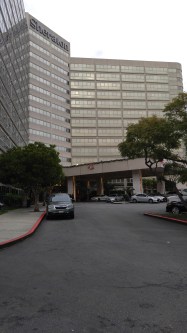
 The Faculty Retreat for the Oikonomia network opened this evening at the Sheraton Gateway, LAX. The retreat serves as a
 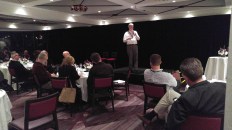 one day precursor to the Karam Forum that follows. Greg Forster greeted visiting faculty and noted that the focus of the retreat revolves around the question “What is the Economic Responsibility of the Church?” Forster observed that often questions of faith, work, and economics begin and end in the
  practical life of the congregation. So, this year’s retreat hopes to raise questions about the church’s life and engagement with our current economic realities.
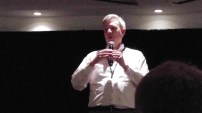
 To orient the faculty to the theme, Forster introduced Dr. L. Gregory Jones from Duke Divinity School and Duke University. Dr. Jones has served both as the Dean of Duke Divinity and
  Provost at Baylor University before returning to Duke to teach and serve as senior fellow the Center for Faith and Leadership. Dr. Jones provided a stimulating presentation on “traditioned innovation” which is also the theme of his recent book Christian Social Innovation: Renewing Wesleyan Witness.
 During 2017 the Sunday School ministry of Kansas City First Church elected to incorporate intergenerational efforts between classes of
 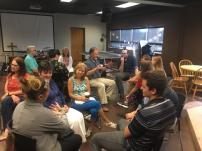 children, youth and adults every “fifth Sunday” as two classes combined on the last Sunday of every month that included five Sundays.

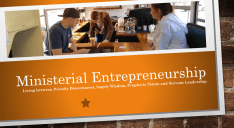 For the past three years, Nazarene Theological Seminary has
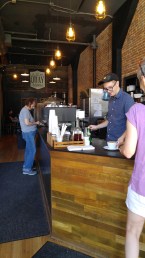 the intersections between people starting new, entrepreneurial, ventures with ministry in mind. The course incorporates a partnership with the
  nnovative
 Today’s gathering of the Oikonomia Network began with Greg Forster
  providing updates on efforts within and beyond the Network. ON continues to cultivate new partners, such as the LABI College/Latin American Theological Seminary (LABI/LATS) in Los Angeles, as well as seek strategies for
  providing sustainability in existing programs. In particular, the Network now partners similar efforts working directly with clergy,
  such as the upcoming conference lead by Pastor Tom Nelson on
  designed for pastors and congregational leaders to discuss how the church participates in flourishing in our neighborhoods. Flourishing in our workplaces. Flourishing in our churches. And flourishing for the good of our cities
 The remainder of the day focused on small group presentations addressing several “social worlds” or institutions that intersect with the church: the legal/political world, Wall Street economics, and the life of the family, as well as a discussion on extending the faith, work, economic conversation at different educational institutions.
 January is always a good time for a faculty retreat, particularly in Tempe Arizona. This week I have the privilege of attending the
  Network gathering is sponsored by the Faith, Work and Economics initiative at
  the Kern Family Foundation. The Network represents a group of scholars and educators engaged in seminary education around the United States, all working on projects to prepare seminarians to take seriously the place of work and economics as part of their ministry.
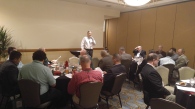 Greg Forster, Director, Oikonomia Network and Visiting Assistant Professor of Faith and Culture at Trinity International University, convened this evening’s gathering by noting the title of the retreat “Strategies for Hope.” Forster offered that, in the middle of unsettled
  times, we need to recognize there are a number of encouraging activities occurring so members need fresh, hopeful, eyes to discern those positive efforts and build on their initiatives. Forster also acknowledged
  that the retreat followed a new, abbreviated, format. In part, the change of the retreat is directly related to a new
  March 2-3, 2017 at Trinity International University. Still, the retreat remains an important event as it both helps new members gain an initial understanding of the network’s efforts, and also allows experienced Oikonomia Network faculty and administrators ongoing opportunity to build their expertise and look for “the next step” to constructively expand their efforts.
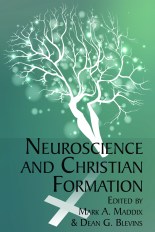 Mark Maddix and I just celebrated the release of our newly edited book
  Overall that responsibility proved to be a challenge for a guy working in a free-standing seminary with no access to university research labs. Still, thanks to the University of Pennsylvania’s
  Center for Neuroscience and Society)


