Neuroscience Applications in Society

Farah provided a closing overview of the new ways neuroscience is interacting with society including examples of current and near-term applications of neuroscience in our lives through manipulating brain function and measuring brain function. And closed with a discussion of the neuroscience “worldview.”
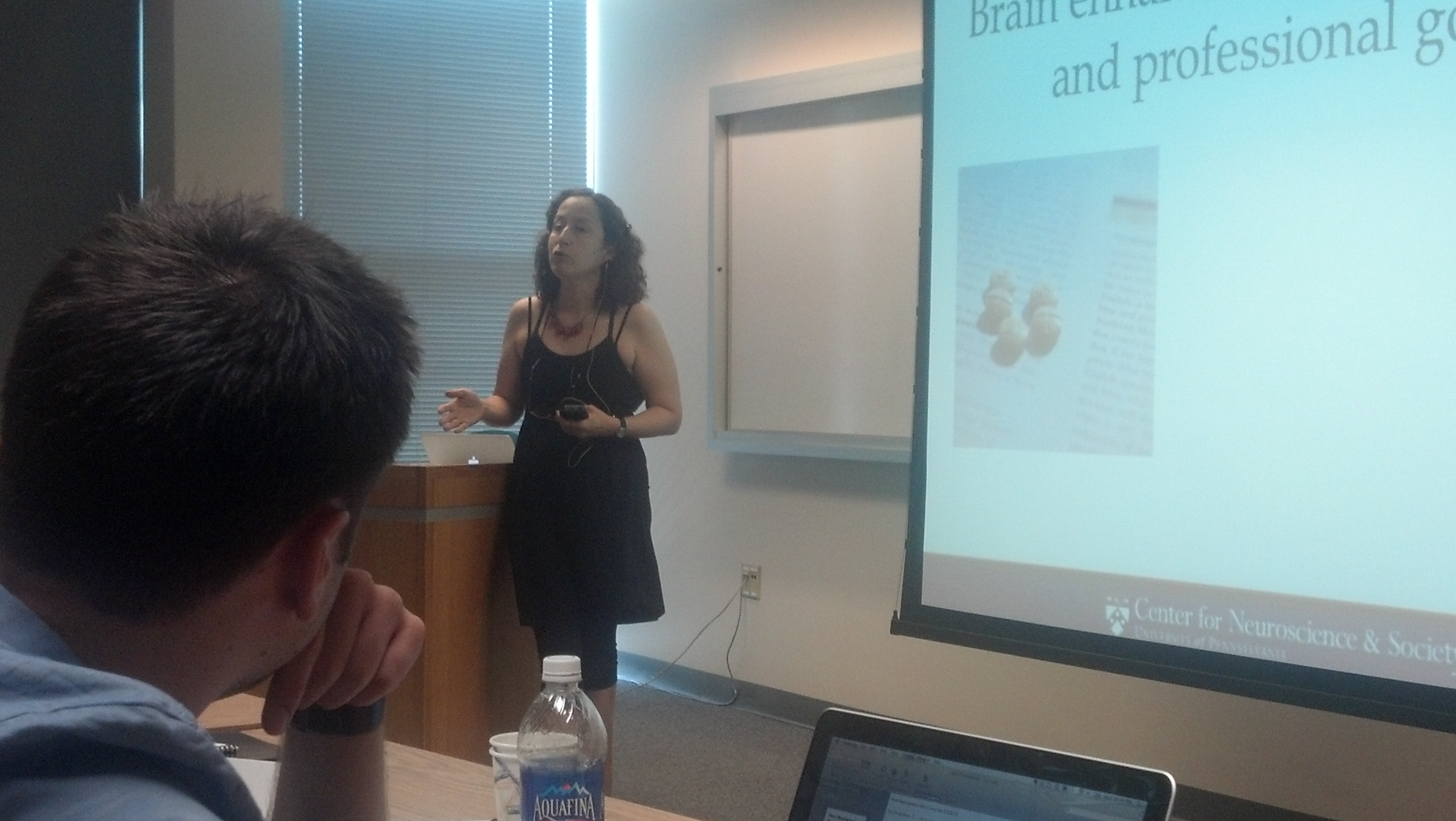
The first engagement revolves around the use of brain enhancement for personal and professional goals (using Adderall and Ritalin by college students to try to gain cognitive enhancement). Farah noted that other drugs have had a similar history of questionable practice (including coffee) but statistical and anecdotal evidence indicate a growing indicator that these drugs are being used “beyond therapy” or “non-medical” growth but actual surveys seem to be suspect. Drugs are used episodically when students need it either for a project or when they feel bored. What is fascinating is that drugs are not procured like street drugs but through friends and family. What is amazing is the studies are not conclusive that it is helpful in cognitive enhancement (as many null results and conflicted results) but may at least provide motivational “bonuses” (people “feel” smarter taking the drug).  However, discriminating between the task at hand (writing a paper) and a social situation (talking with friends) tends to be the same so these drugs do not insure staying “on task” once taking them. Is there any concern between people with ADHD vs. those who don’t? In Neurochemistry there are a lot of inverted “U” functions so that continued drug use (so dopamine increased in someone who is at optimized already results in a poorer performance).
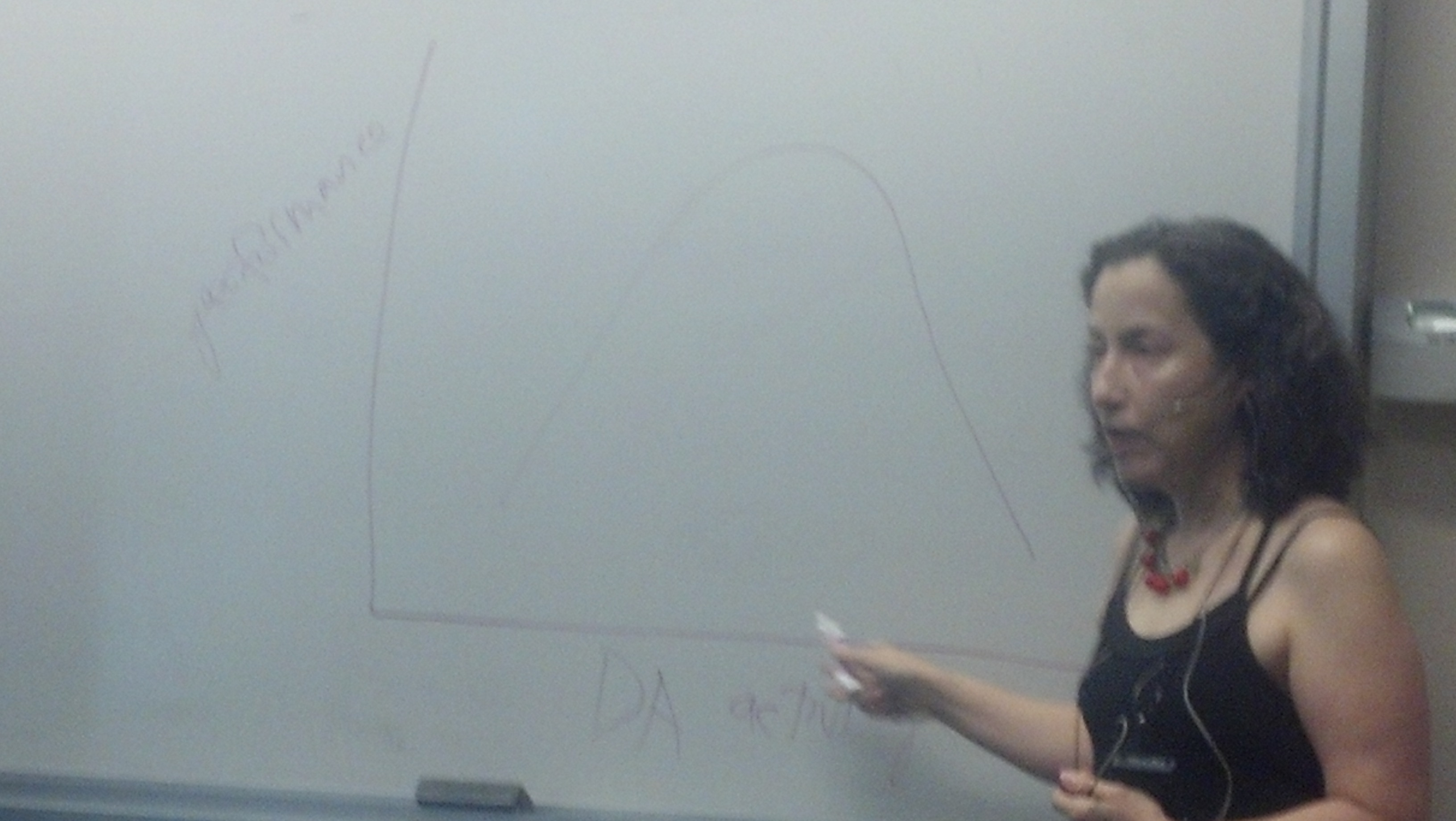
FYI, caffeine does not interact with dopamine so it does tweak chemical pathways but differently.

A different drug used by adults is Modafinil (for doctors, pilots, hard-driving professionals) which helps people go a long time without sleeping without the normal cognitive/mood side-effects. I.e. those undergoing massive jet lag really recover. It has just recently gone off patent so it is cheap and easily prescribed by Doctors. Danger may be that adults may be harmed since it disconnects the “alarm” when we need sleep but may help others, like surgeons working at 2 am or pilots, cope well. Long term implications are unknown and there may be a social problem if professionals begin to “pressure” employees to work longer and harder using this resource. A side question emerged if lack of sleep also might mean a lack of memory consolidation… unknown. So, could we have “the greatest vacation we can never remember?”

Other issues emerged around other memory drugs in pipeline being designed to help older adults improve memory. They are on the way. Of interest is that most of the drugs that seem to enhance memory were not first used for something else first in psychiatry that seems to have incidental help (“me too” drugs) but actually designed for memory (probably with the hypocampus).

In addition people have explored how drugs help relationships (see book Listening to Prozac). An emerging class of drugs use of Oxytocin (and agonists) for relationships and other application. Oxytocin is a hormone in all animals best known for parent-child bonding as well as the bonding feeling following sex. The molecule does not easily cross the blood brain barrier but if you squirt enough of a LARGE volume across the nasal barrier it makes you more generous and giving than usual. Yes, altruism in a nasal spray (or, better, nasal air gun). However, there may be a perceived downside since the nurture focuses more toward an “in-group” but perhaps greater hostility toward other groups. However, some research demonstrates this drug may help autism so more information to follow.

One issue discussed was the crisis in pharma that the pipeline is running drive in new drugs for psychological treatment. This change is motivating interest in noninvasive brain stimulation which raises new questions concerning basic science, clinical translation and Do it yourself communities.
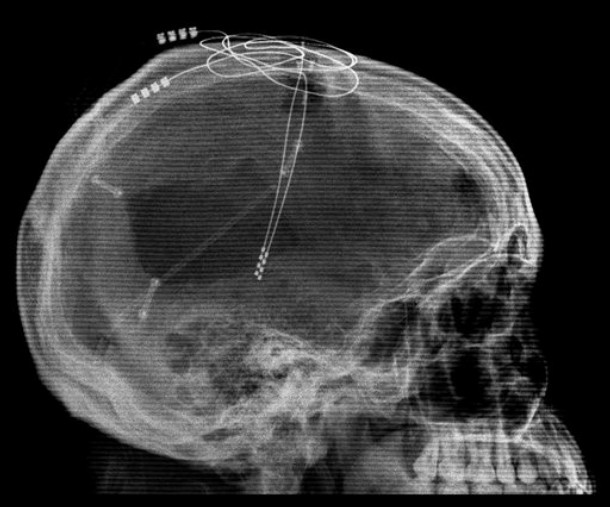
Of course there is also discussion about the role of deep brain stimulation (obviously for issues more than self enhancement). In US the approval is for the device not for treatment procedures.  However the impact of DBS on depression has proven phenomenal (a kind of pacemaker for the head). See this site’s twitter feed for complementary readings.

Other technology and brain interfaces include the use of pulse related dbs and brain interface.
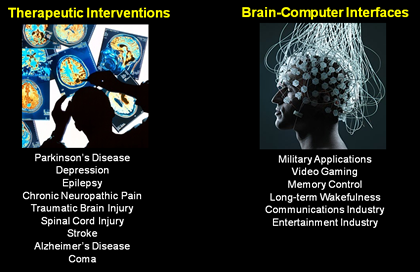
Farah also noted there may be other innovations using genetic interventions, stem cell and other neural tissue grafting, as well as interesting work in optogenetics (splicing in light sensitive genes into neural cells and by controlling for color you can fire different neural circuits) i.e. playing wavelengths of color to “play” neural pathways.
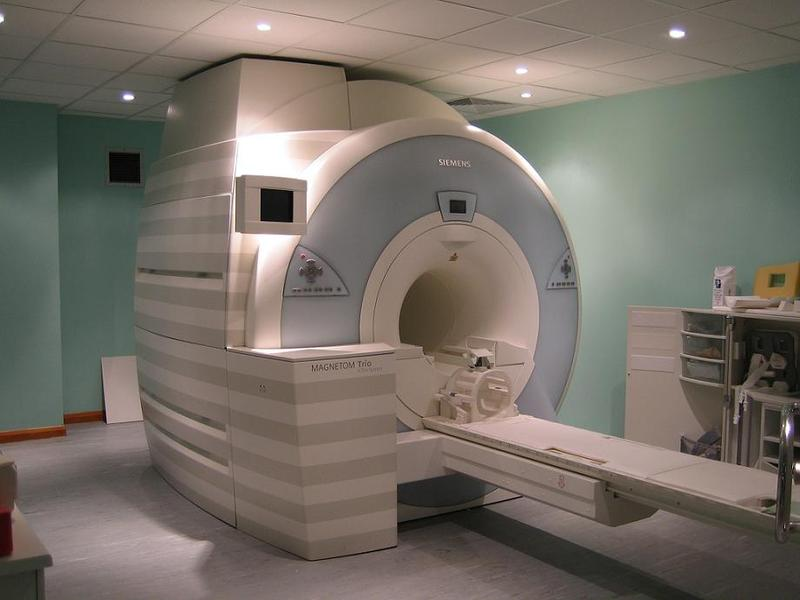
In addition Farah noted how imaging and other methods are being used in new applications, medical and non-medical for the future such as assessing awareness of non-responsive awareness. Unfortunately some people are using SPEC scanning and other scans for diagnosis (and people really abusing it). Of course that is problematic as the class discussed (just because a part of the brain “lights up” as the result of a disorder does not mean the disorder is the only thing that lights up that part of the brain… the standard logical fallacy of inference). This approach has also generated a lot of poor inferences (neuro marketing, family counseling, and brain based lie detection). Issues like variability in diagnosis, the difference between laboratory settings and real time actions/explanations, general population versus individual predictability, and even the standards for accuracy in court settings, create a number of issues that allow many questionable practices to continue while neuroscientists work through a range of research methods.
Posted in Uncategorized | Leave a comment

Other sources

I was away from the computer for a really helpful presentation that I may try to report later but I did want to note some other really helpful resources from other members in the group. See the Lisa Sansom’s Blog at LVS consulting for a really thoughtful review of each day.

http://www.lvsconsulting.com/blog/

You might also check out the Penn Flicker site for a pictorial history

http://www.flickr.com/photos/80684788@N06/7735346854/in/photostream

Posted in Uncategorized | Leave a comment

Personality

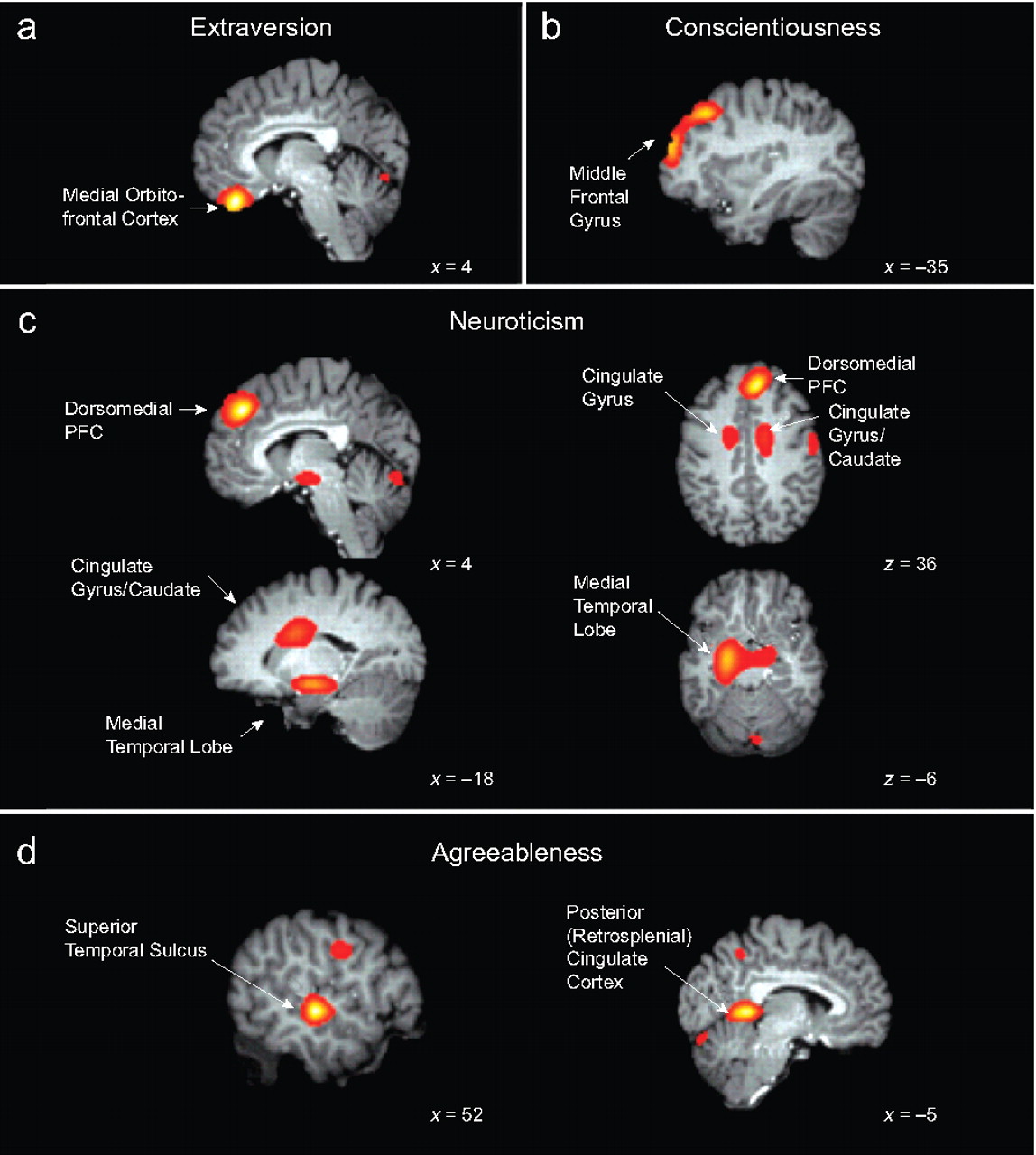
Dr. Joseph Kable provided an overview of different approaches to studying personality in Neuroscience. I will only touch on one since the others were a little unclear to me. One approach was using fMRI/BOLD studies of the brain correlated to different states or moods known as the “big five”

(1) Neuroticism
“I have frequent mood swings.”

(2) Extraversion
“I don’t find it easy to take charge of a situation” (reversed)

(3) Openness
“I enjoy trying new and foreign foods.”

(4) Agreeableness
“Most people I know like me.”

(5) Conscientiousness
“I keep my belongings neat and clean.”

These states seemed to correlate to different brain areas


Posted in Uncategorized | Leave a comment

Aging

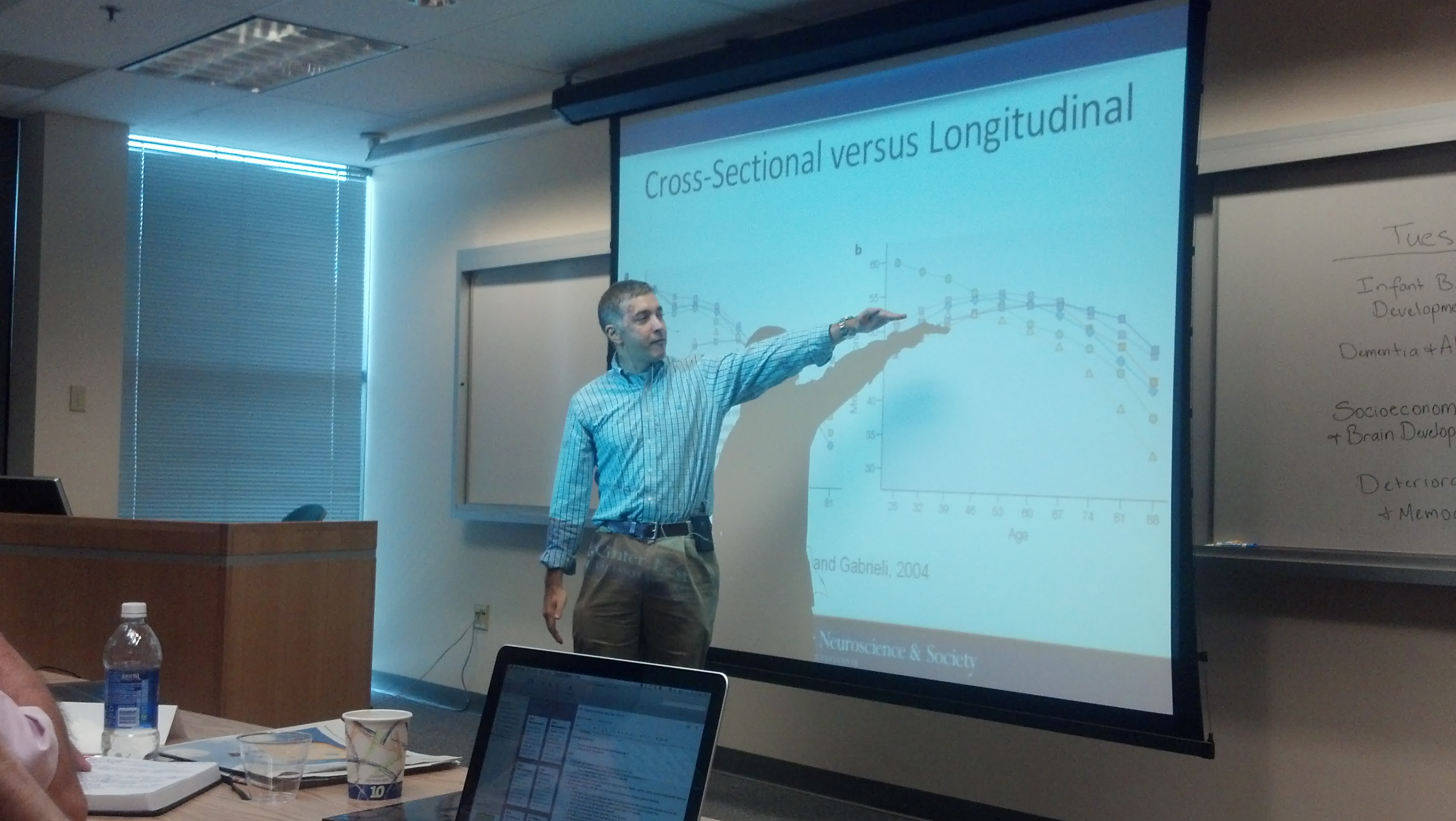
Dr. Wolk returned to discuss Aging. Basic concerns with this area surface when you consider the data that we are seeing a Significant increases in proportion of elderly in developed countries due to reduced birth rates; increased longevity so that by 2050, 26% older than 65 year olds with only and 15% younger than 15 year olds. Increase creating questions of both “Healthy” cognitive aging and pathological cognitive aging. For instance age is the greatest risk factor for Alzheimer Disease so that the prevalence doubles every 5 years after age 65. So researchers are concerned about optimization of cognitive health. Good news is that there is a wealth of data now from fMRI studies and other sources.

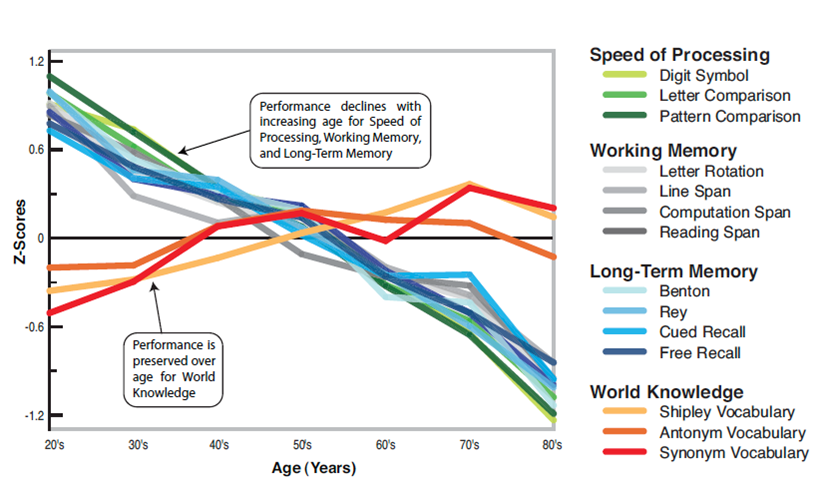
Yes, we do decline with aging. The only thing that seems to get better is our vocabulary.

The losses in the aging seem to emerge from a variety of areas around the prefrontal cortext leading to a Frontal Hypothesis of Aging including loss in
Speed of processing decline: Perceptual speed (same/different)
Working Memory Deficiency: Reduced capacity
Loss of inhibition: Inefficient – slows processing and disrupts working memory
Controlled processing deficit: Reduced top-down control/strategic processing

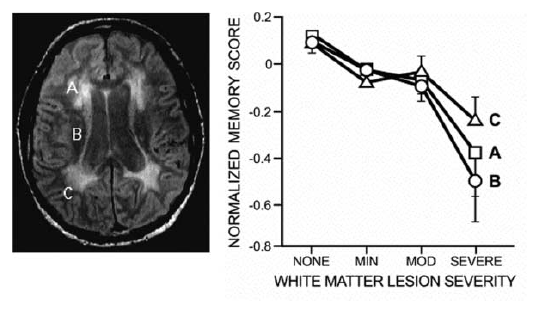
Yes we do see correlation with structural changes (reduction of hippocampus but also increase in white matter injury and other issues) but overall these correlations prove “fuzzy” so researchers are now looking for functional changes that may account for additional variance (so yes shrunken cortext but real issue is older adults are just under-recruiting aspects of the brain like the VLPFC). However, if you give the adults a semantic tasks (like forming sentences rather than just recalling words) these older adults can enhance memory.  Question raise whether older adults develop other compensatory actions that might be either less efficient or just alternative but the overall view seems to indicate the overall evaluation is more complicated. There does seem to be some ways to offset aging including:

    • Physical Exercise
      Mental Stimulation
      Educational attainment
      Reduction of cerebrovascular risk factors
      Psychosocial factors including

        • Social networks
        • Neuroticism
        • Stress

One question revolves around if people live longer are we all “determined” to outlive brains (contract Alzheimers?) probably not (AD is a disease) but there are long term health concerns so learning to delay cognitive loss remains a key question.


Posted in Uncategorized | 1 Comment

Nature and Nurture

Interesting morning on developmental considerations with Martha Farah which should resonate with most of my students.

Primarily the opening theme addressed the idea that development is both nature and nurture beginning with behavioral genetics studies in heritability (both adoption studies and twin studies but twin studies may be better for this type of work when you work with monozygotic twins). HOWEVER heritability estimates may be informative but they are NOT absolute, essential or immutable. Heritability studies cannot predict exactly how much is heritability and how much environment but only general trends and even then you need stable environments to factor for change in heritability.

Turkeimer et al. provided a strong analysis that often when environmental changes fluctuate widely it is hard to set up even categories of analysis much less comparative frameworks.  Such information helps researchers read large studies with care but not necessarily debunk all aspects of the study (see the discipleship commons twitter feed for access to articles on this subject)

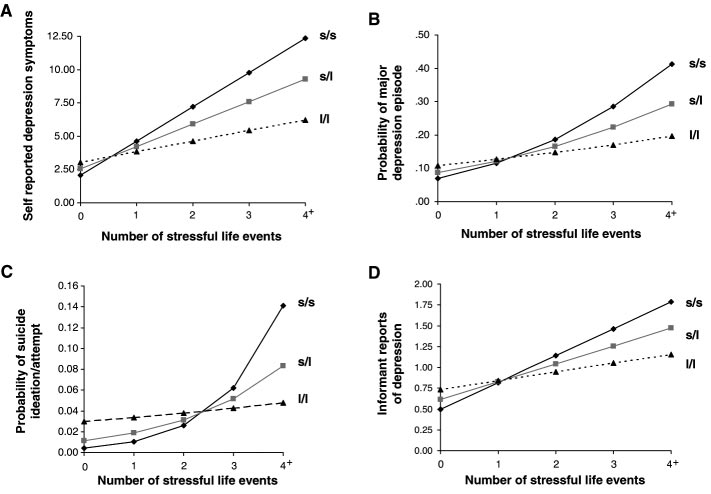
Studies on the relationship between certain genes (for instance neurotransmitter-metabolizing enzyme monoamine oxidase or MAOA so that maltreated children with a genotype conferring high levels of MAOA expression were less likely to develop antisocial problems.) and even on environmental sensitivity to both stressful and nurturing environment.

Just a side note. Behavioral genetics seems to have trouble replicating and sustaining reliability but often have a lot of influence in drug therapy. My personal observation is that correlation work in population studies may be doomed. The deep suspicion of cultural construction compels some people to really want to deconstruct all studies at one level rather than understand that population studies are bounded but still helpful (funny that some of the same detractors will, however, validate anecdotal evidence). I may be wrong but this cultural suspicion really makes “nature” oriented studies very difficult in a number of settings, contributing to incommensurability between communities of academic discourse.

The case for environmental influence seems a bit more self evident due to the phenomenon of plasticity. Farah invoked the basic theme that neuronal connections depend on neuronal activity: i.e. “Neurons that fire together wire together” and can actually change macroscopic size and shape of brain! (See the London Taxi Driver study).

Overall plasticity reveals also critical environments where kittens, for instance, deprived certain pathways for perceiving cannot replicate them later. There are also “sensitive” periods where certain learning a second language is more adaptable (or where certain language issues like missing certain fricatives or plosives may occur).

A classic study revolves around ‘Genie’ was discovered in Arcadia, California, at the age of around 13. She had been locked away by her parents and had very little socialization. See http://www.integratedsociopsychology.net/genie.html. So you can partition questions of nature and nurture but not neatly or definitively. However a strong case can be made for both perspectives contributing to the conversation.

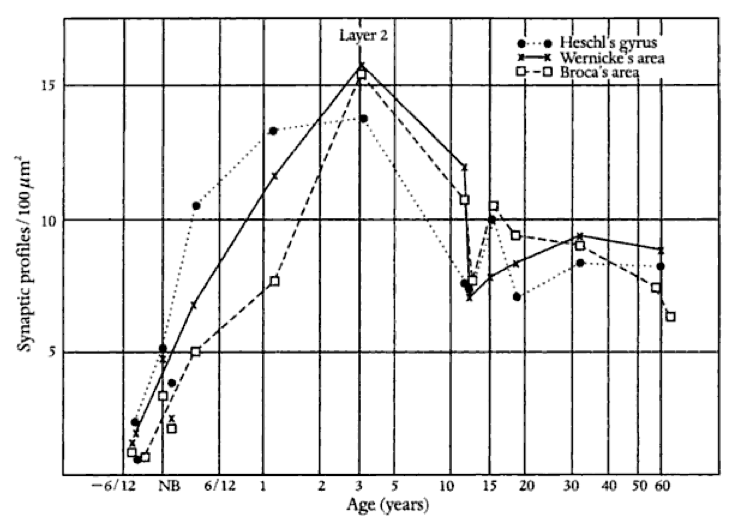
Farah continued with the overviews of developmental plasticity via synaptogenesis and pruning and the fact that adolescents do not have a fully developed “aspects” of PFC but with appropriate caveats.

The presentation closed with a discussion with ADHD… but I was too distracted to summarize.

Posted in Uncategorized | 1 Comment

Reading and Dyslexia

Important to remember that reading is a cultural phenomena. Not all cultures developed reading in the same way which raises issues concerning the next cognitive disorder. Chatterjee presented a case where an subject learned to read a second language in adolescence to the point where the second language dominated while the primary language regressed! (Something that does not normally happen where a dominant language is learned early, second languages are harder at this time.)

ImageThe difference revolved around the way different languages are acquired (grapheme or phoneme) which influence abilities to obtain the language particularly English, since the language has so many irregular words, require whole word exception.

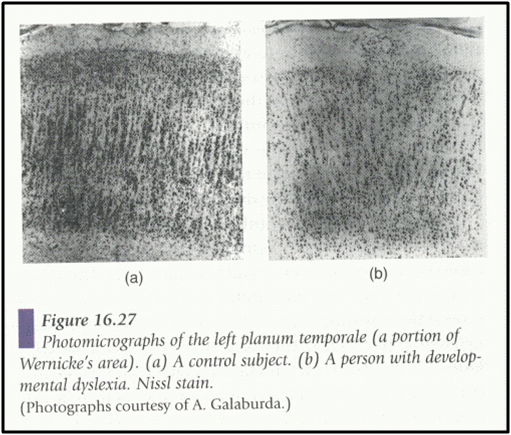
This example lead to a discussion of developmental dyslexia which inhabits 5% population of school age children. SES is not thought to be causally related but does require both the need to combine eye and ear (rapid auditory processing and lexical command) and . However, biological indicators of the problem might include the magnocellular decrease (neurons involved fast switching) and abnormal cortical folding.

[Unfortunately the lack of etiology with dyslexia has prompted quick fix responses (computer programs) which actually are not as important than more difficult, highly related work with a tutor.]

What was overlooked in the illustration presented was that the adolescent could not read irregular words (English) where the adolescent could read Spanish which has all regular words. The desire to speak the second language did include adolescent behavior but the etiology was primarily around dyslexic ability to read another language at a level that was greater than anticipated (the subject could read Dantes in Spanish!).

Posted in Discipleship, Neuroscience, Religious Education, Uncategorized | Leave a comment

Pathologies of Cognition

ImageAfternoon presentation focuses on pathologies of cognition with Dr. Anjan Chatterjee. Session opened with definitions for dementia and Alzheimer disease. One indicator is patient/relative ratio rule of thumb (when patient concerned but not relative then depression, when relative concerned but not patient, Alzheimer). Still the overall these areas are provide one of the most emotional social issues today. Dementia is a major problem: 10% of people over the age of 65 or 5.1 million cases in the United States with 16 million expected by 2040. Currently dementia costs 148 billion/year caring for patients with dementia. It is important to remember that age is a major risk factor

–65-69  –  2%
–70-74  –  4%
–74-79  –  8%
–80-85  –  16%
–over 85  –  40%
•Over 85 – (with this age group the fastest growing segment of the population)
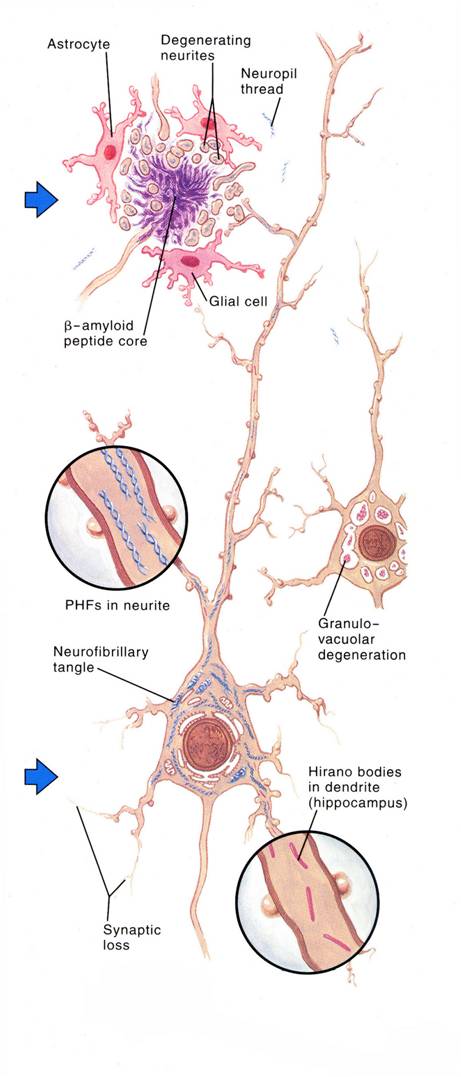
Alzheimer entails loss of cognition (repeating oneself within an hour) decrease in activities of daily living (caring for oneself) and personality changes. The neurological reasoning entails two phenomenon: Amyloid Plaques and Neurofibrillary Tangles (disagreement over which most important)Image
•Amyloid Plaques (Ab) includes the extracellular accumulation of Ab  (fragment of the amyloid precursor protein). Abnormal processing of APP critical to pathophysiology of Alzheimer’s disease.
•Neurofibrillary Tangles define Intracellular, paired helical structures composed of hyperphosphorylated tau. The tangles correlate well with disease severity and neuronal death.
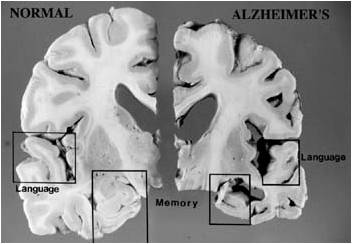
The reason “why” these occur and contribute to Alzheimer remains unknown but their overall impact result in brain shrinkage over time.
Image
Posted in Neuroscience | Leave a comment