
-
Recent Posts
- Children Find Peace, Purpose Through “Gratitude in Action” at Spring Break Day Camp April 3, 2026
- Trust expressed among Native American Children March 25, 2026
- West Coast Nurturing Care Initiative Shows Grassroots Innovation and Spiritual Impact Across Congregations March 18, 2026
- Midwest Churches Expand Efforts to Welcome Children with Autism March 15, 2026
- Nurturing Care Launches Nashville Maker’s Space March 10, 2026
Categories
- Autism
- Bible
- Children
- Clergy
- Continuing Education
- Culture
- Degree
- Design
- disability
- Discipleship
- Economics
- Entrepreneurship
- Family
- Global Theology
- Higher Education
- Homes
- Intergenerational
- Journals
- KC Nurturing Care
- Leadership
- Media
- MidAmerica Nazarene University
- Mission
- Moral Integration
- Nashville Nurturing Care
- Neuroscience
- NorCal
- Northern California
- NTS Praxis
- Nurturing Care
- Pedagogy
- PLNU
- Practical Theology
- Preaching
- Preaching Conference
- Race
- Religious Education
- Research
- Scholarship
- Science
- Short Term Mission
- Social Media
- Spiritual Formation
- Technology
- Theological Education
- Theology
- Uncategorized
- Virtue
- Vocation
- Wesley
- West Coast
- Women
- Work
- Young Adult
- Youth
- Youthfront
Opening Session Nashville Nurturing Care Maker’s Space
Posted in Autism, Children, disability, KC Nurturing Care, Nashville Nurturing Care, Nurturing Care
Tagged #NurturingCare, Autism, Children, disability, ministry, NTS, Nurturing Care
Leave a comment
Resting on the Shoulders of Care One Child at a Time
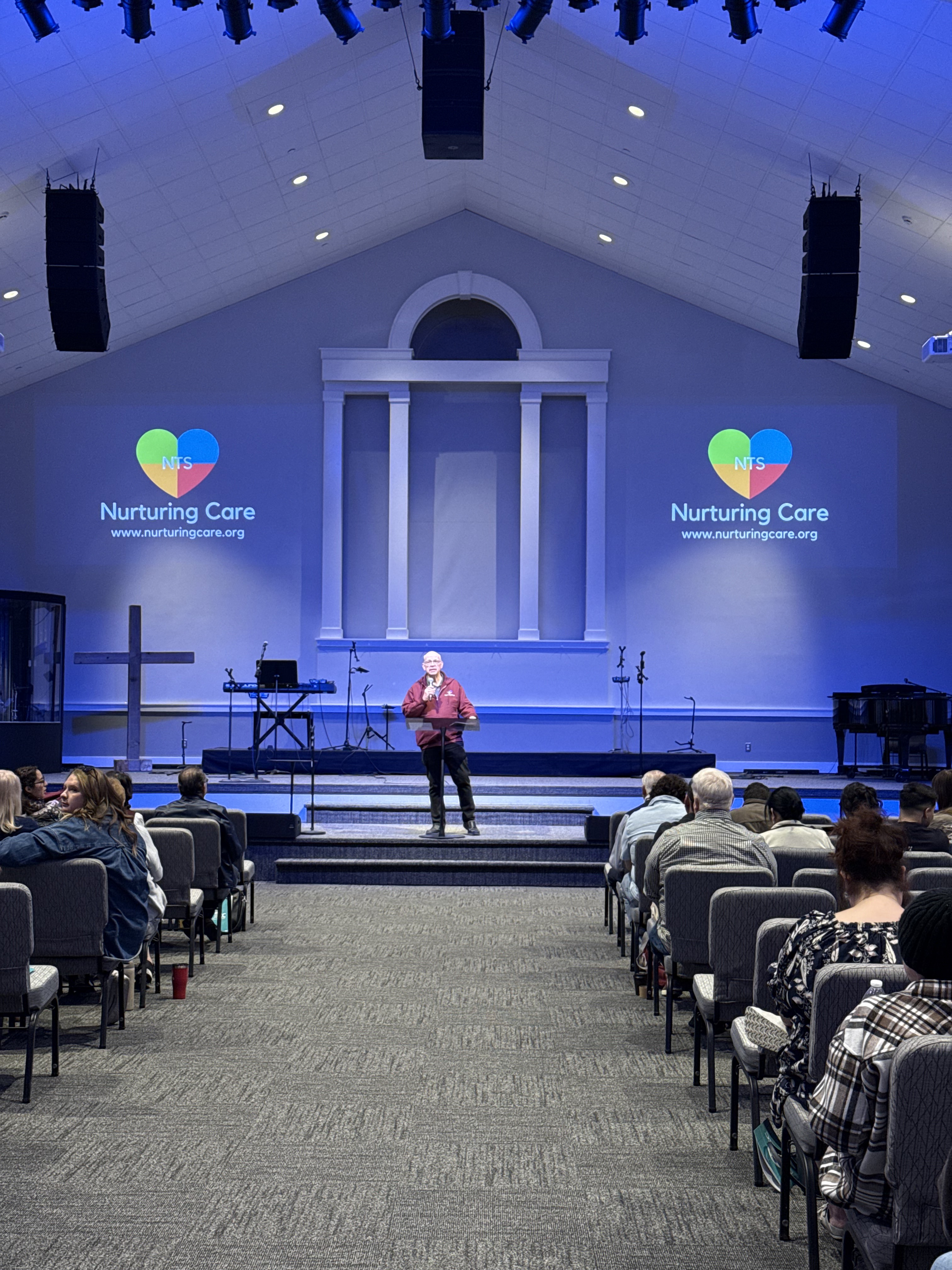
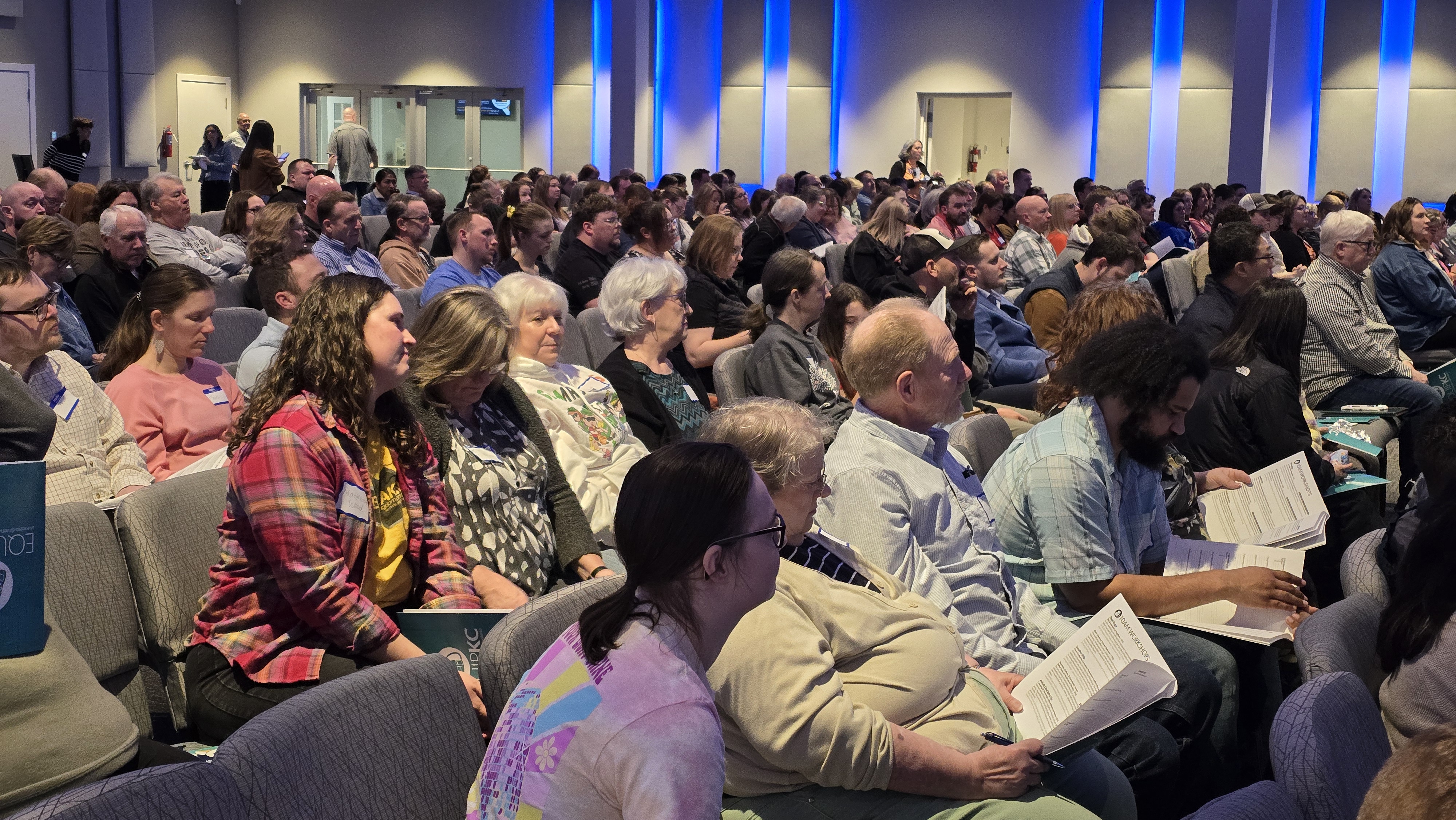
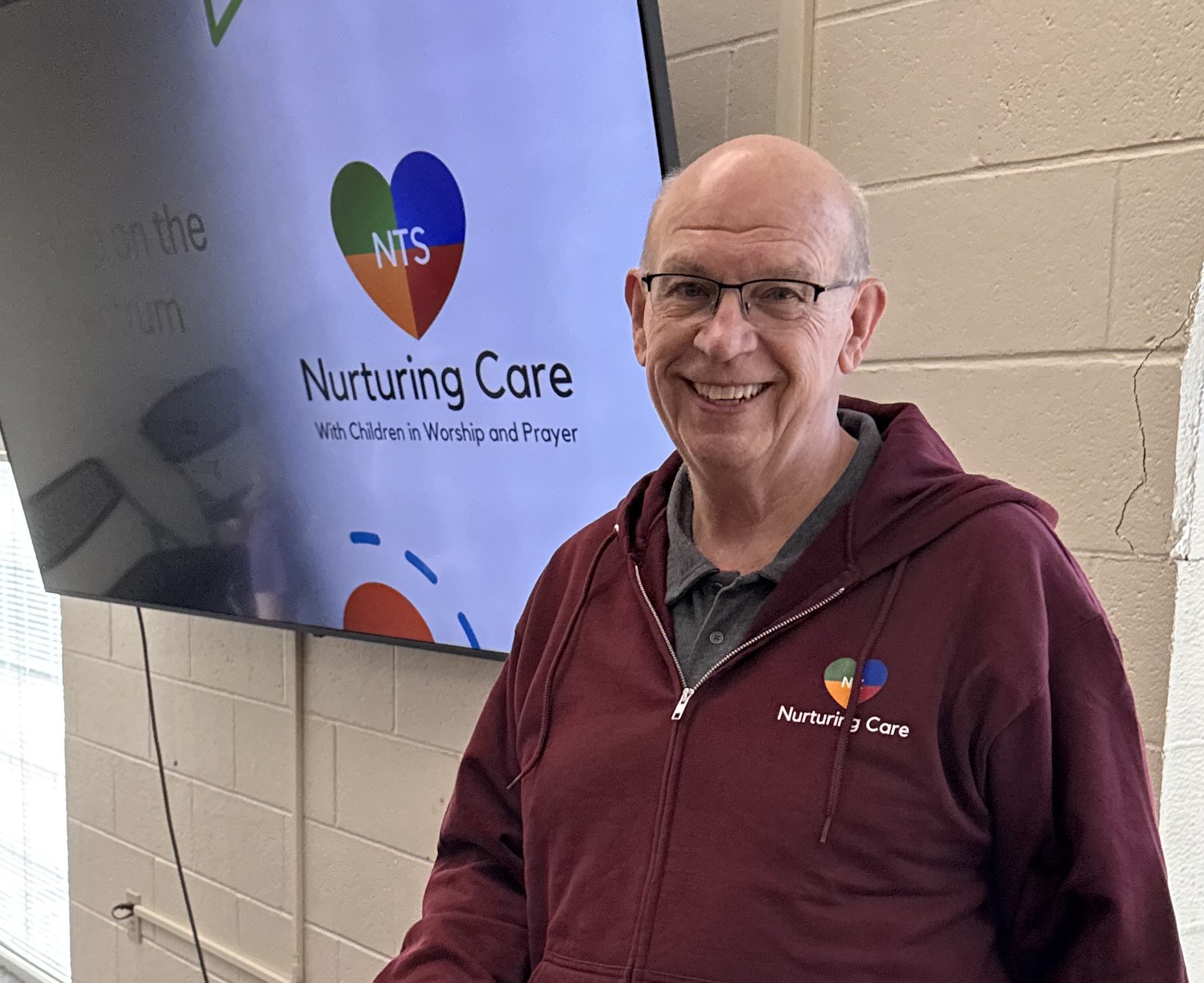
This past weekend Nurturing Care Director, Dr. Dean G. Blevins, was given an opportunity to address a room filled with dedicated leaders, pastors and local lay workers, committed to discipleship. Dr. Blevins also offered his workshop presentation, Worship on the Spectrum, calling for a greater awareness when it comes to understanding and leading neurodivergent children in worship.
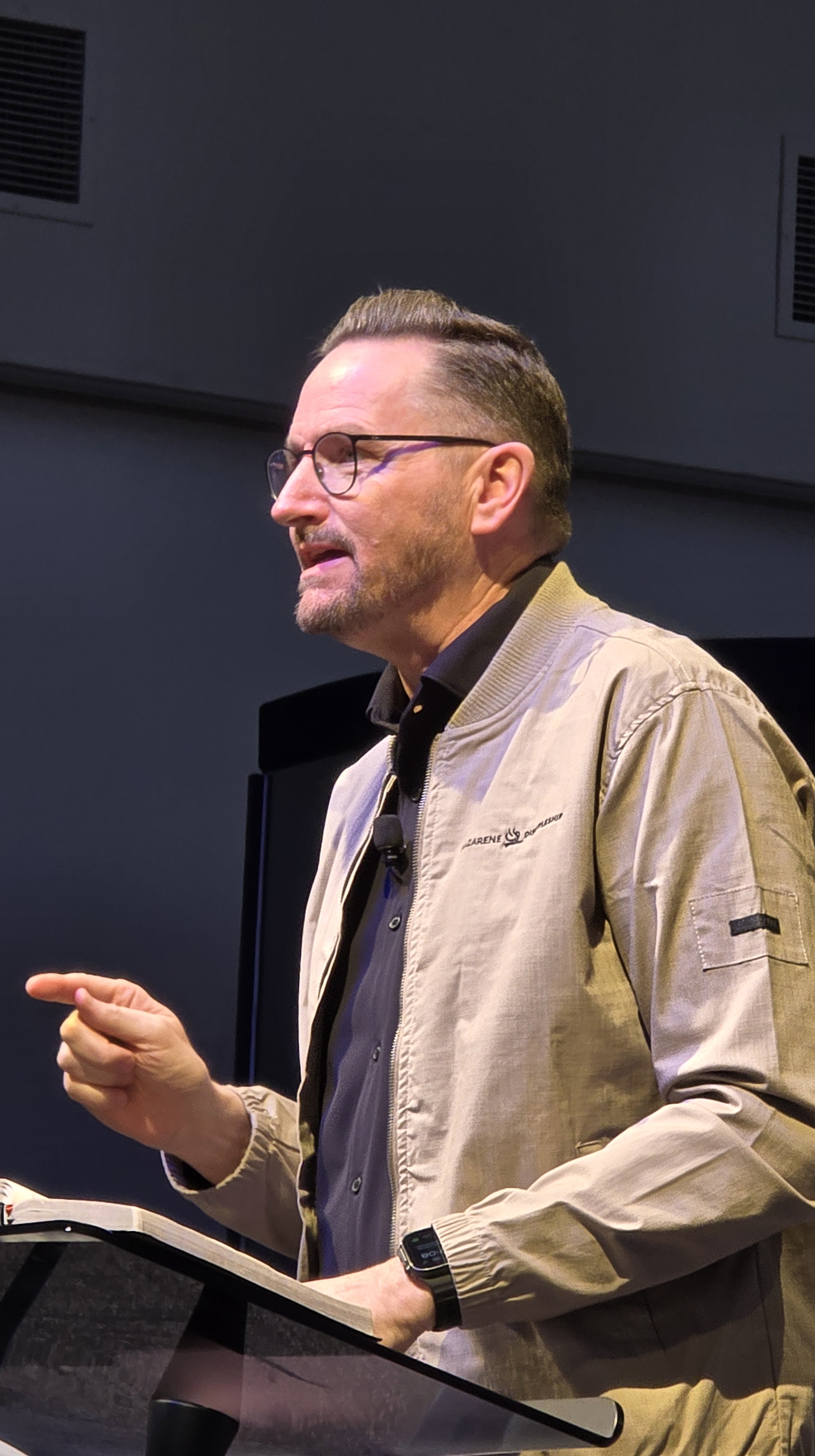
Kansas City District leaders titled the occasion EquipKC. A session filled with wisdom from NDI Director Dr. Sam Barber and others providing workshops and insights into ministry. While Dr. Blevins’ workshop was well received, the real strength of the gathering lay in the people attending. In several settings Nurturing Care staff continue to encounter stories of people whose lives were changed through the everyday care of local congregants. The following response reflects the depth of that care.
Dear Dr. Blevins,
My name is Jennifer Wanner, and I serve as a pastor at Lawrence First Church. I wanted to thank you for your class today.
My family and I are profoundly grateful for our church community. When we first began attending, one of our concerns was whether our son would be welcomed and accepted for who he is. The church embraced him with such care and love, affirming him just as God made him. At the time, he was in second grade; he is now a freshman in high school, a stage that has brought new and different challenges.
Isaac is level 2 on the autism spectrum, and we have always been open with him and our people about his autism. That openness has allowed me to connect with other moms from both our English and Spanish services. As a pastor and a mom, I am often looked to as a resource for families with neurodivergent children. I consider it a privilege to support and walk alongside these parents, though I do not always have the information or tools they need. As you noted today, the spectrum is broad, and each individual’s needs and preferences are unique.
I am especially grateful for the resources you shared. Thank you again for such a meaningful workshop.
Joyfully,
Jennifer Wanner
While Nurturing Care strives to empower congregations into the future, that work rests on the shoulders of caring leaders who work tirelessly with parents and neurodivergent children… one child at a time.
Posted in Autism, Clergy, disability, Discipleship, Intergenerational, KC Nurturing Care, Nurturing Care
Tagged #NurturingCare, Autism, Children, disability, ministry, NTS, Nurturing Care
Leave a comment
Sensory Room Laboratory Opens to First Children, Helping Churches Test Tools for Neurodivergent Ministry
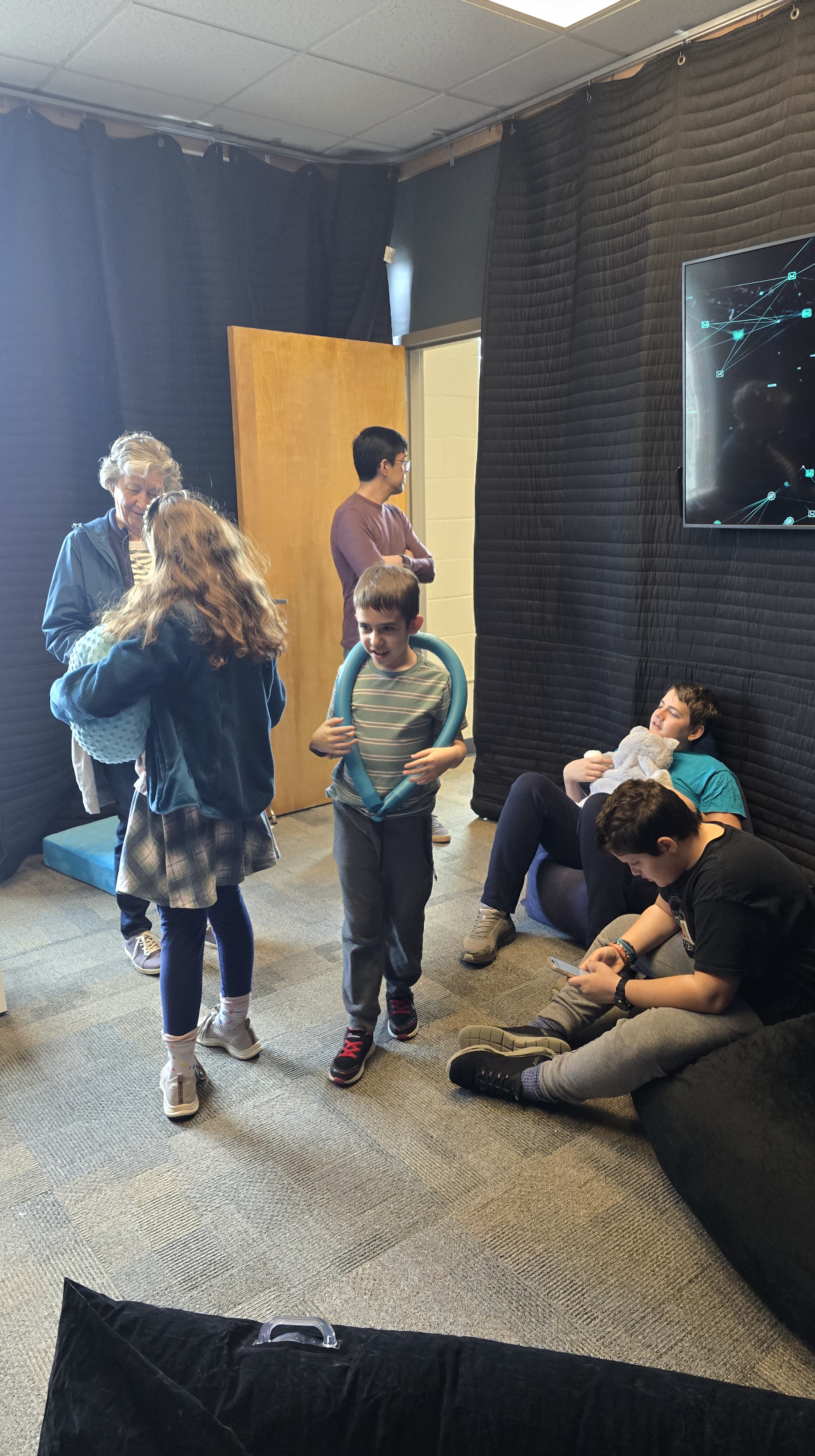
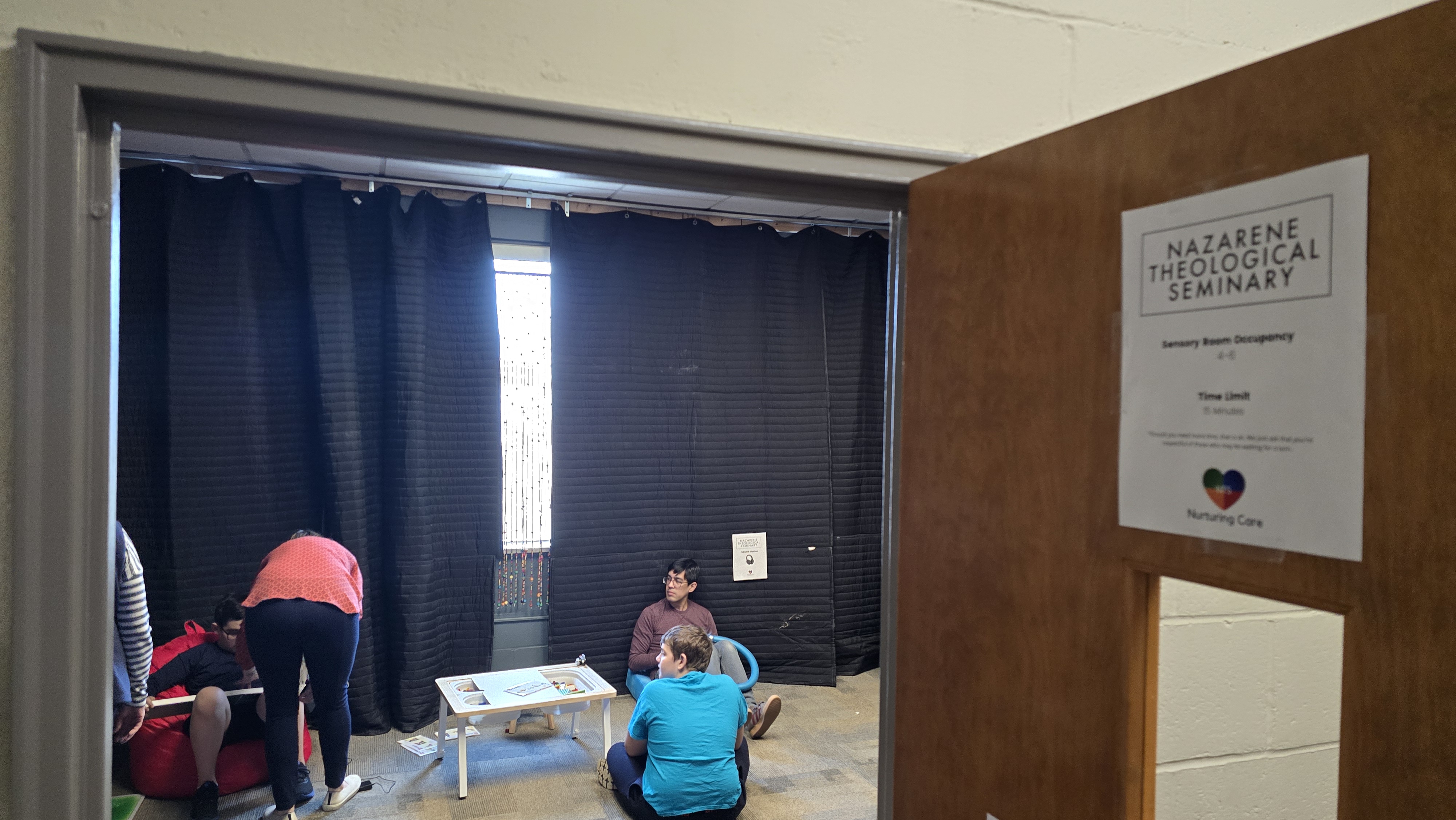
Nurturing Care’s Sensory Room Laboratory welcomed its first group of children this week for a hands-on visit where kids and adults tested tools designed to support a wide range of sensory needs. Pastors, church leaders, and curious kids moved through stations around the room, trying items and learning how each resource might work in their own setting.
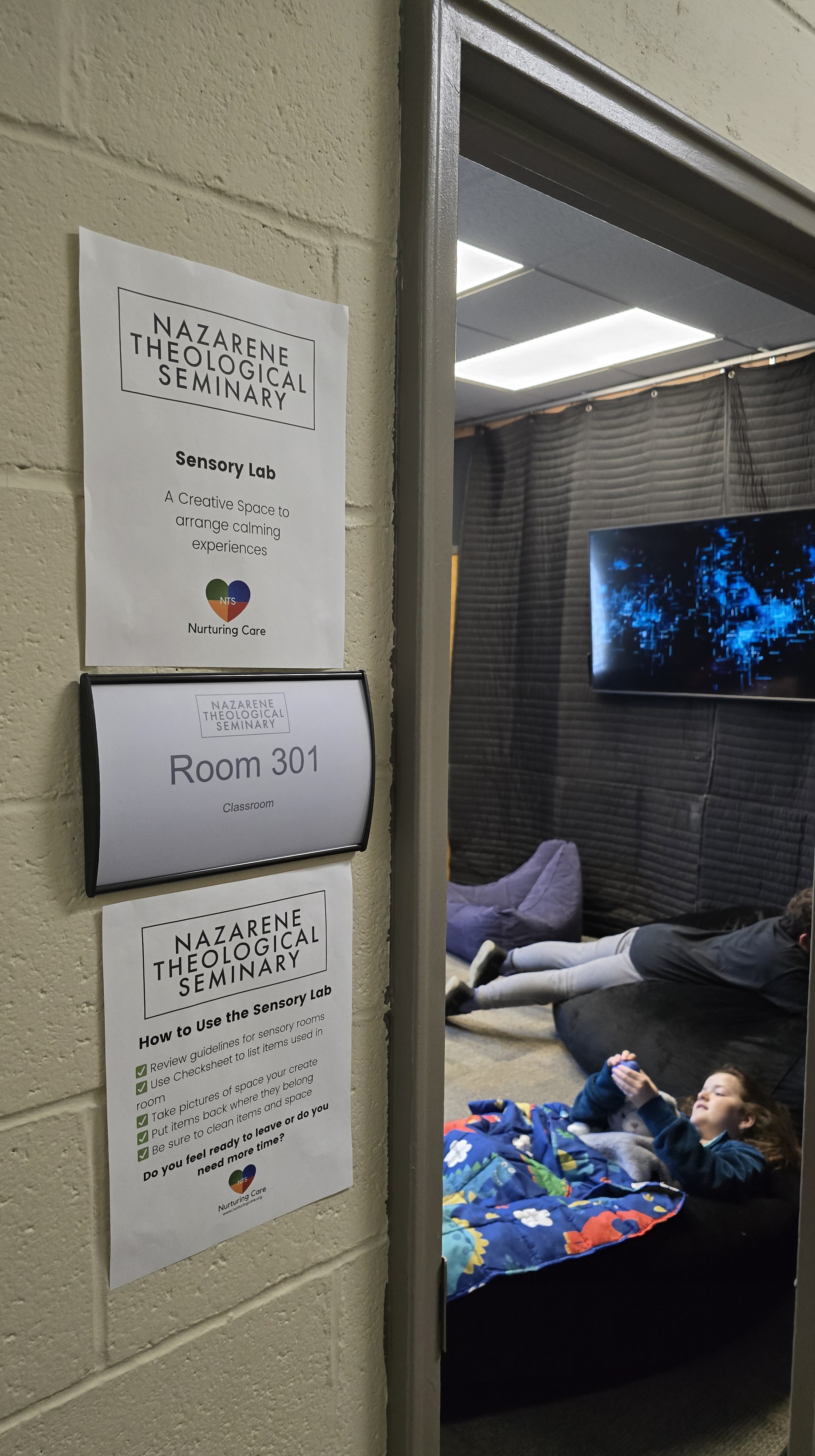
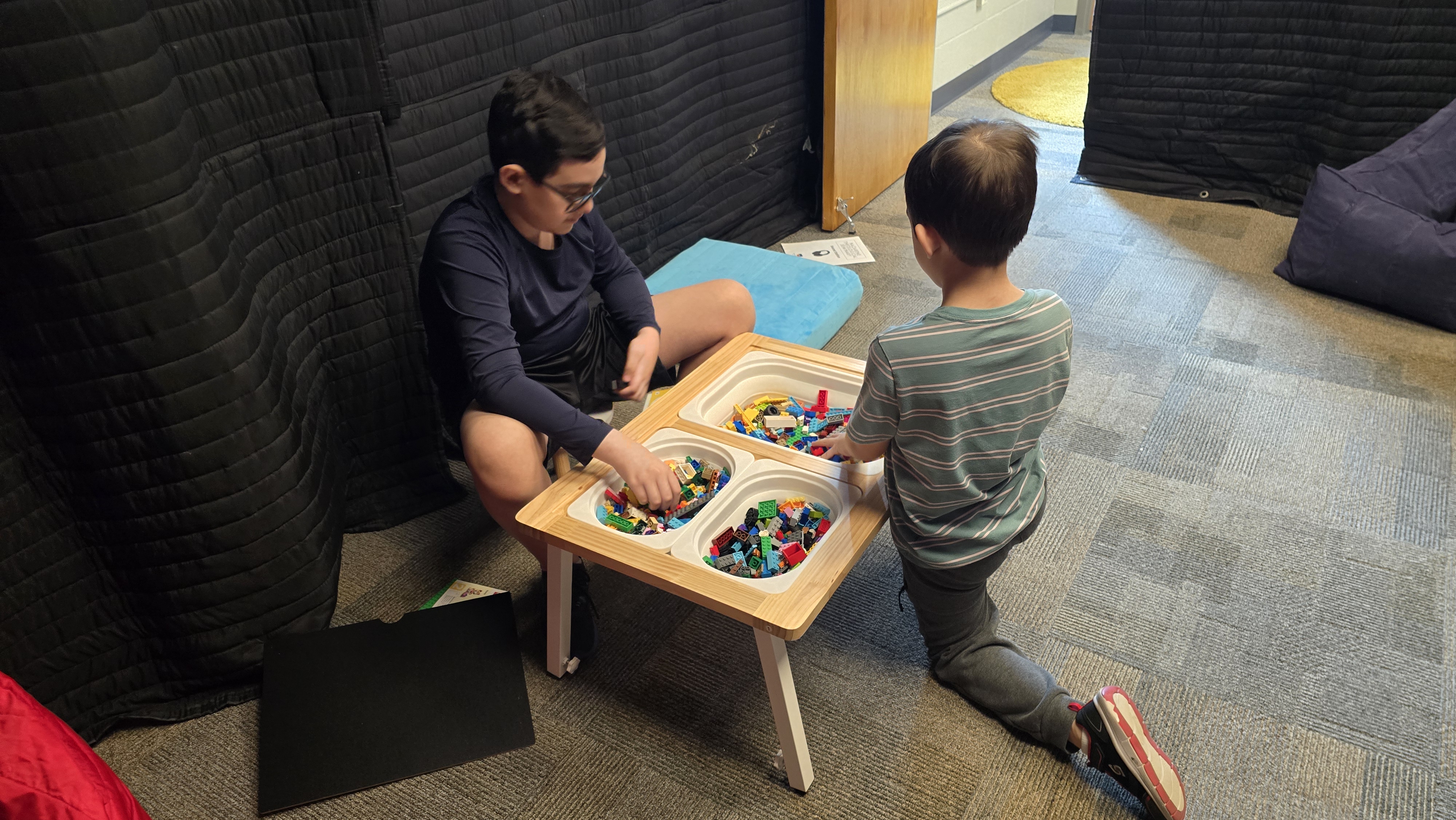
Nurturing Care developed the room to support neurodiverse visitors—including adults—during NTS-related events. The same space also serves as a test lab for churches exploring child-friendly sensory tools. Many congregations build their own sensory spaces through trial and error, without access to an adaptive environment where they can try equipment before purchasing it.
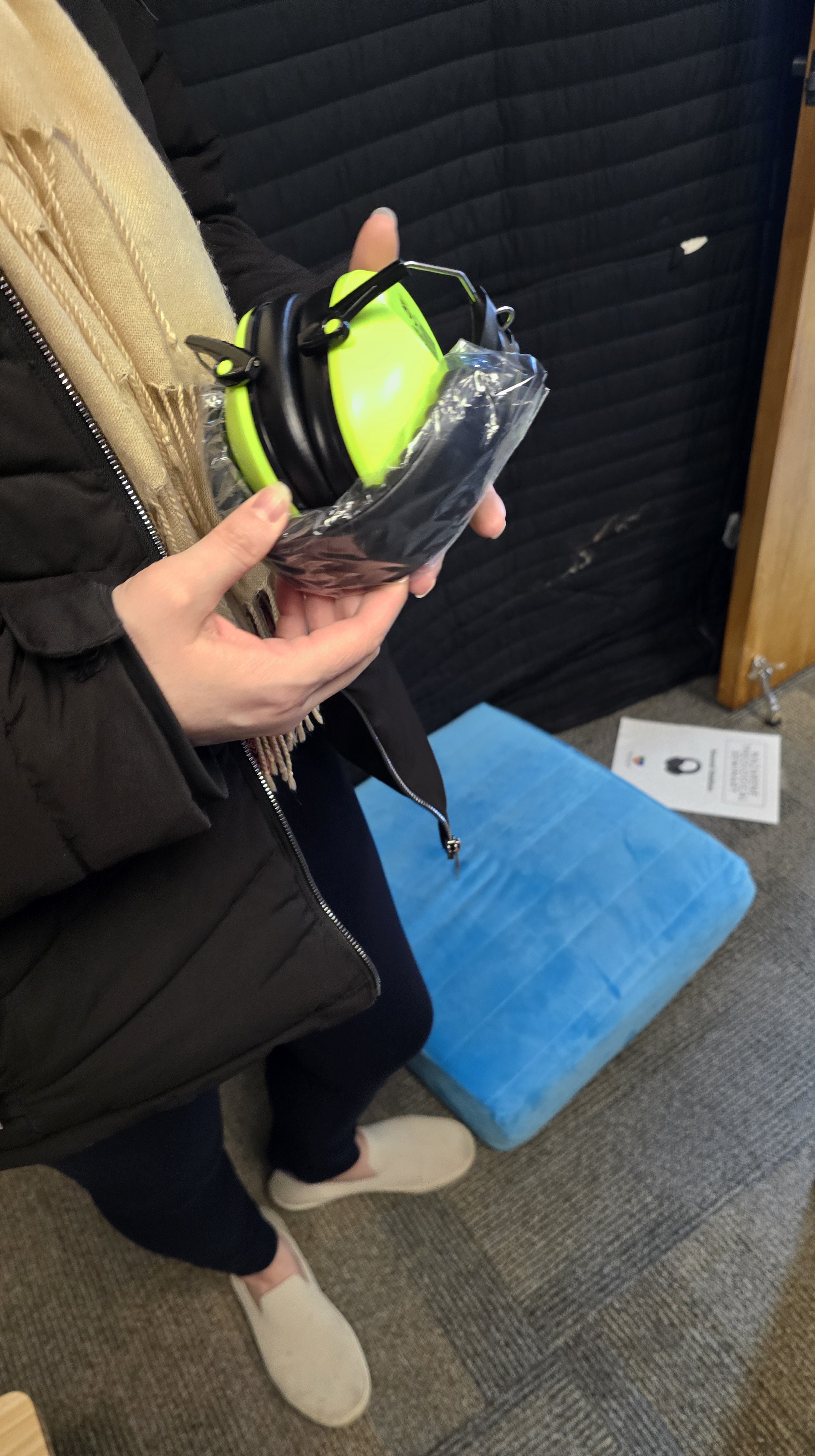
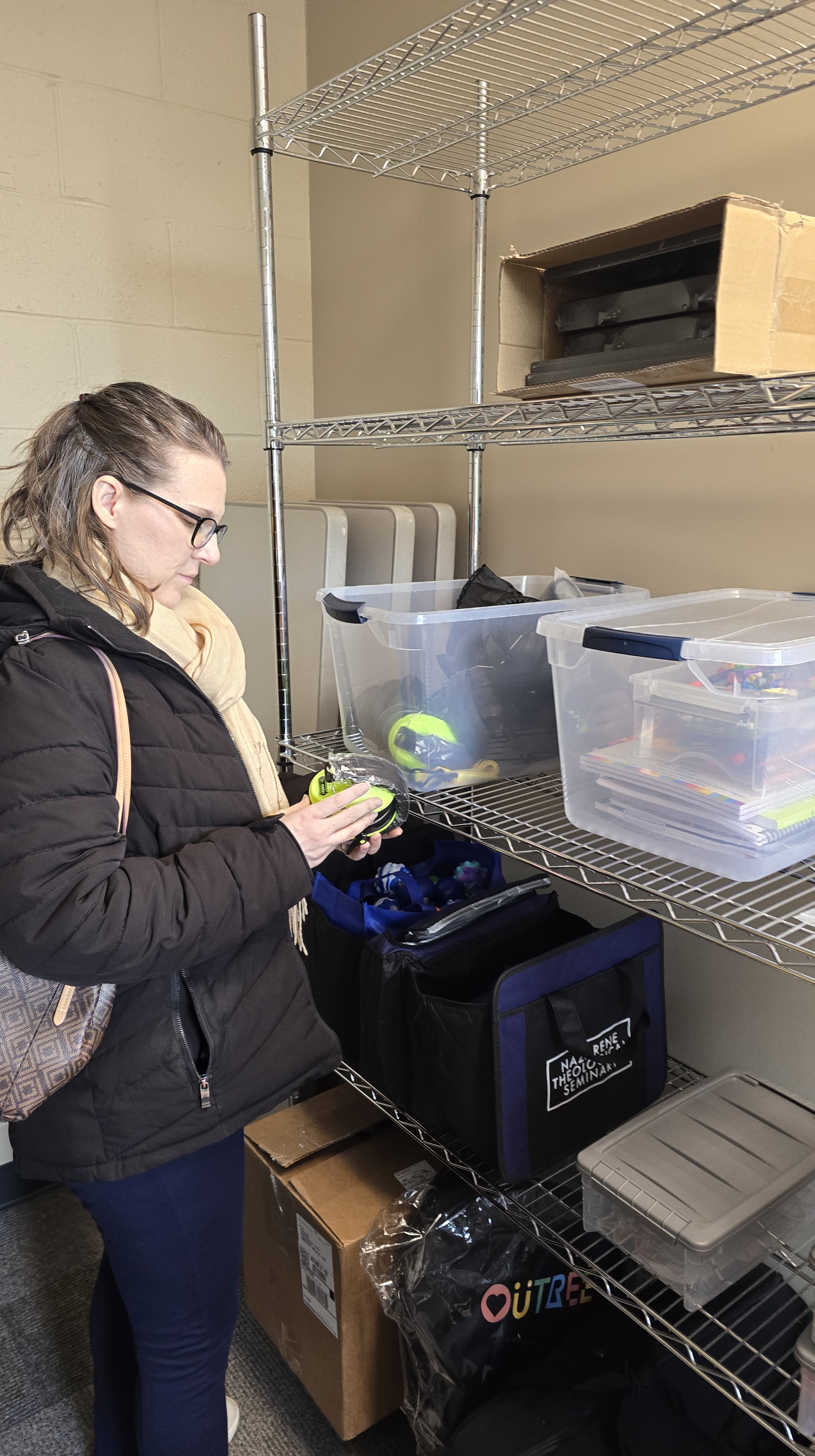
During the visit, leaders compared options such as white-noise and brown-noise machines and tested how sound changed under the room’s sound-dampening canopy. They also tried different noise-reducing headphones, weighing comfort against audio clarity. Leaders said many parents want headphones that lower volume without blocking hearing so much that children miss instructions from adults.
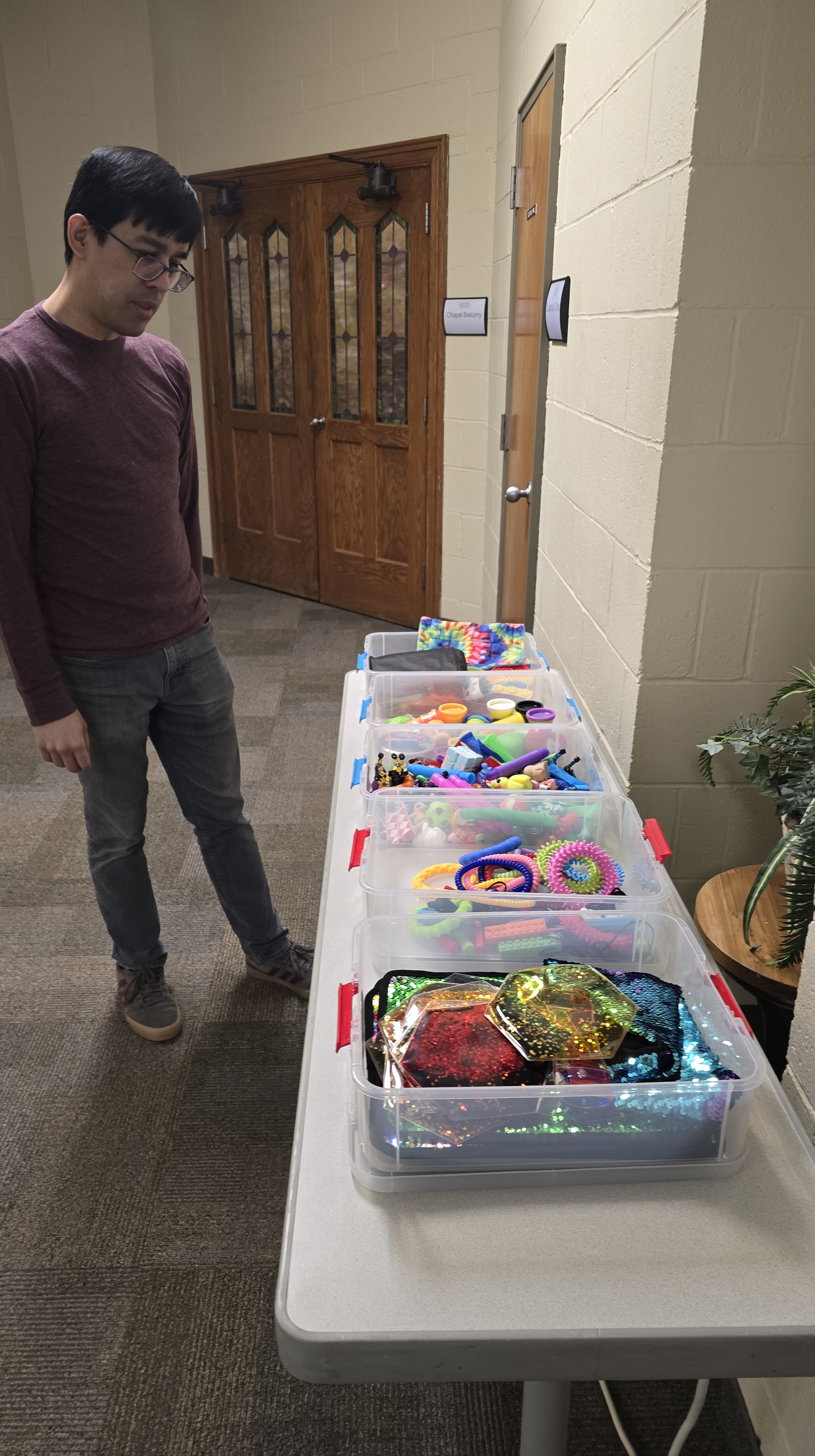
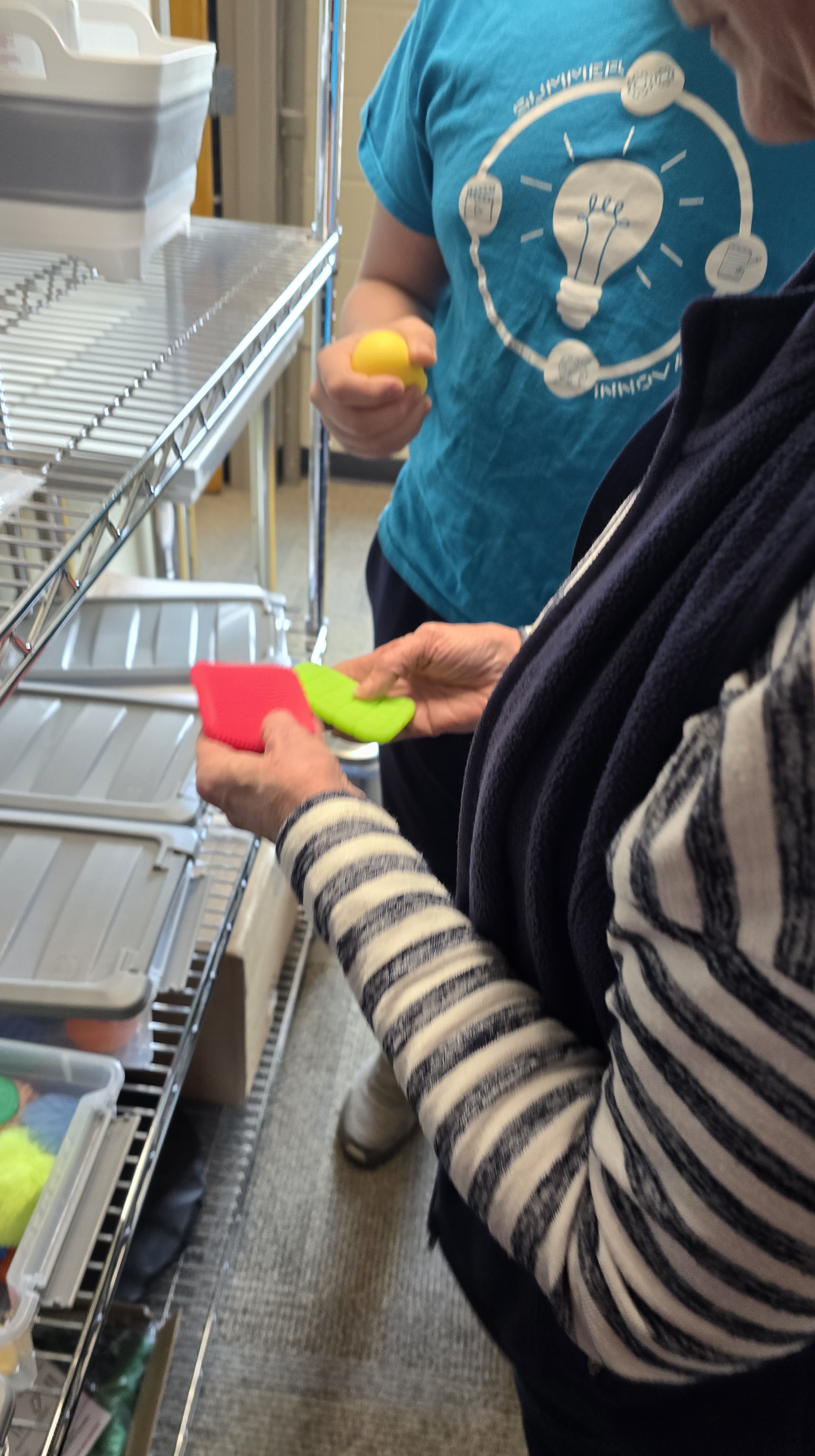
Adults also evaluated sensory tools by weight, size, and texture—hands-on insight that online shopping can’t provide. The lab includes supplies to sanitize shared items between uses, and includes several multifunction devices that combine features such as vibration and sound to reduce the number of tools needed.
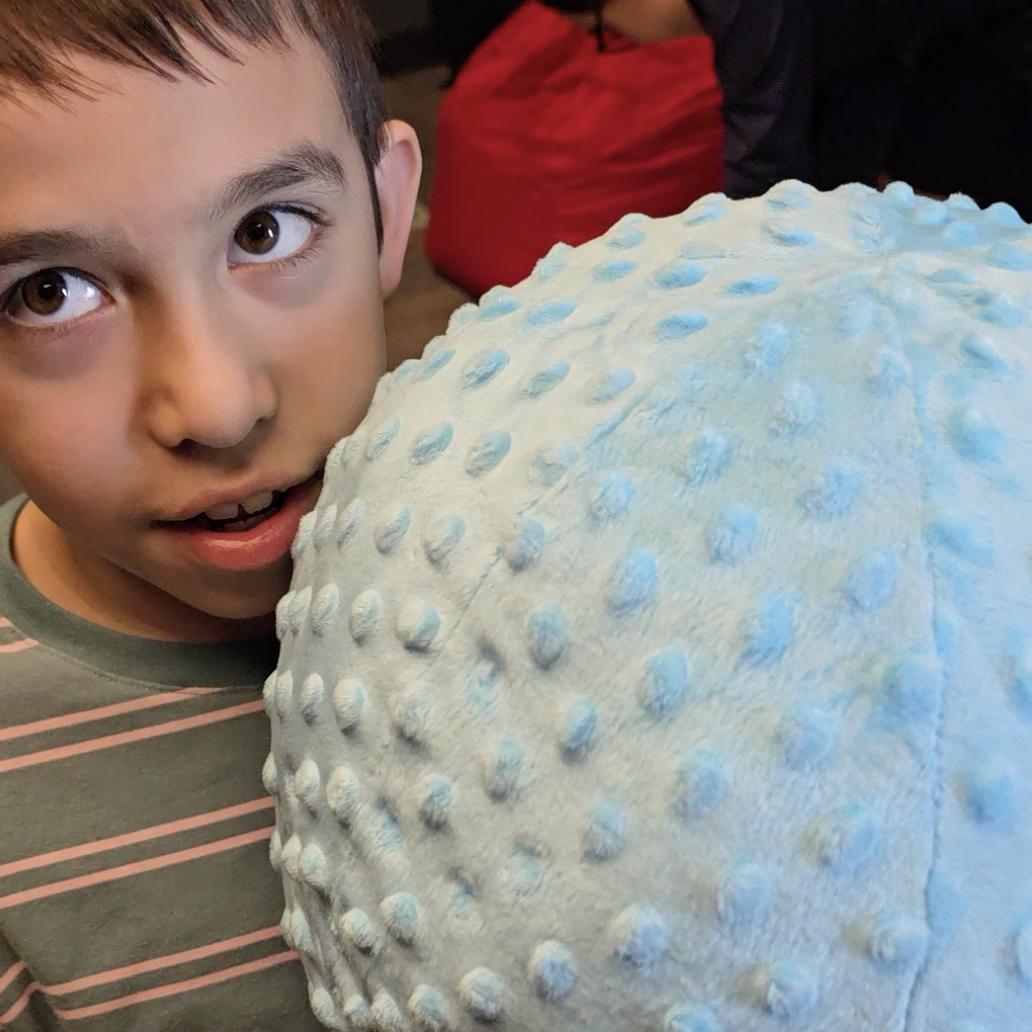
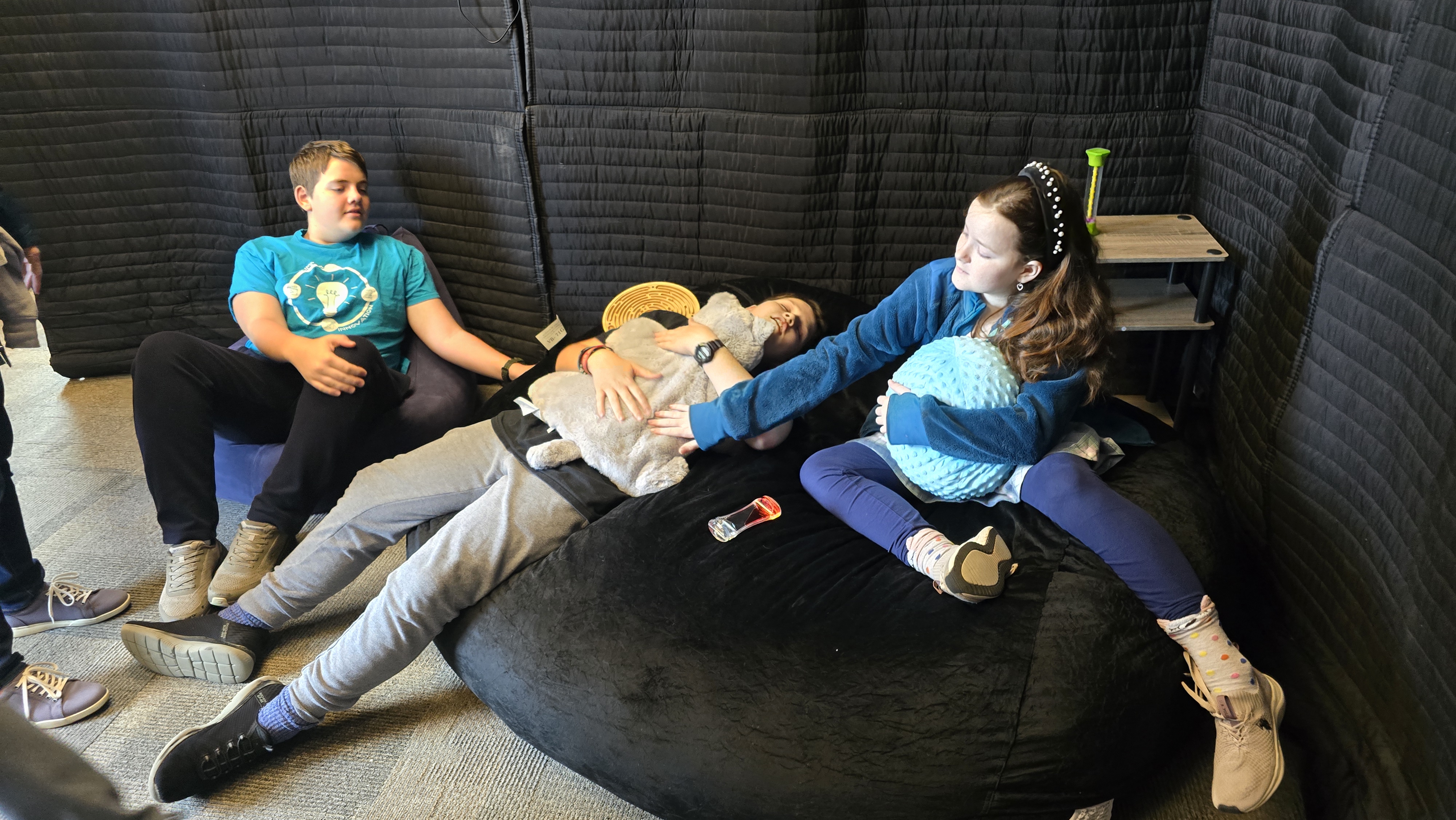
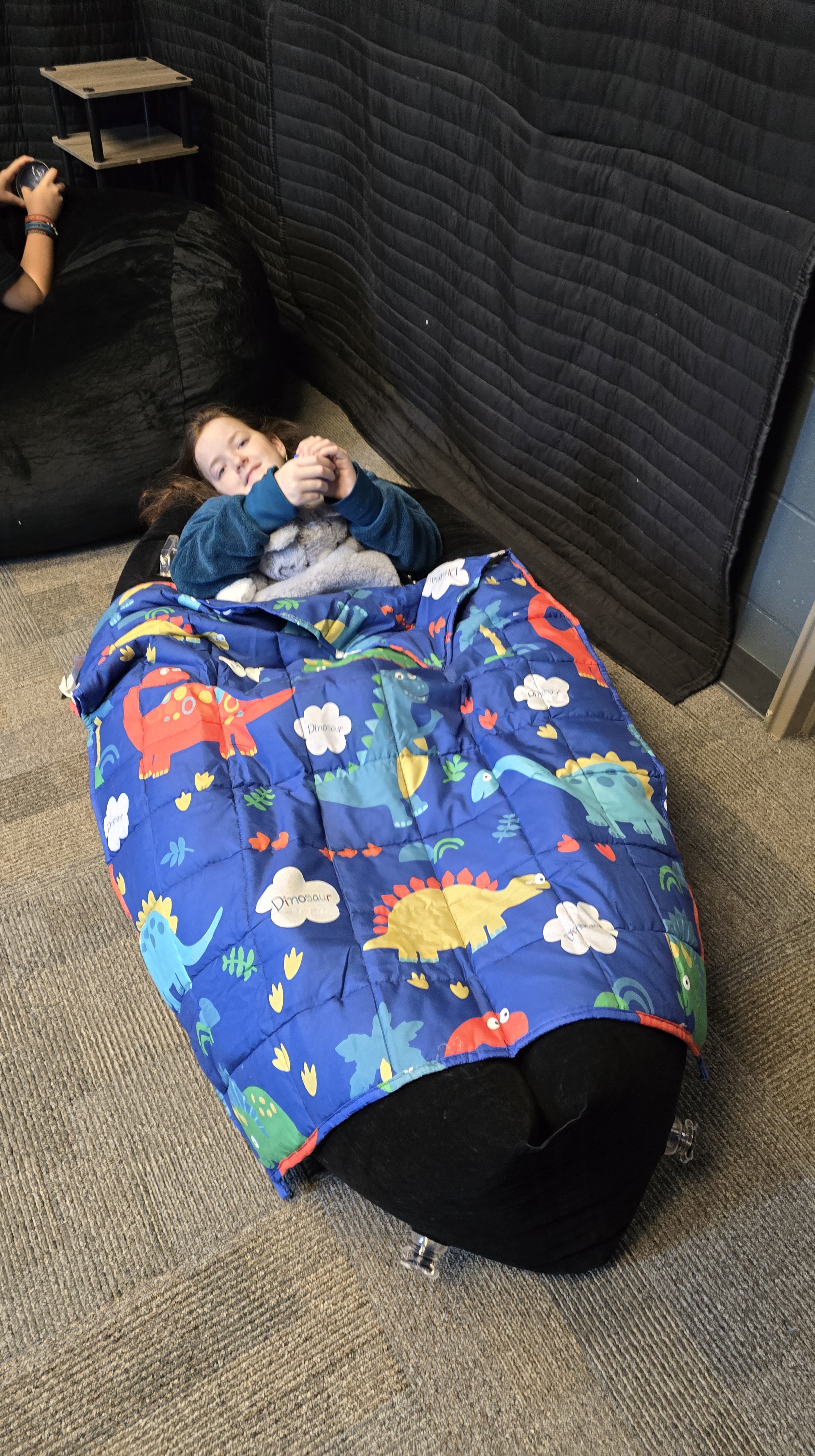
Children gravitated toward furniture designed for calming breaks, including age-appropriate weighted blankets, varied seating options, and visual aids. As they moved from station to station, they traded seats—especially around a PeaPod-style chair that doubles as a compression-style rest space.
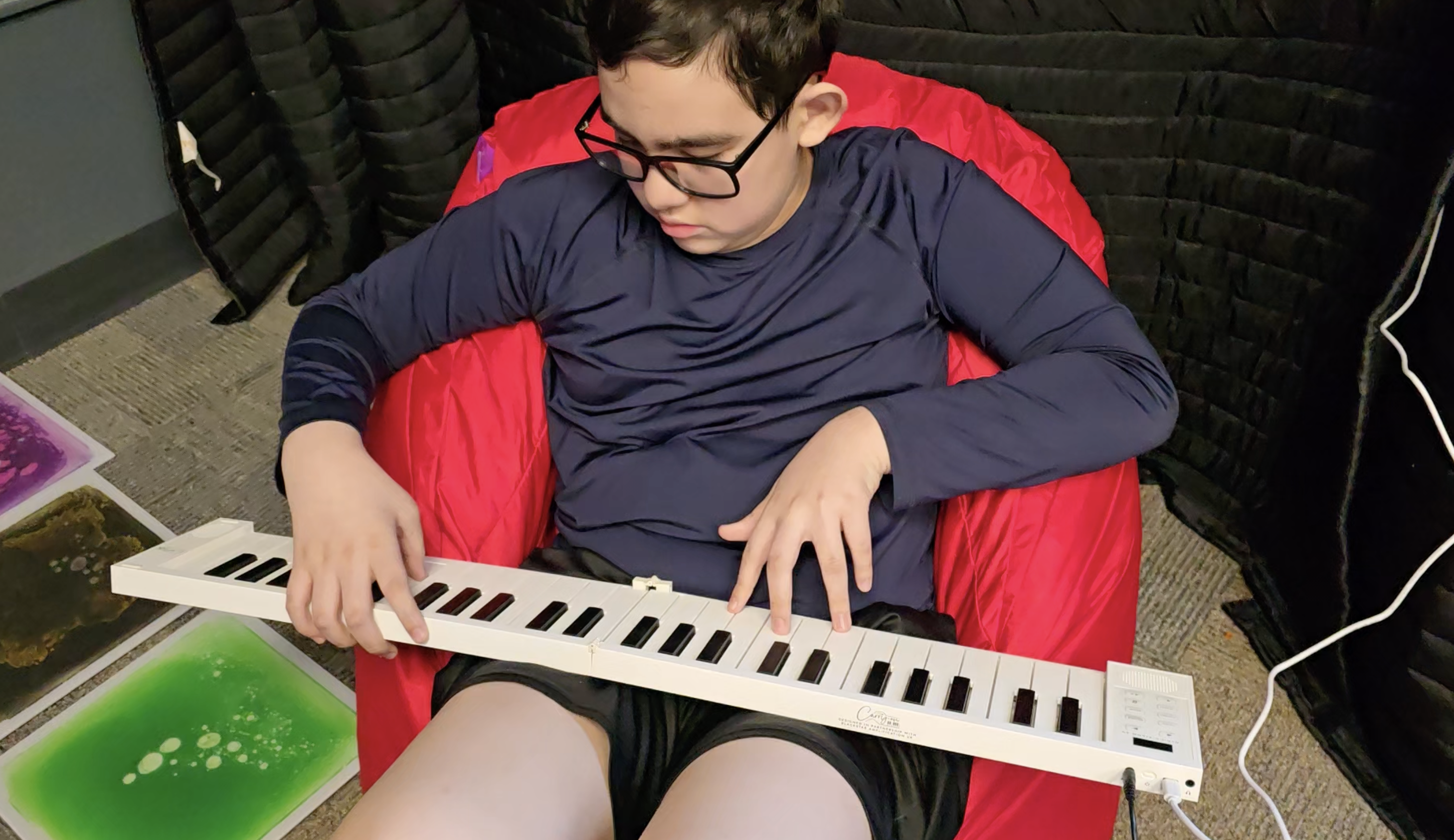
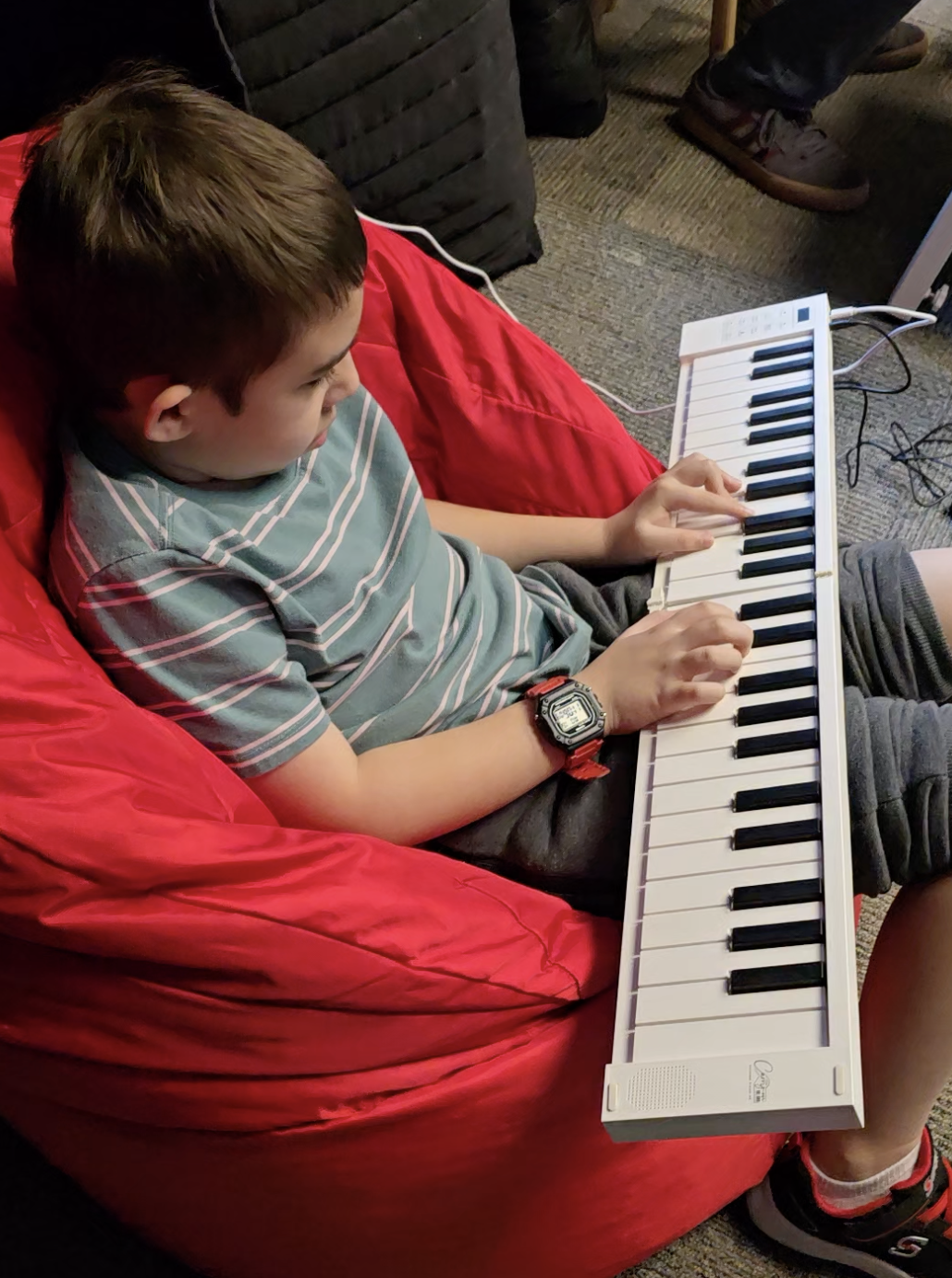
One unexpected highlight came when children discovered a portable keyboard, purchased so it can be played while wearing headphones. Several children took turns playing, revealing musical talent and confidence.
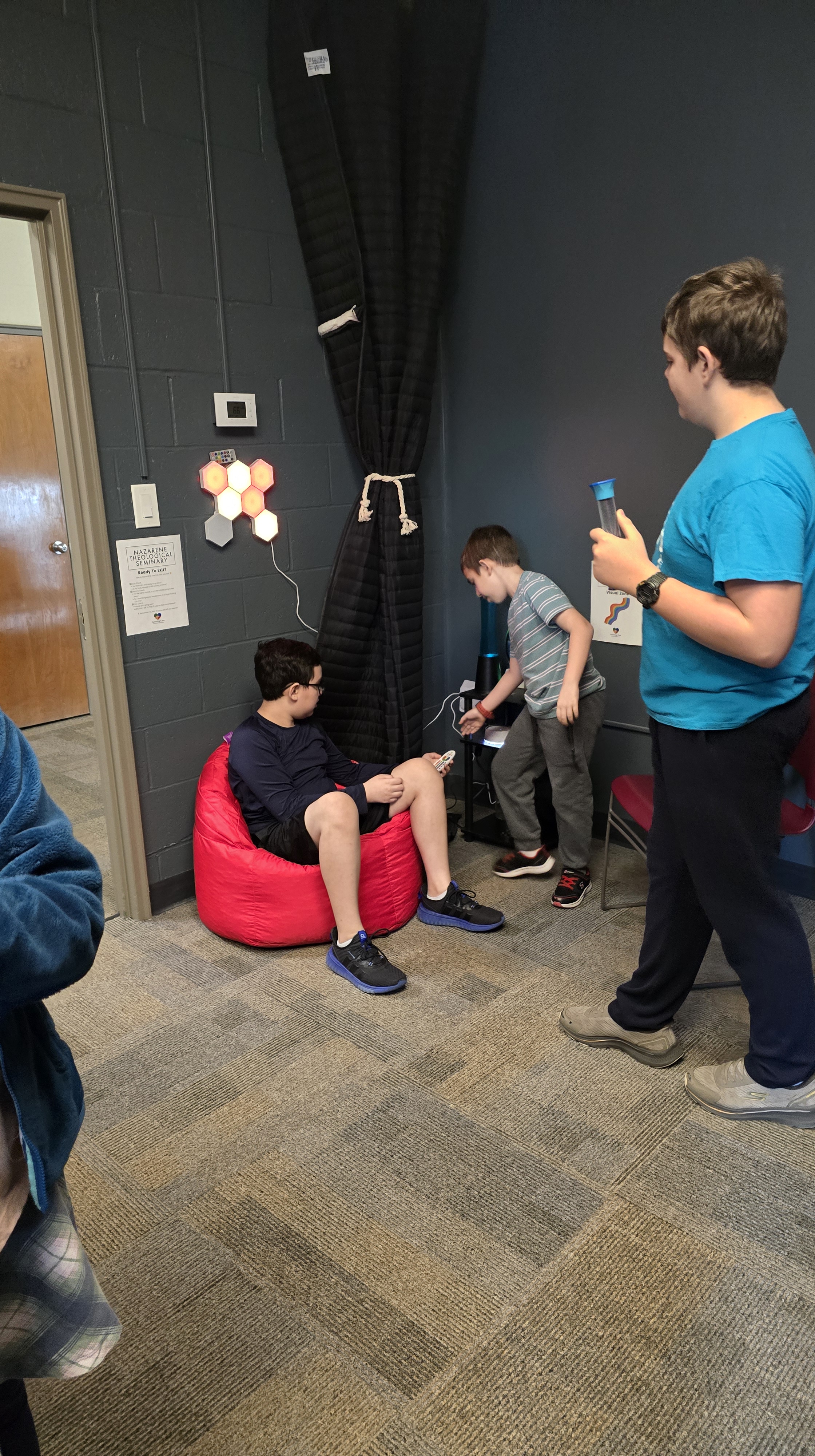
Nurturing Care director Dean Blevins said most tools were intentionally purchased through widely available online retailers so participants can easily find the same items. The organization also keeps a catalog of each resource, including images of how the products appear online.
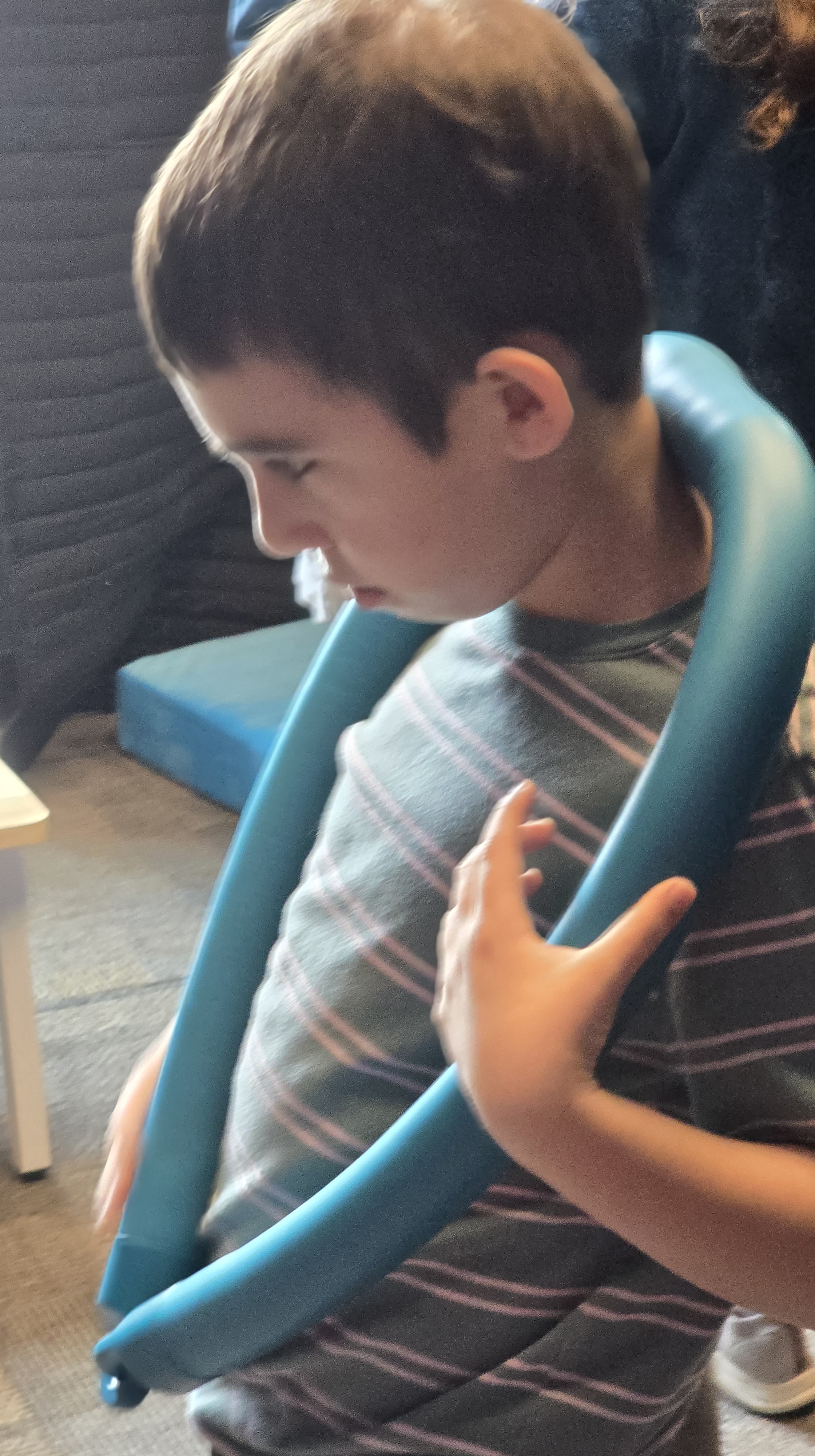
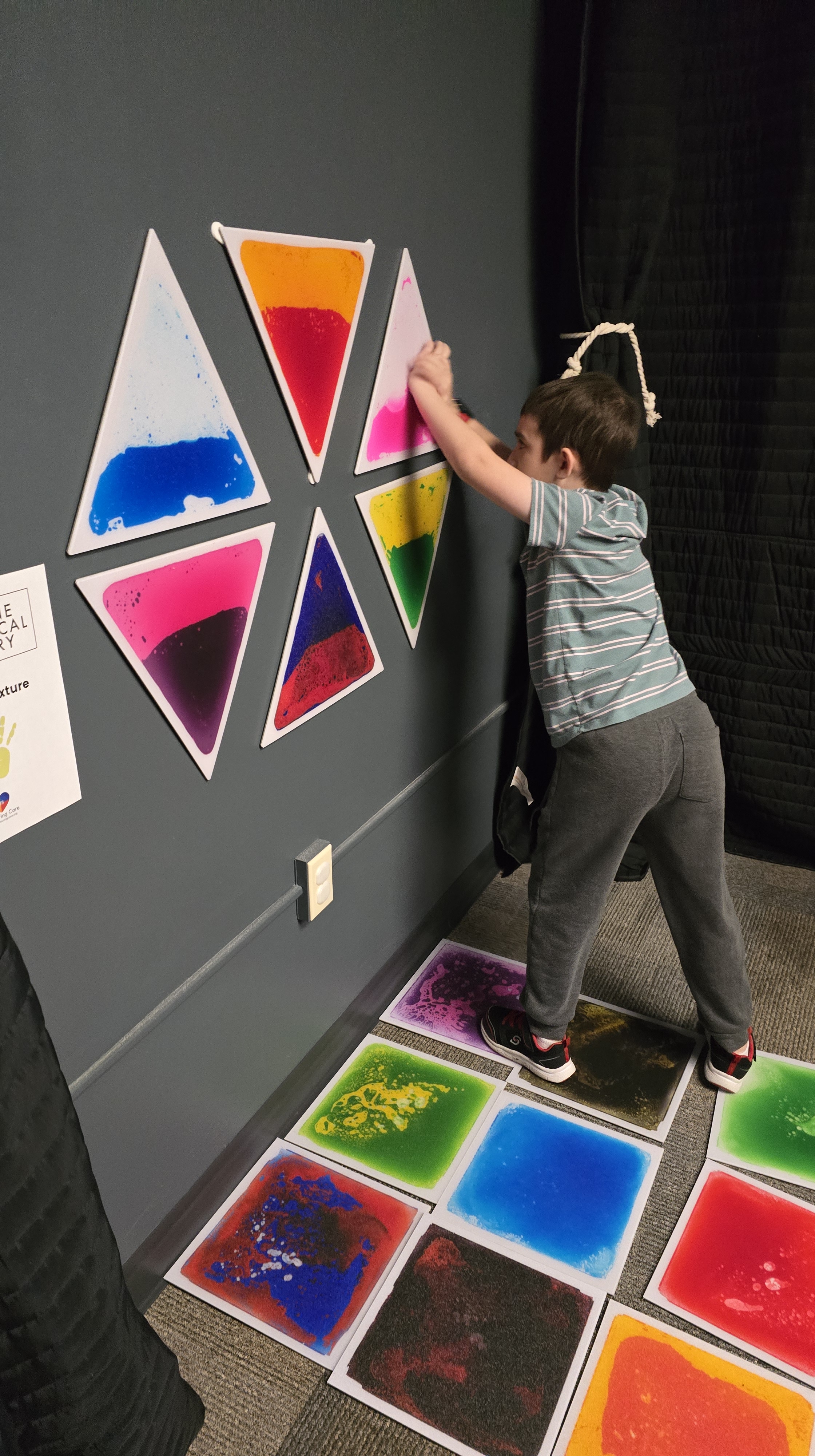
Leaders from the visiting church said the experience helped them identify tools they may adopt locally, and children left with positive experiences in the room. Nurturing Care credits Camp Encourage, a Kansas City ministry, with helping design the space and providing a video-based introduction for future visiting churches. The room functions both as a sensory space and as a practical lab—helping congregations learn how to support neurodivergent children through guided exploration.
Posted in Autism, Children, disability, KC Nurturing Care, Nurturing Care, Technology
Tagged #NurturingCare, Autism, Children, disability, ministry, NTS, Nurturing Care
1 Comment
West Coast Initiative A Mosaic of Learning and Trust
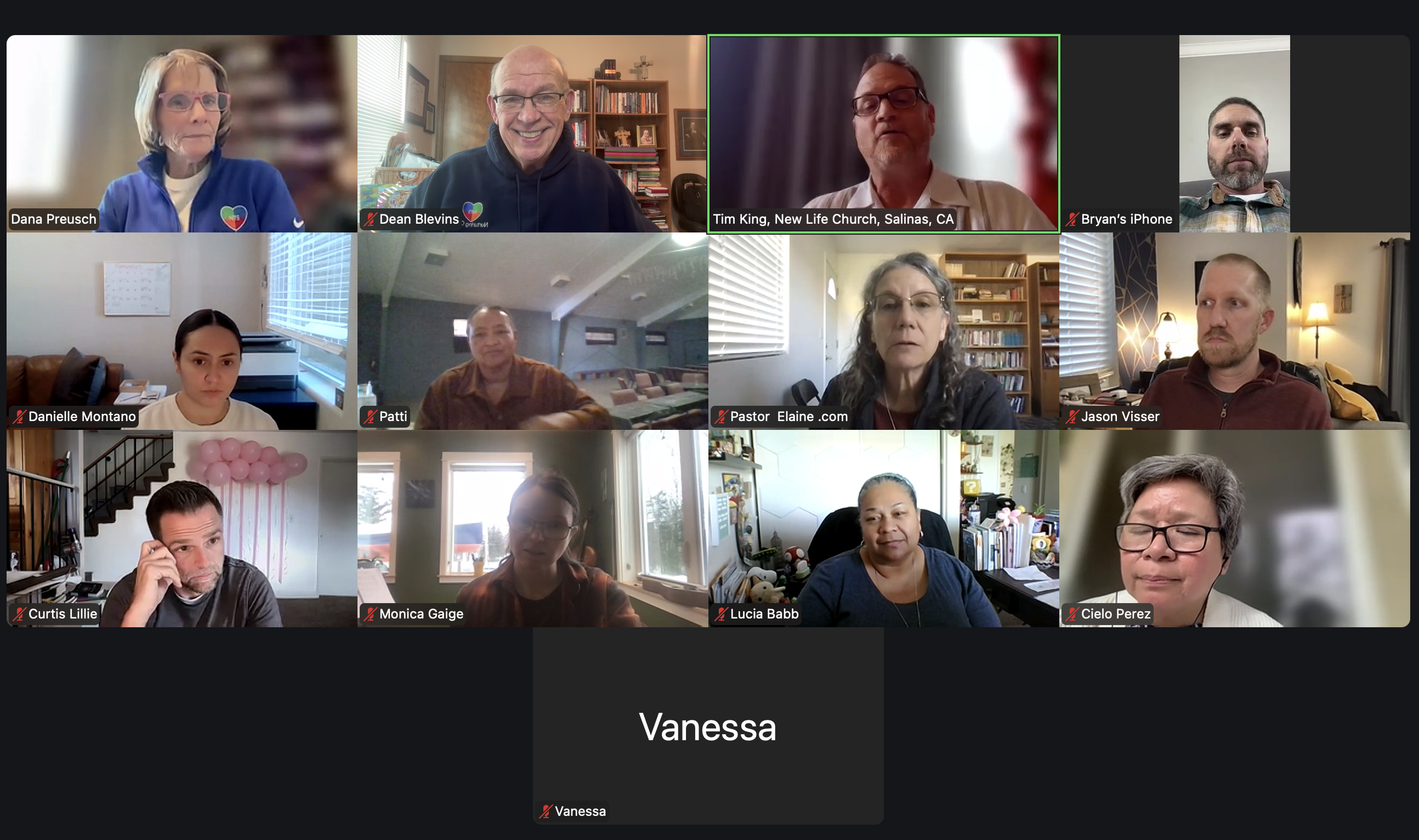
On the West Coast wing of the Nurturing Care initiative, the stories coming in from congregations don’t read like a single program rollout. They read like a movement learning, week by week, what it takes to make worship and prayer accessible for children—and what happens when adults trust kids with real spiritual agency.
Singing As Belonging

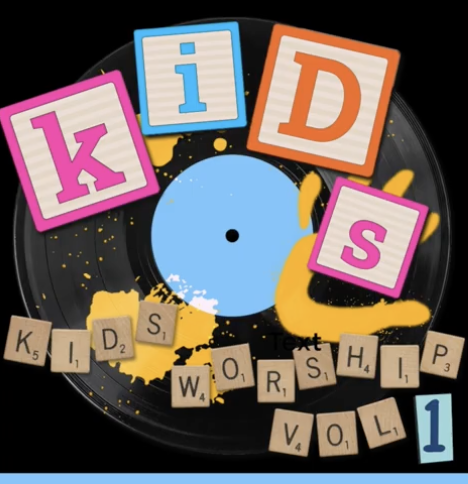
In Bend Church of the Nazarene, that trust is sounding a lot like music. Pastor Jason Visser reported the release of the church’s first children’s worship album—Kids Worship, Vol. 1—with a Spanish version and a bilingual release close behind. For Bend, the project isn’t just a production milestone; it’s an intentional picture of belonging. Visser wrote that worshiping in a bilingual setting regularly places children side-by-side with peers who “look different” and speak different languages, training them to see that diversity as normal rather than threatening.
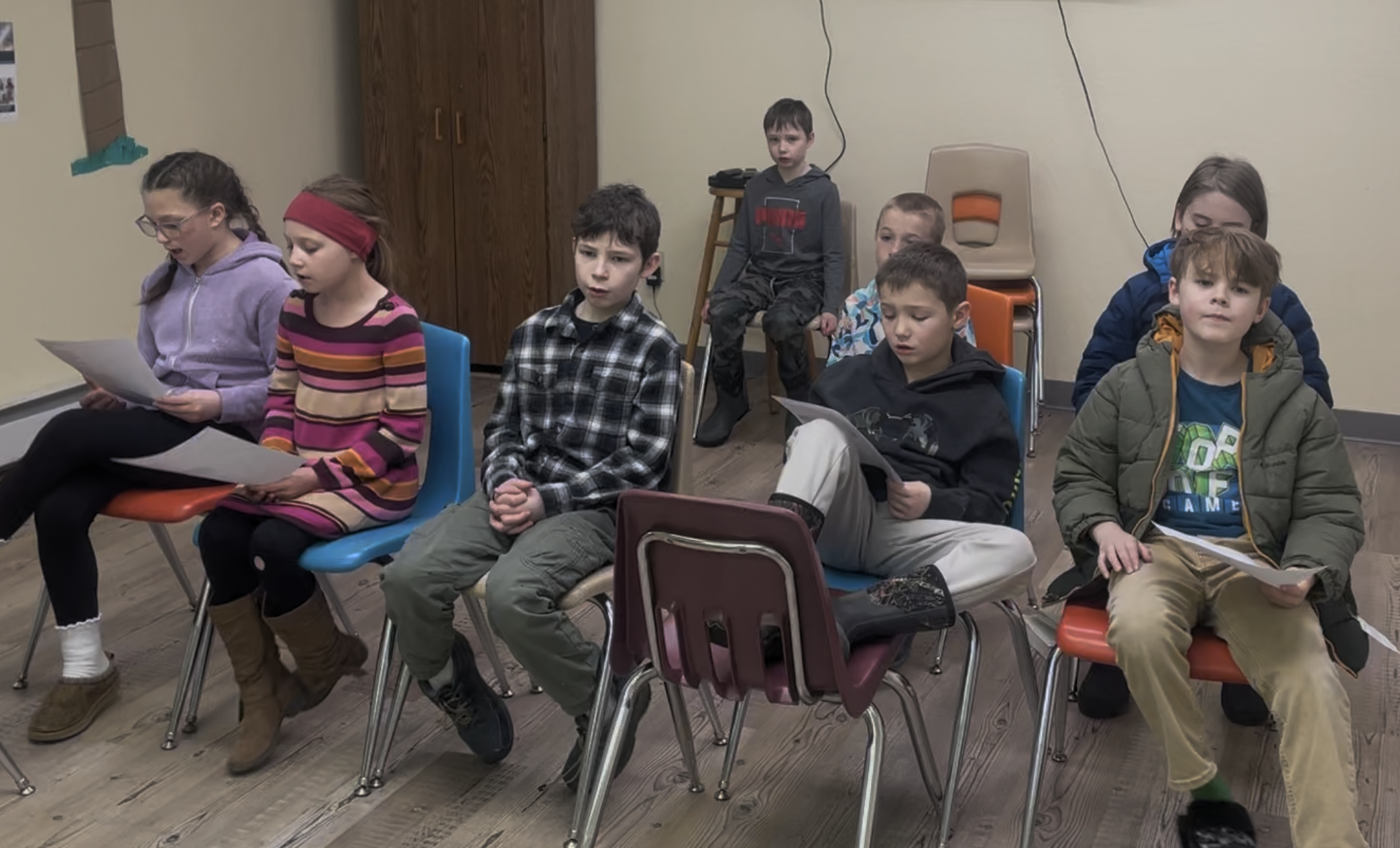
That same conviction—that children can shape a congregation’s worship life rather than merely observe it—surfaced again in Palmer Church of the Nazarene show in this picture rehearsing the song “There is a River of Life.” In a note from Palmer Family Church of the Nazarene, Monica Gaige described a worship moment that carried extra weight: a student facing difficult circumstances at home, previously reluctant to participate up front, decided he wanted to join the church’s worship leadership and play trumpet during It Is Well. The child’s decision came after sustained encouragement and a worship pastor’s affirmation that singing with the kids had become his favorite part of church. Gaige noted that the congregation’s support has been steady—and that children’s joy has a way of catching.
Kids making a Difference
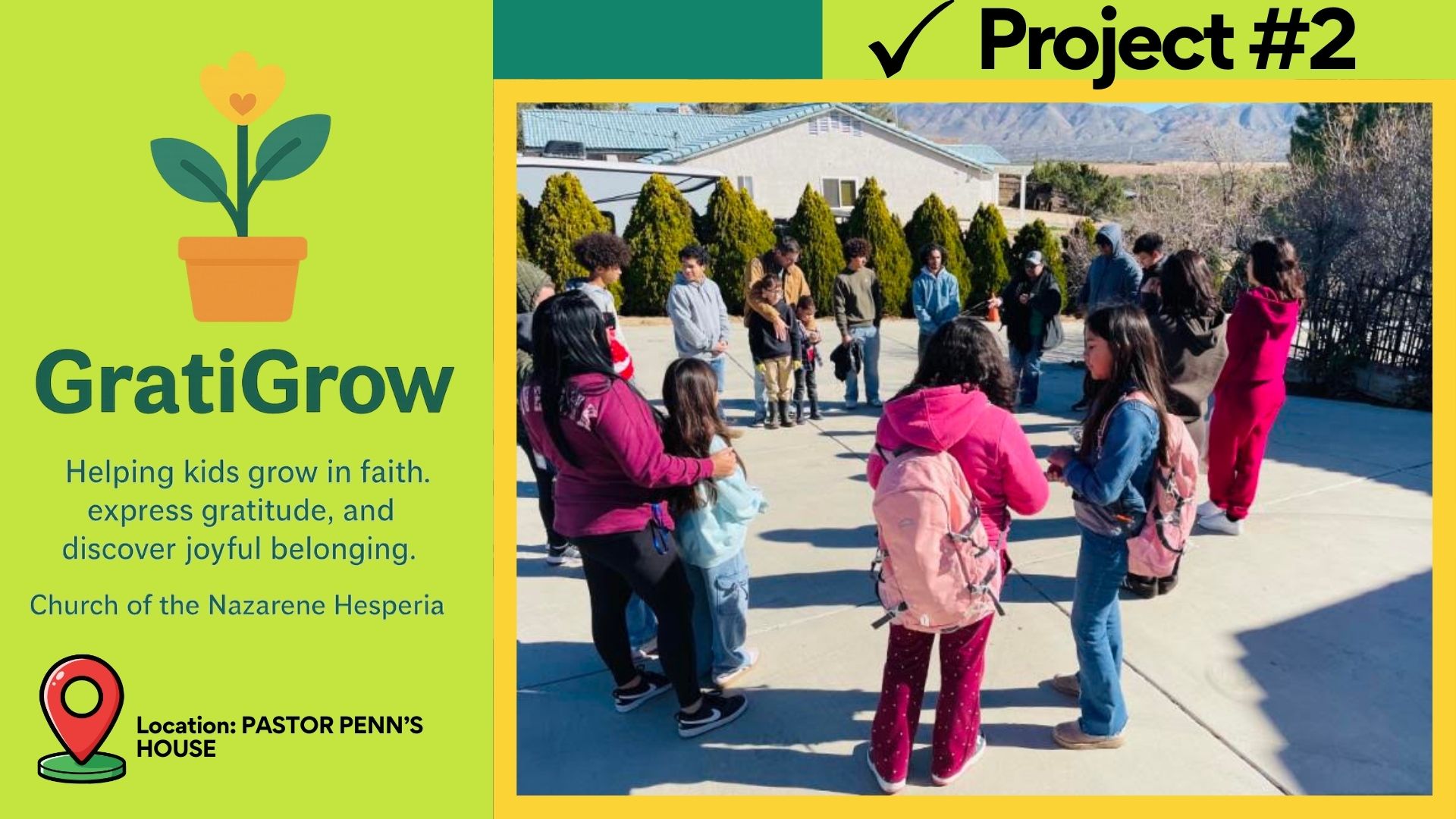
Across the West Coast reports, this theme of kids as contributors shows up in more than music. As noted in a previous story, in Southern California, the GratiGrow project at the Church of the Nazarene in Hesperia leaned heavily into service—building spiritual formation through hands-on outreach. Coordinator Lucia Y. Babb-Rodriguez reported volunteer training that included youth from the community, many of whom had never attended church before. In January, the group’s first outreach brought families together to clean and assist a pastor with physical limitations; the work drew a neighbor’s gratitude and prompted parents to say their kids returned home proud—some having helped for the first time. The experience, the report said, was marked by prayer, order, and what they described as the presence of the Holy Spirit, with momentum growing as more children signed up for the next month.
If Hesperia’s story highlights formation through service, a report titled “Gratitude is the new attitude” underscores formation through emotional regulation and relational repair—the kind of discipleship that happens establishing trust before the first song even begins. At Sandia Valley Church pastor Patti Rivas reported that a child arrived dysregulated and struck at his grandmother/guardian, a scene that previously might have escalated the room’s anxiety. Instead, a leader guided him to a “God’s time” space, explaining that it was his place to pray, write, read, sing—or simply color. The child chose coloring, and the moment de-escalated in a way leaders hoped could become repeatable: giving children a structured, spiritually framed choice before worship so they can settle and connect with God in the way that works best for them.
In Arizona, the SWLA Church of the Nazarene in Chandler offered a quieter update—but one that still reveals how grassroots this initiative can be. Scheduling conflicts kept leaders from meeting monthly or starting regular time with the children, yet the report emphasized that both kids and parents remain eager to launch the prototype. At the insistence of one child, pastor Vanessa Hernandez reports an early start to the effort. In Nurturing Care work, momentum sometimes looks like weekly programming; other times it looks like sustained enthusiasm that outlasts a complicated calendar.
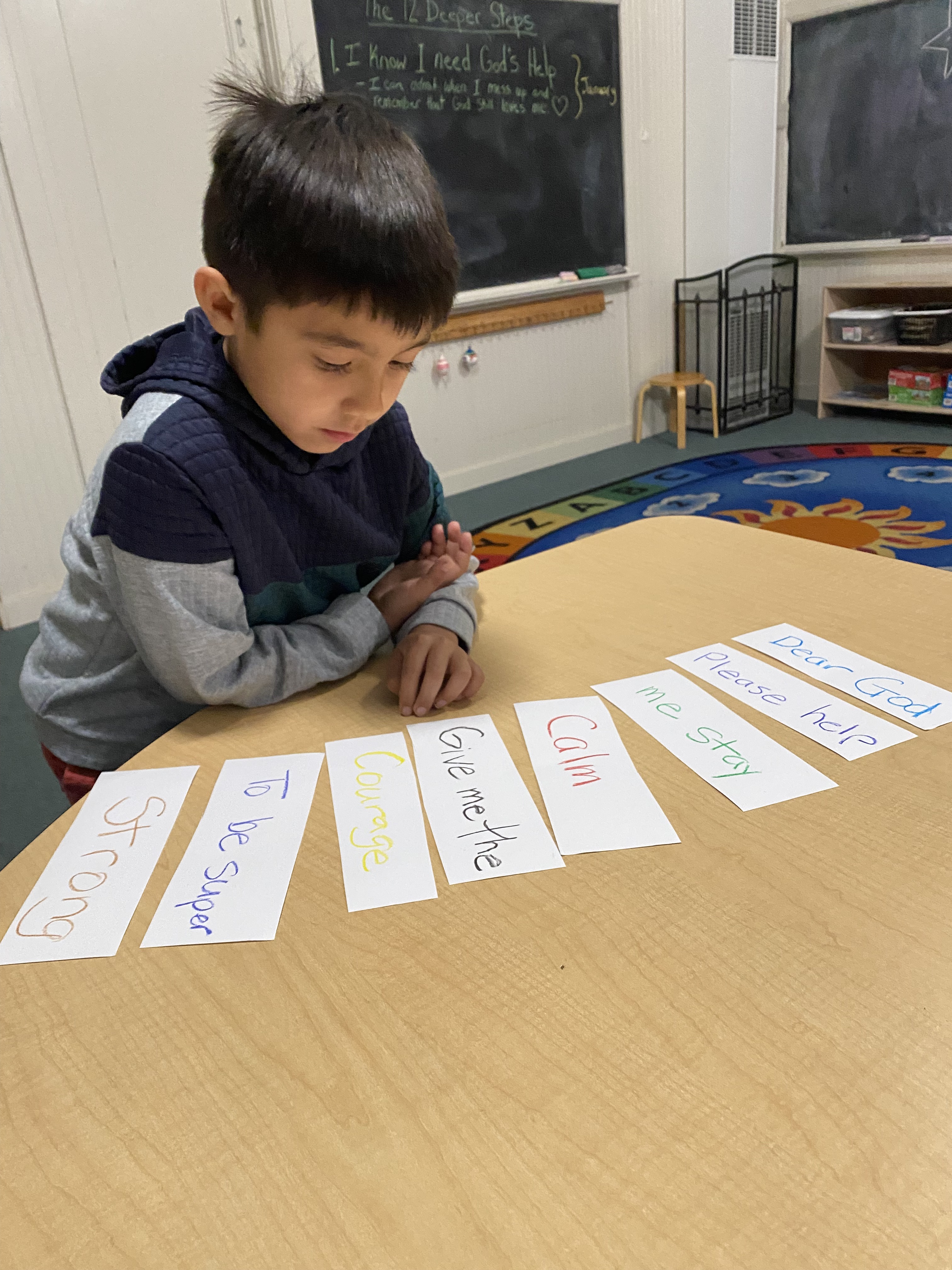
Further north, Sonoma Valley Church of the Nazarene showed another side of the same reality: behind every “successful” children’s moment is a less visible workload of planning, writing, and revising. Rev. Elaine Briefman reported curriculum development so extensive that the initial printout came to 89 pages—an amusing moment that led the team to shift plans and print professionally so volunteers would have durable copies. The church is also developing motions for a new song and exploring quarterly performances that would bring parents and children into worship together more regularly—especially meaningful after a former drop-in daycare program ended.
Worship as a Training Ground for Trust
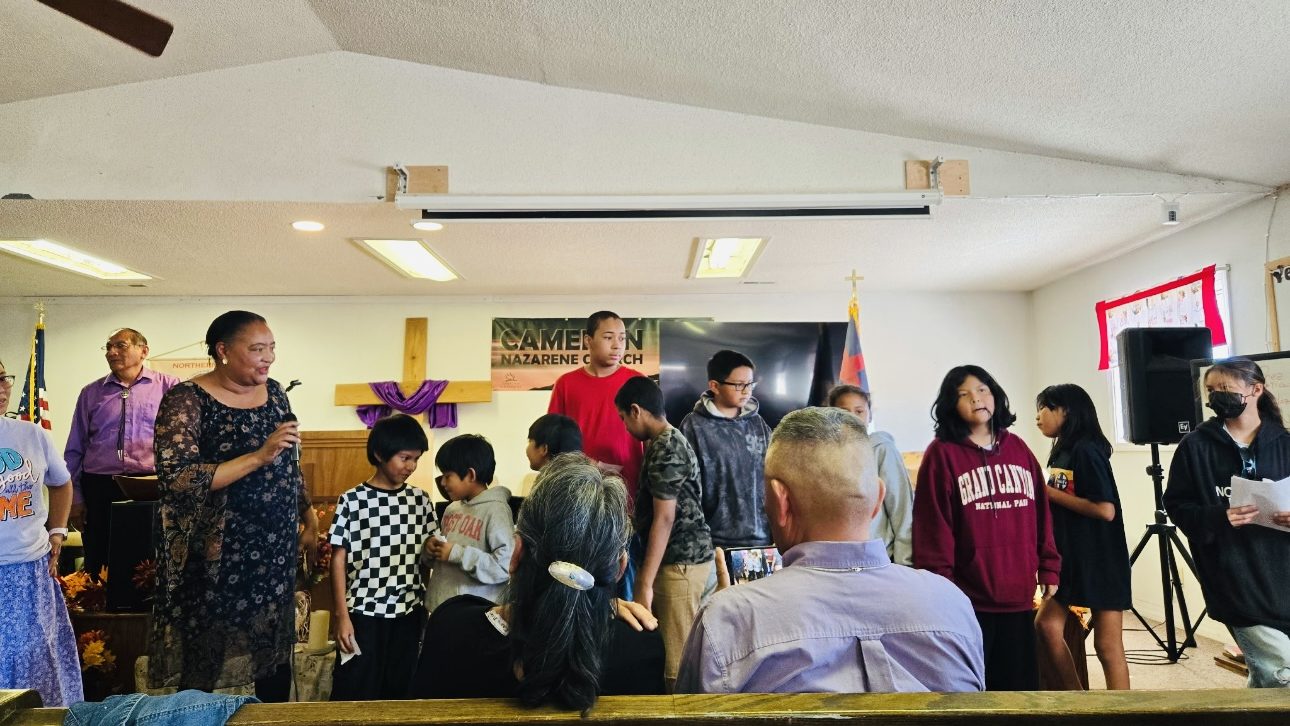
And running beneath many of these updates is a regional emphasis on worship as a training ground for trust. A separate report from the Southwest Native American District—centered at New Life Church of the Nazarene in Sanders, Arizona—described district-wide training where leaders introduced “trust” alongside worship, creating space for children to sing and recite scripture in front of congregations. In one service, children stepped into an unscheduled gap in programming and still flourished; in another, two children volunteered as offering ushers and prayed publicly, drawing amazement from adults across multiple districts.
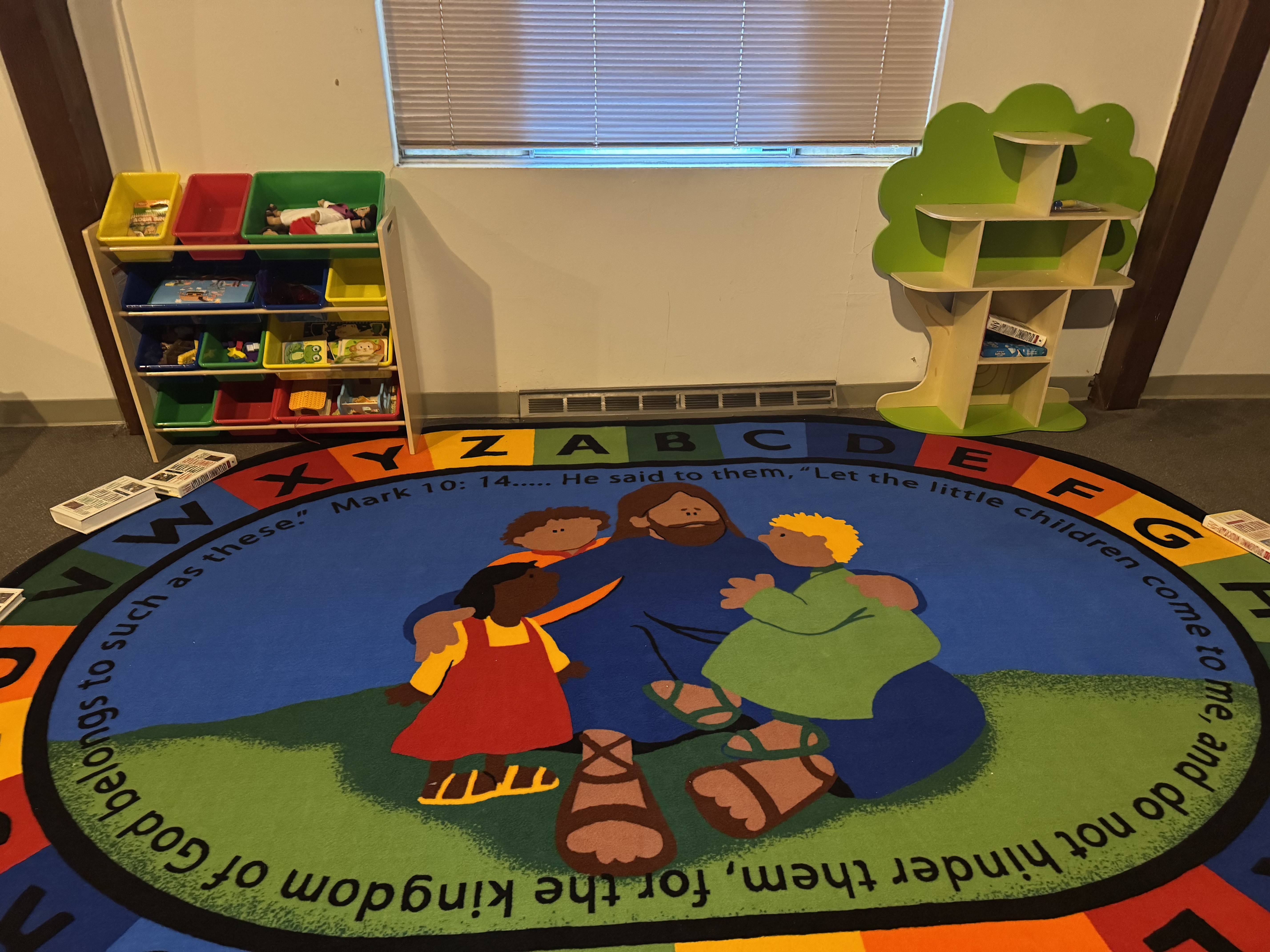
Pittsburg Church of the Nazarene noted they have made progress with intergenerational worship and their “prayground” is set to open next Sunday. The church hosted a “set up party” after service last week where adults, teens, and even little ones jumped in to help. One 4 year old exclaimed in the middle of all the excitement and seeing the new items, “this is the best day of my life!!” Leadership celebrated that even in this preparation the participants demonstrated their commitment to worship as an inter-generational church that values everyone and their contributions.
Taken together, the West Coast Nurturing Care reports suggest three broad developments happening at once:
- Worship is becoming more multilingual, more child-led, and more formative, from Bend’s bilingual albums to Palmer’s student musicians.
- Spiritual formation is expanding beyond the classroom, turning “worship time” into everything from outreach work in Hesperia to pre-service regulation practices that prevent shame and escalation.
- The infrastructure is catching up to the vision—whether that’s Sonoma’s 89-page curriculum or Chandler’s patient work of aligning schedules so the prototype can begin.
In other words, the initiative’s West Coast story is not a single headline about a new program. It’s a mosaic: children learning they can belong in worship in more than one language, volunteers learning to respond with calm structure instead of escalation, and churches learning that when kids are trusted—with songs, scripture, service, and space—congregations often follow their lead.
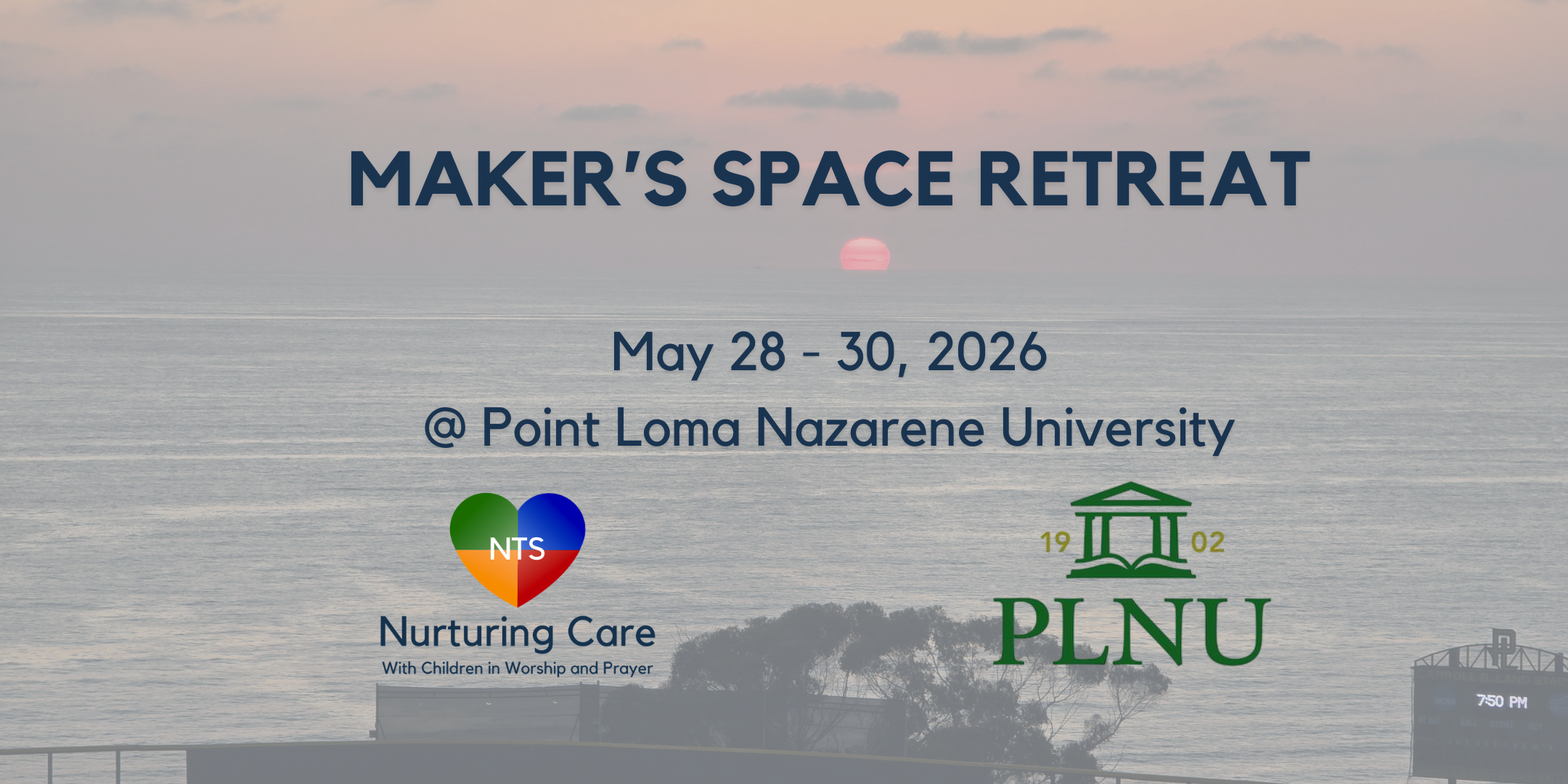
Just a note that Registration for May Maker’s Space in San Diego (Point Loma Campus) is officially open:
https://www.eventbrite.com/e/nurturing-care-plnu-makers-space-retreat-tickets-1982828733117?aff=erelexpmlt. Churches may apply through the registration process that ends May 15, 2026. Churches are then invited to attend the May 28-30 event on campus where Nurturing Care covers expenses during the event. West coast churches can email info@nurturingcare.org for more informations but please review the FAQs on the Eventbrite page as well.
Posted in Children, Discipleship, Intergenerational, Nurturing Care, Virtue, West Coast
Tagged #NurturingCare, Children, ministry, Moral Integration, NTS, Nurturing Care
Leave a comment
Nurturing Care Autism Updates and New Event April 13
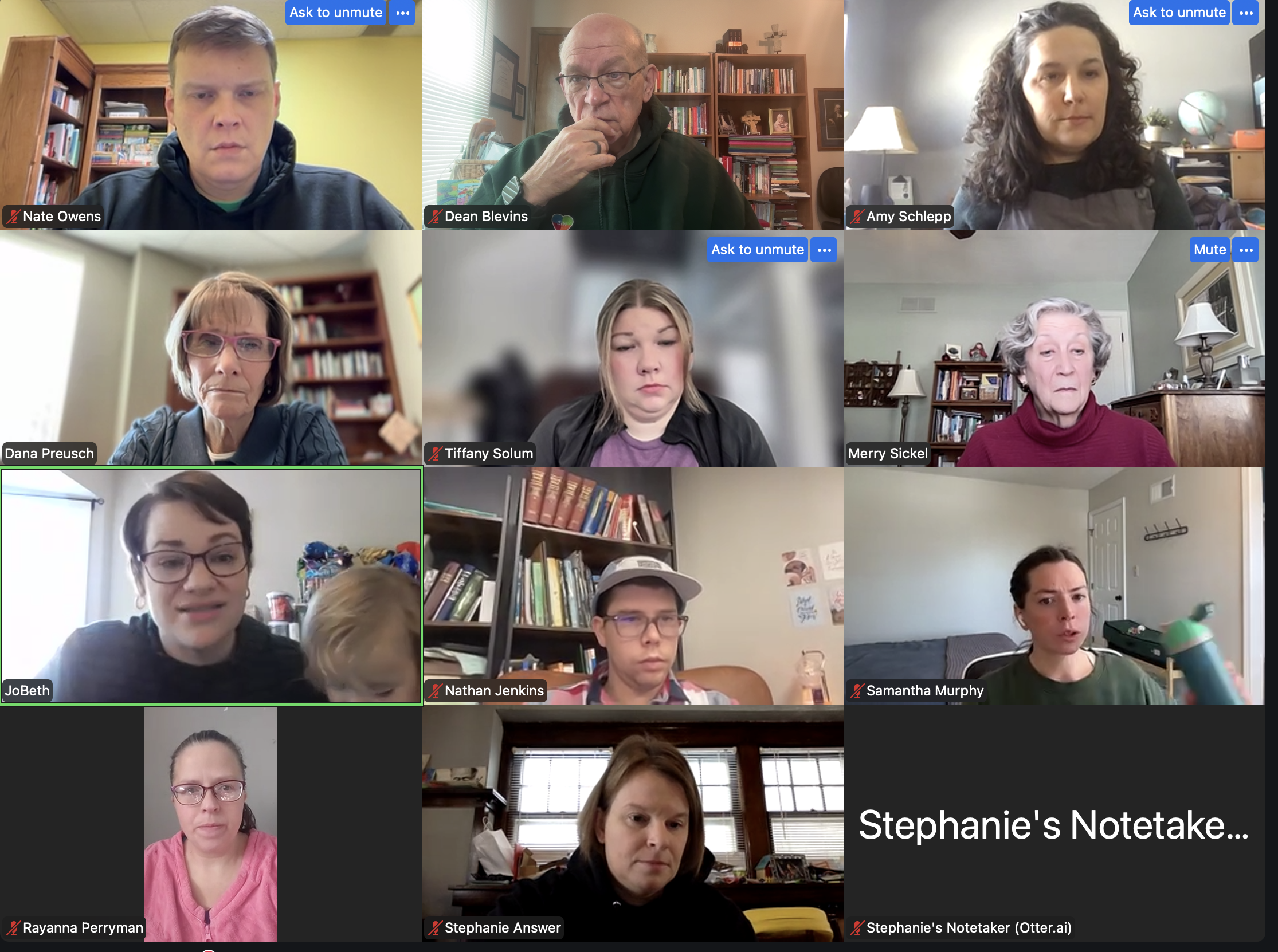
A growing network of midwest congregations are redesigning children’s ministry and worship spaces to better welcome children with autism, ADHD and other sensory needs. A recent meeting, coupled with several written updates, revealed churches pairing practical tools like flexible seating and sensory rooms with volunteer training and shared learning across churches. In addition Nurturing Care announced its next Day of Learning with Melody Escobar on April 13 (see below)
At Second Presbyterian Church in Kansas City, leaders say the most visible change isn’t a single tool—it’s how the congregation is learning to make room for children as full participants. In worship, older adults are growing more comfortable with babies crawling and kids moving in the sanctuary, while teens join preschoolers in a “pray-ground” space using a visual children’s bulletin and shared sensory bins. The report notes that even without a specific autism-focused story in this month’s update, the goal is to normalize welcome so families who arrive later “can belong exactly as they are.”
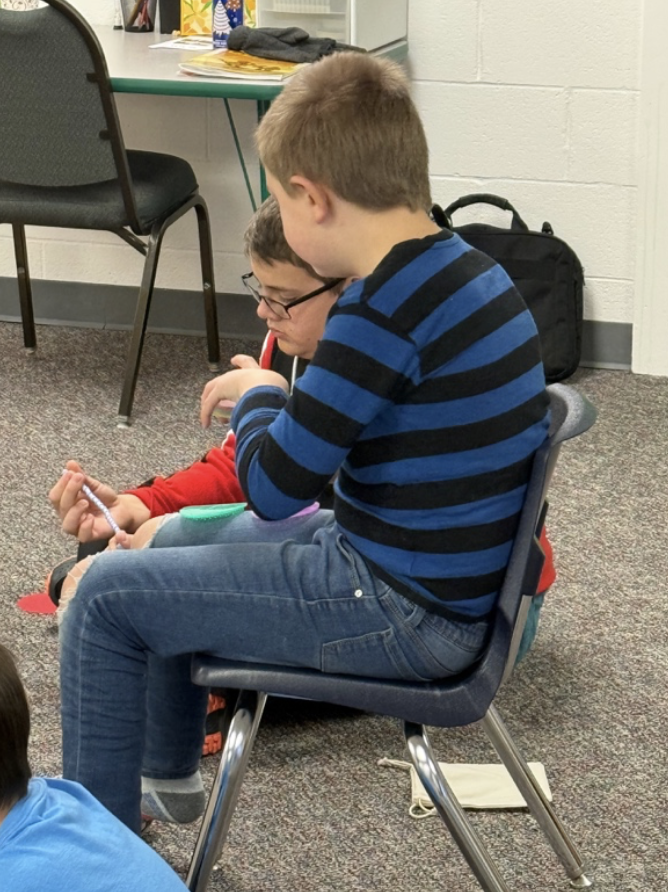
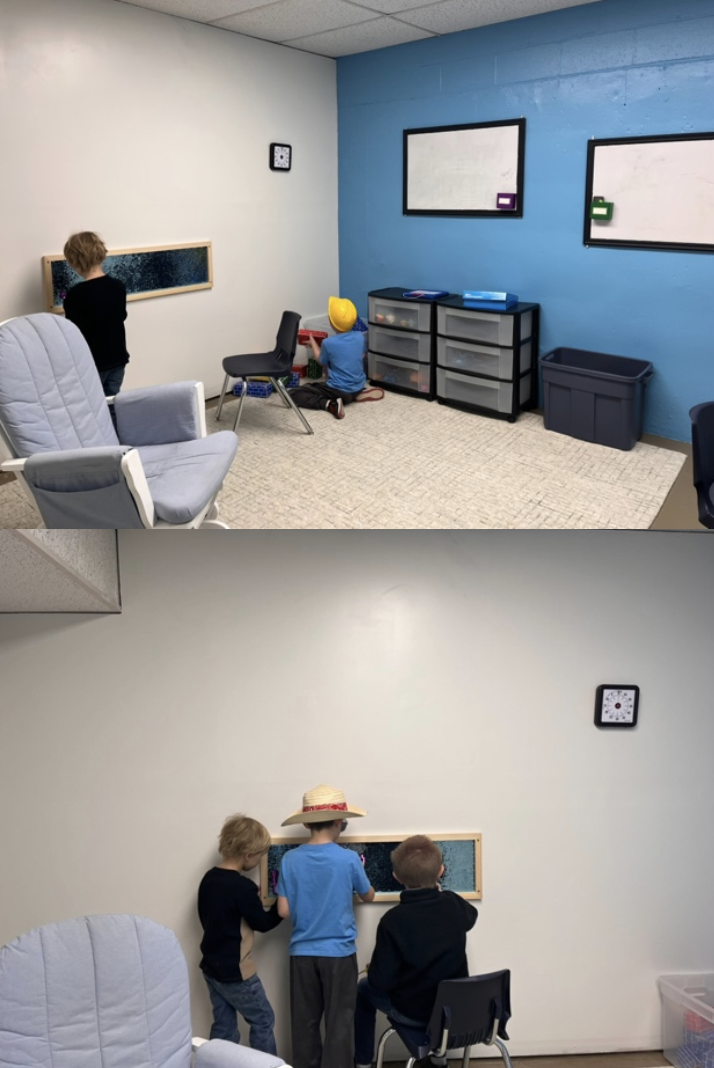
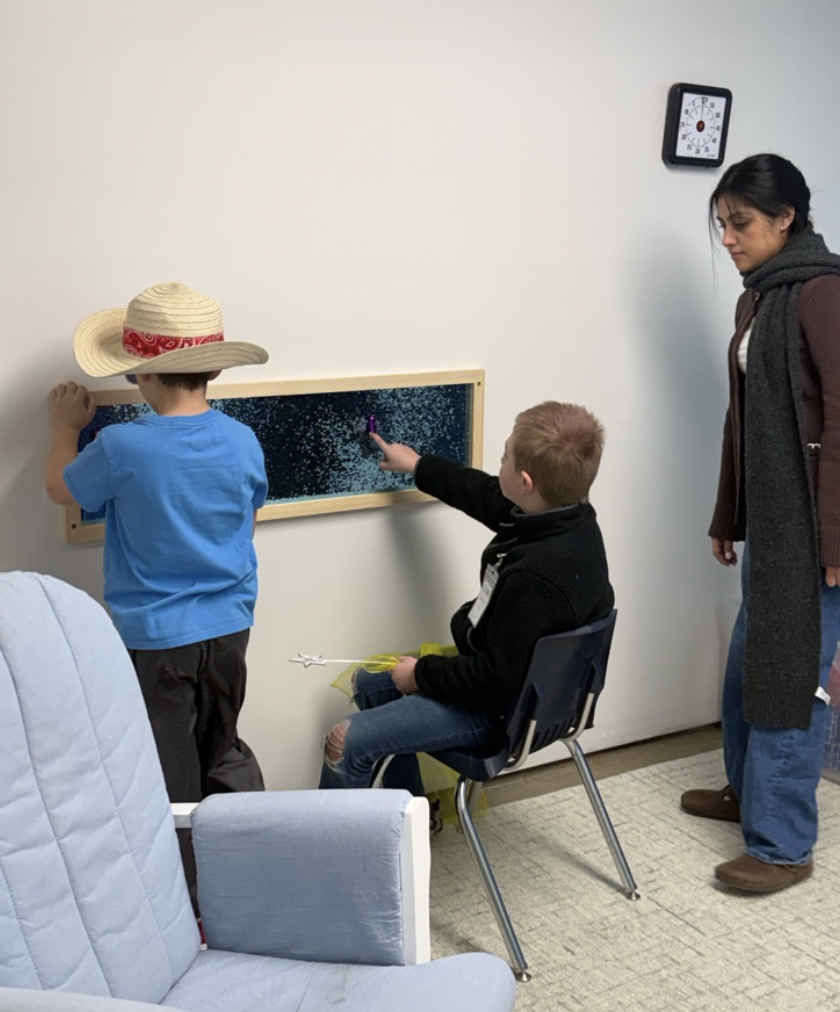
Other congregations are seeing how small accommodations can reshape a child’s experience of worship. At New Hope Church of the Nazarene, leaders described supporting an autistic child with a rubber seat topper, simple directions, and a consistent buddy—changes they said helped the child remain calm and participate more fully, including staying through songs and clapping at the end rather than leaving mid-service. The congregation has also built a sensory-friendly “Blue Room,” allowing children to explore wall-based sensory features and a buddy-system approach in action.
At Raymore New Vision Church of the Nazarene, a balance board became a turning point—not only for a student who previously struggled to answer discussion questions, but for an adult volunteer who had been hesitant about the prototype. After seeing the student engage more effectively while using the board, the volunteer told leaders they were “more on board,” the report says. Leaders also noted that as they identify which fidgets are too loud or used in unintended ways, congregants are responding positively to the adaptive process—and some adults have even expressed curiosity about trying the tools themselves.
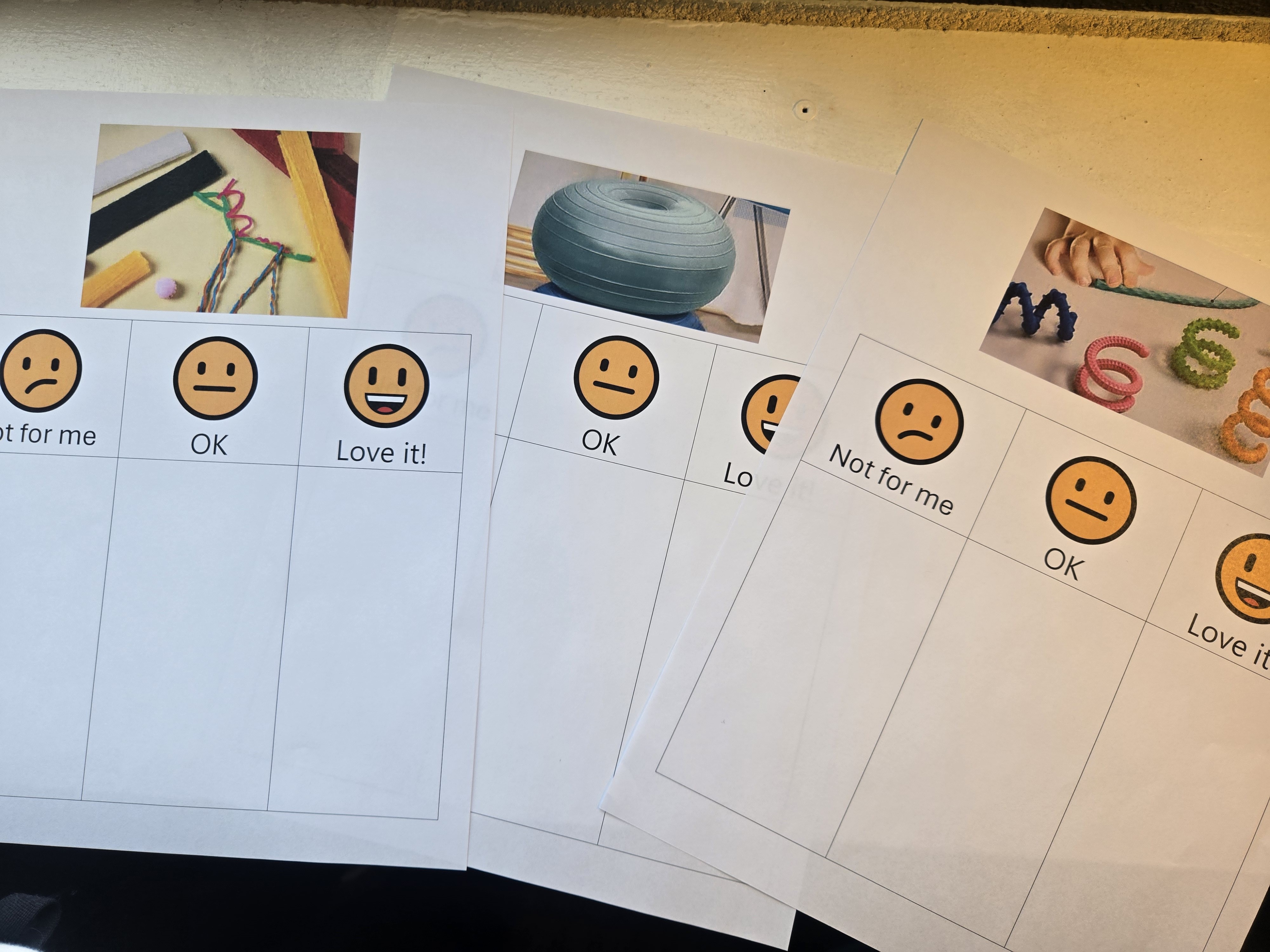
Several churches emphasized that introducing sensory supports also requires teaching boundaries and expectations—especially when kids love the tools for reasons beyond their intended purpose. At Christ Community Church of the Nazarene, leaders launched an “Engaging Movement” initiative by purchasing sensory items, flexible seating, and fidgets, then created a visual, emoji-based survey so pre-readers could still give feedback during children’s worship prayer stations. Early trials were promising, but the report flagged a familiar challenge: children gravitating toward donut chairs as if they were riding toys—prompting leaders to prioritize training so the supports lead to deeper connection rather than simple distraction.
At Westside Church of the Nazarene in Olathe, leaders said they have “dramatically adjusted” the worship space by limiting overstimulating activities—such as ball games—and replacing them with quieter, more interactive options, along with expanded seating choices that give children more agency while still maintaining expectations for participation. Volunteers have noticed the difference, including one Sunday school teacher who reported kids arrived more ready to engage after children’s worship in the updated environment.
Across the cohort, leaders are also turning toward more formal training. An 8th Street grant report described a shift “from observation to conversation,” as kids-ministry volunteers asked for skills-based support to better serve neurodivergent children and those carrying trauma. The team is now planning a congregational training with a neurodiversity professional, aiming for March, and discussing opening it to the wider church to strengthen a shared culture of care.
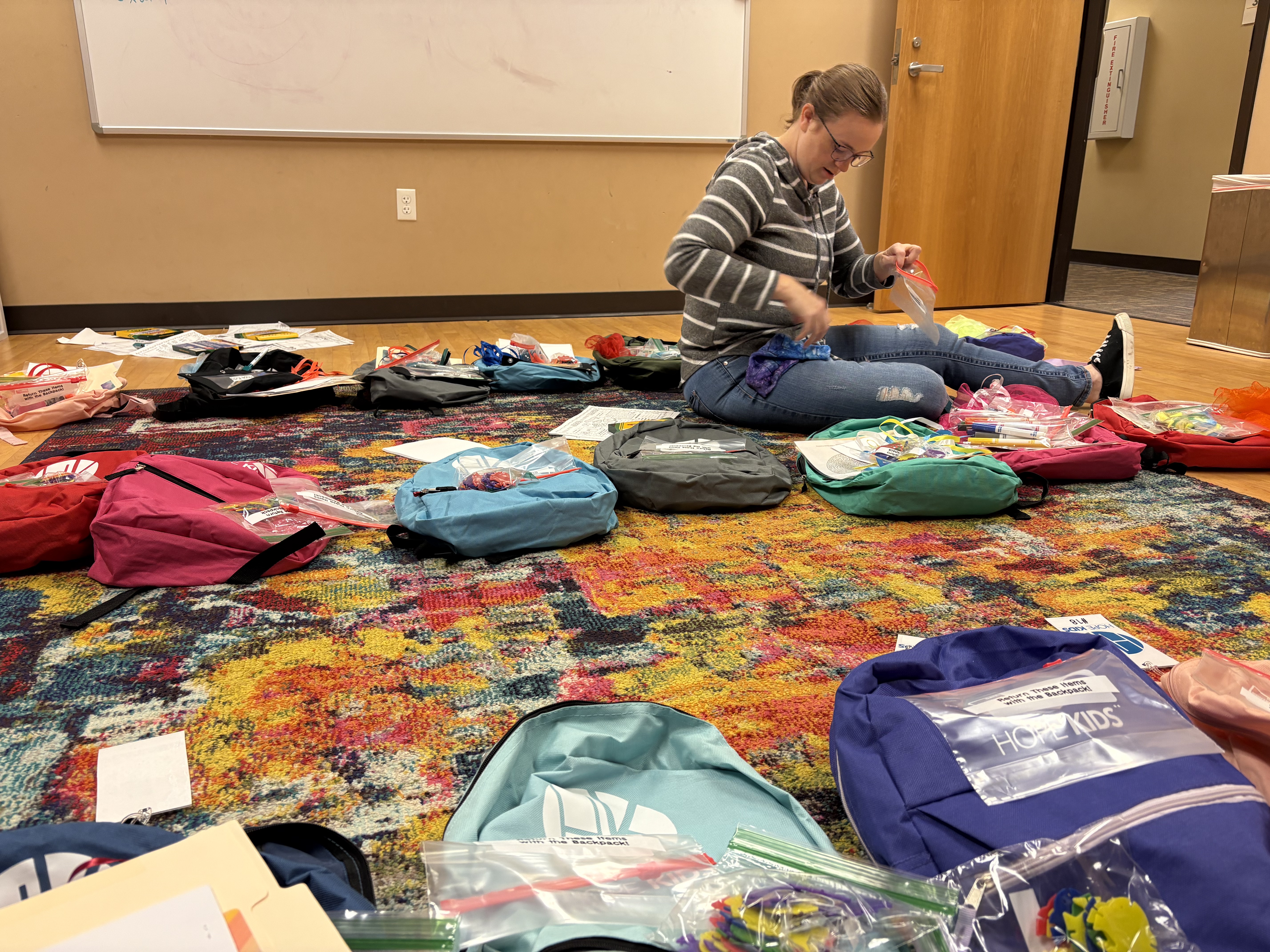
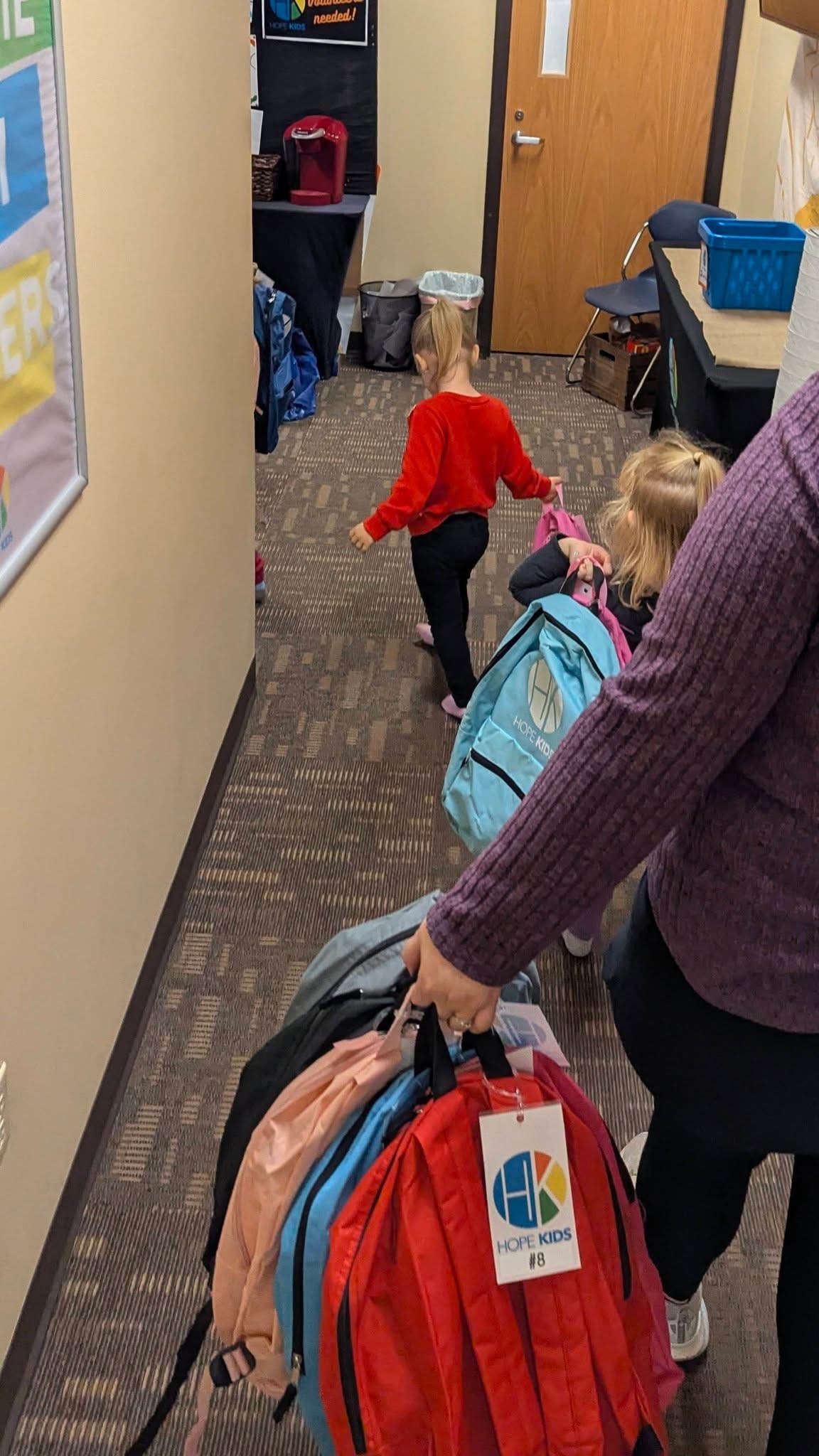
That learning mindset is showing up in hands-on preparation, too. At Living Hope Church, children of multiple ages are helping pack “backpacks” of supports for Sunday worship—an effort leaders hope will form long-term expectations of inclusivity among the next generation of volunteers. The report also describes upcoming classroom walk-throughs, a new teacher’s manual for volunteers, and a moment when a long-time volunteer shifted a struggling student’s behavior by assigning “leadership tasks,” underscoring how relational strategies can work alongside sensory tools.
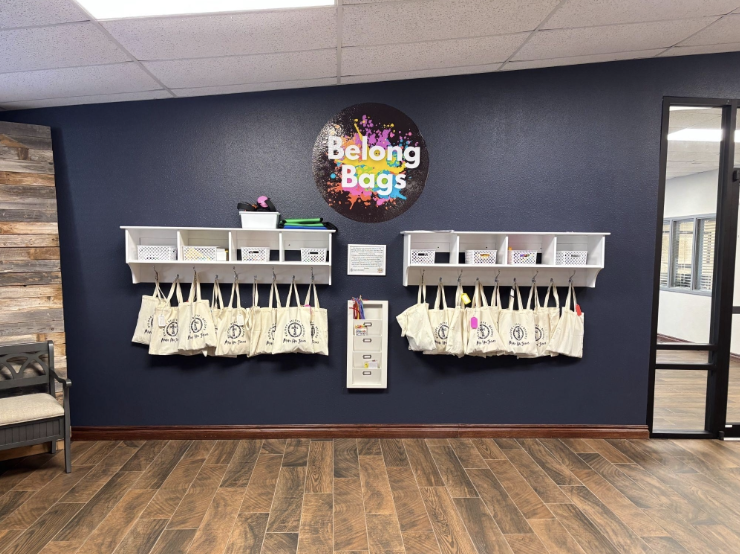
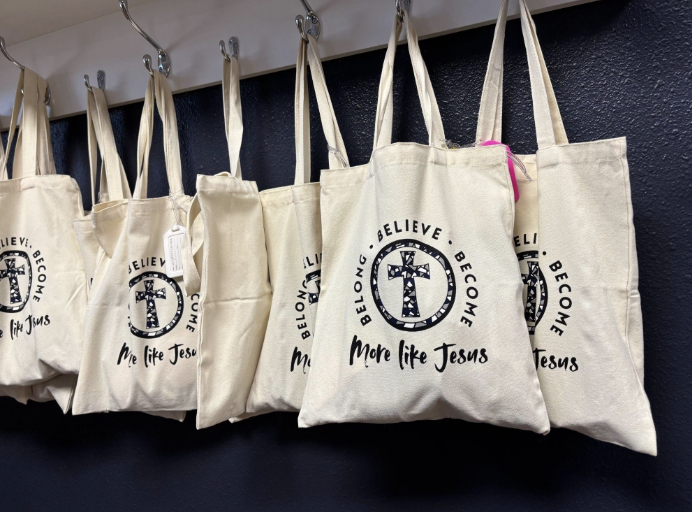
In similar fashion Norman Community Church also unveiled their mobile sensory bag station. Pastor Nathan Jenkins and lay leader Wesley Grippen noted that they have had nothing but compliments about this bold display, but the favorite reaction has been that of the kids. While possessing the mobile sensory bags for some time, but they had been somewhat of an afterthought with no prominent placement. Jenkins observed: “The first Sunday we had the shelves up, the kids surrounded them as they had the chance to ‘customize’ and ‘personalize’ their bags. One kid even said, ‘This is the best day ever!’”
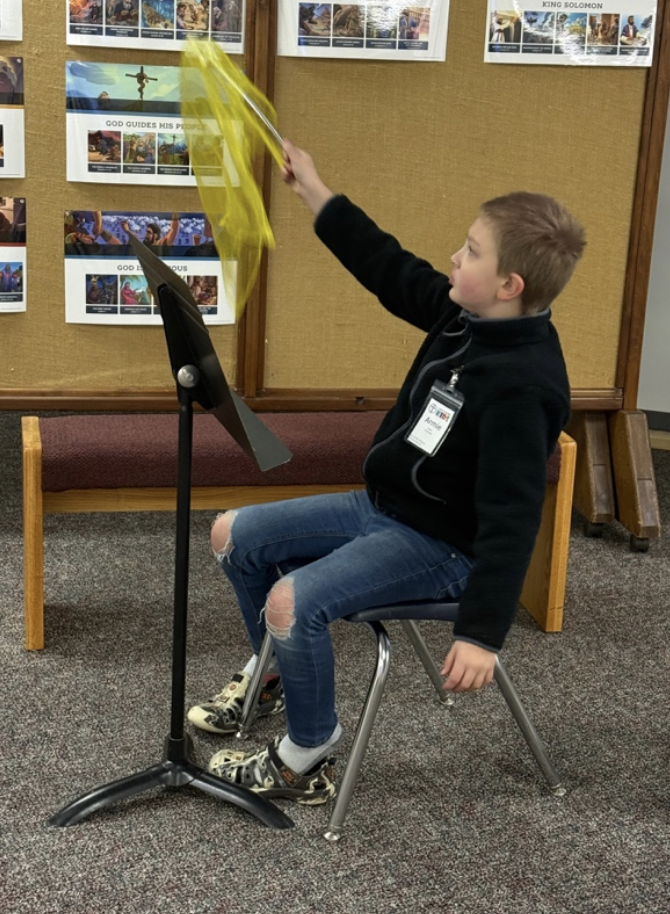
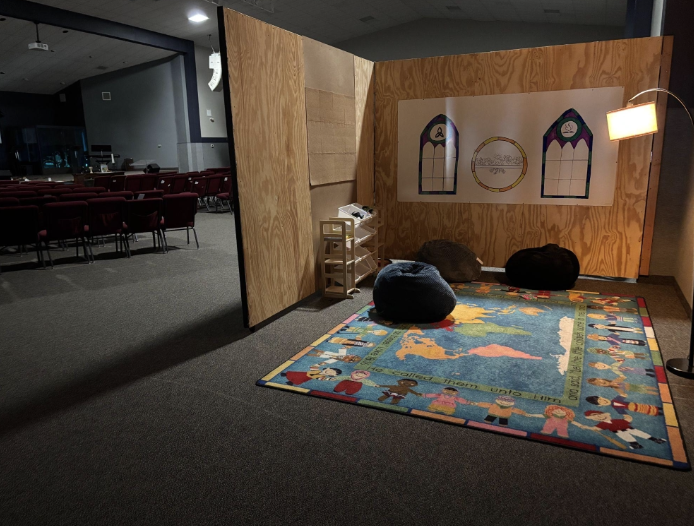
Norman Community church also includes a hybrid sensory space. Leaders in the Nurturing Care cohort reported that the work has moved beyond purchasing supplies to building a culture of belonging: creating calmer environments, training adults to respond differently to overstimulation, and swapping ideas—from weighted stuffed animals and sensory boards to safety lessons about how tools are used.
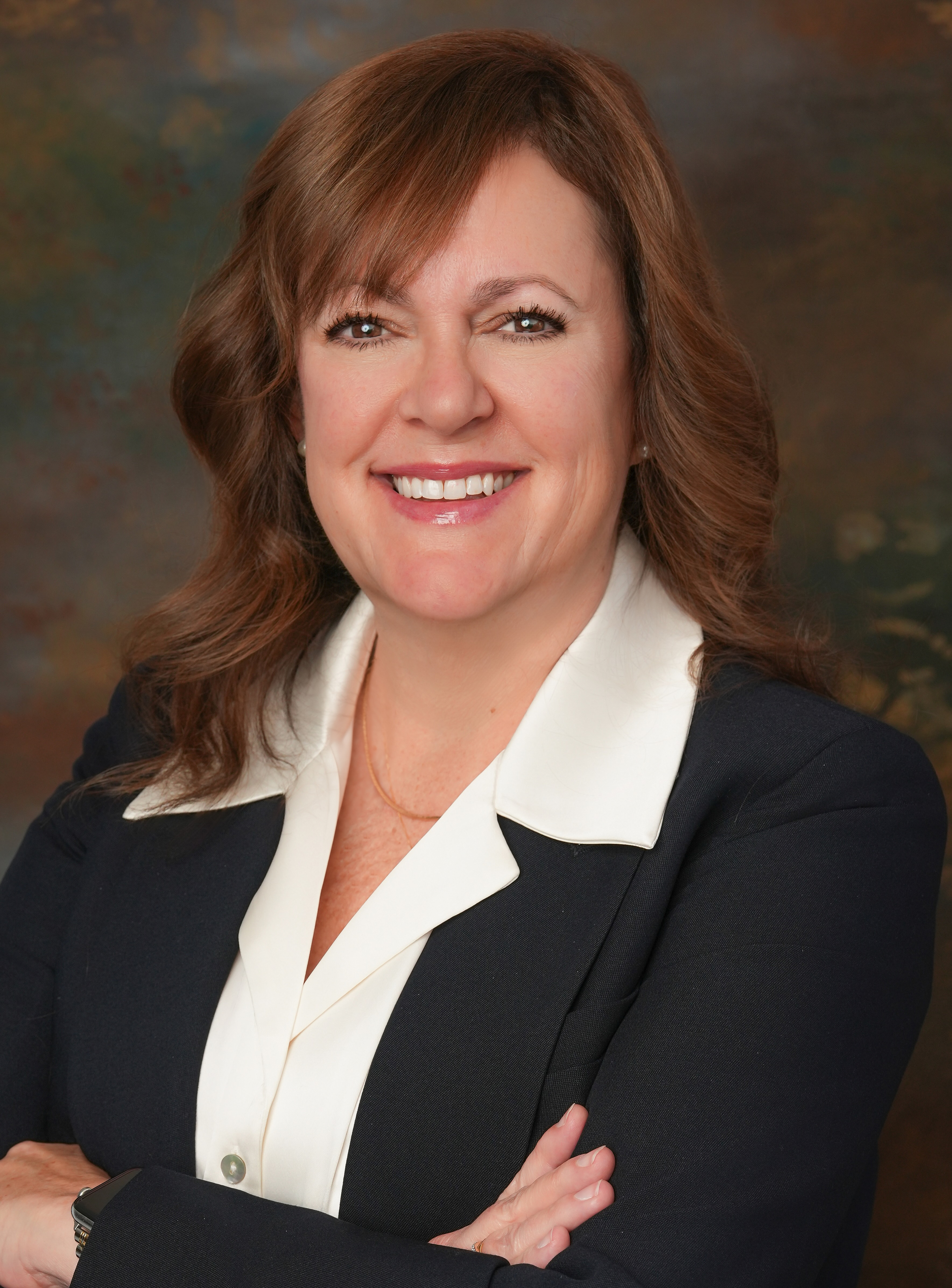
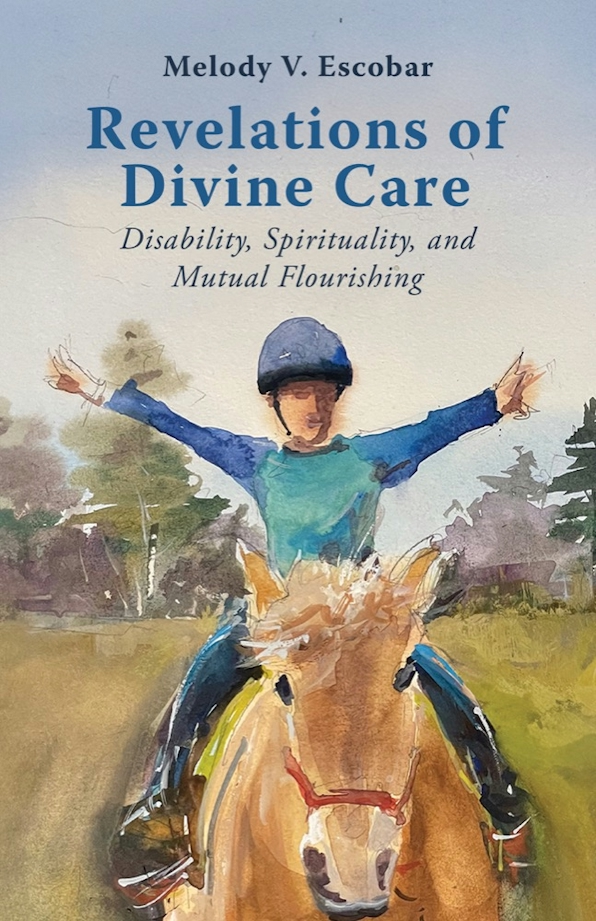
Organizers are also planning collaborative next steps, including a possible sensory-room open house and an “Day of Learning” on April 13 titled Revelations of Divine Care: Welcoming and Caring for Autistic Members in the Life of the Church. The event will take place at Nazarene Theological Seminary and offered online, featuring Dr. Melody Escobar from Baylor’s Center for Disability and Flourishing. Dr. Escobar, author of Revelations of Divine Care: Disability, Spirituality, and Mutual Flourishing, will draw from Julian of Norwich’s theology of God’s tender, adaptable care and contemporary autism ministry research, Melody will share her family’s journey—from years behind the cry room glass to their autistic son’s First Communion—and invite participants to explore practices, postures, and possibilities that can nurture deeper belonging within their own communities present
Taken together, the January updates show a cohort learning in real time: celebrating progress, naming safety and training needs, and building a shared calendar of ways to keep widening the circle of belonging—one seating option, sensory space, and volunteer conversation at a time.
Posted in Autism, Children, disability, Intergenerational, KC Nurturing Care, Leadership, Nurturing Care
Tagged #NurturingCare, Autism, Children, disability, ministry, NTS, Nurturing Care
Leave a comment
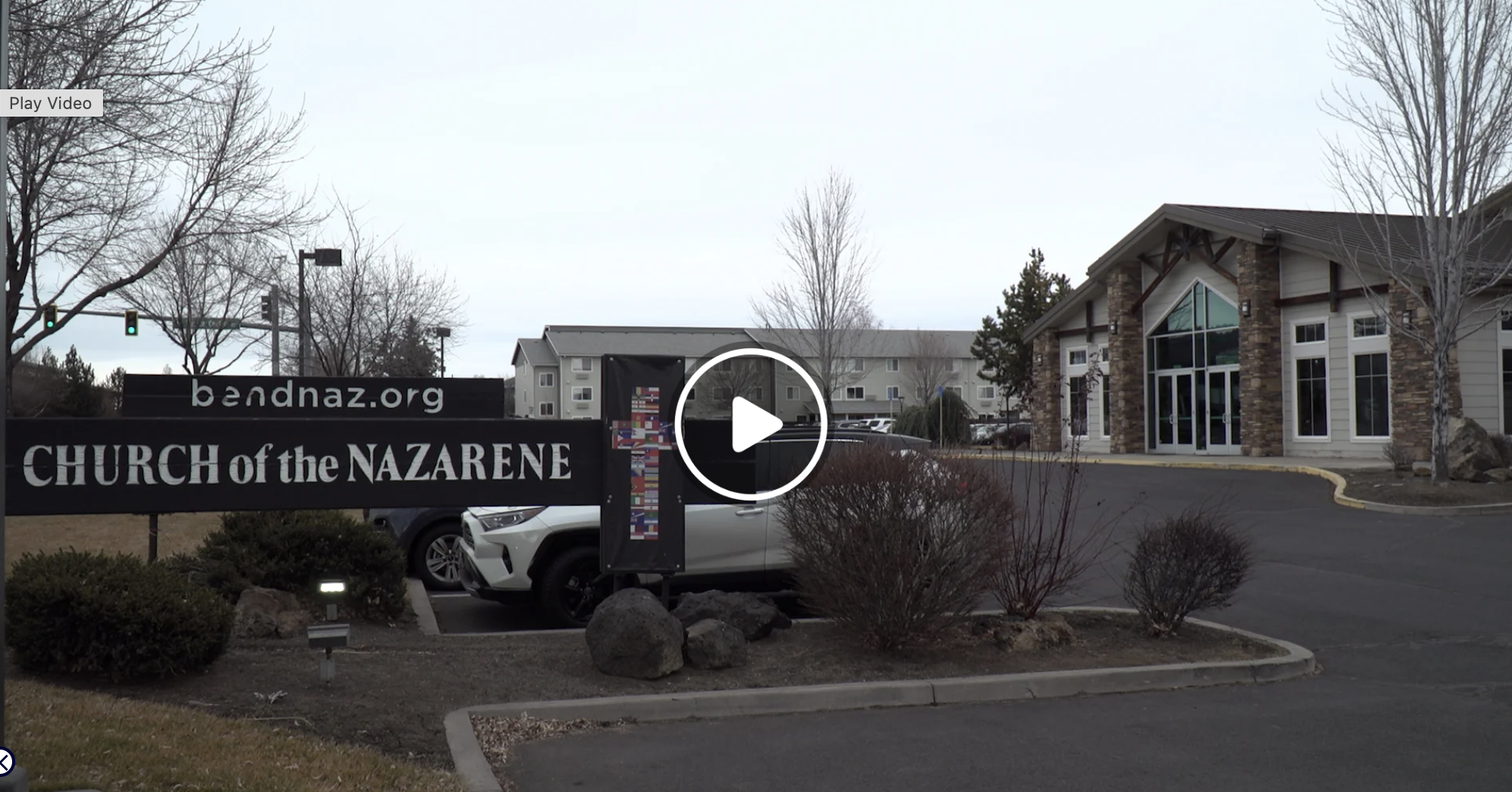
Bend Nazarene Church releasing English, Spanish, bilingual kids’ worship albums

A news story from the Central Oregon Daily News on one of our Nurturing Care Prototypes at Bend Church of the Nazarene where leaders build trust through multilingual worship. Reporter Jakob Salao writes:
BEND, Ore. — Church services can be isolating for people who don’t speak English as their first language.
“It’s been said that 10:00 a.m. on Sunday mornings is the most segregated hour in America,” Bend Nazarene Church Kids & Family Pastor Jason Visser said. “Our heart as a church is that we would be the opposite of that.”
Posted in Children, Clergy, Intergenerational, Moral Integration, Nurturing Care, Virtue, West Coast
Tagged #NurturingCare, Children, ministry, Moral Integration, NTS, Nurturing Care
Leave a comment


 Discipleship Commons