#DATC2024 panel discussion with Lamar Hardwick, Kimberly Britt, and Tait Berg, on serving in ministry leadership with a disability includes a range of responses from personal challenges both in maintaining personal boundaries but also overcoming negative perceptions. The respondents encouraged those with disability, yet called to lead, should 1) try to have a team to support them, 2) strive to be flexible in the face of challenges yet resilient in the call, and 3) to recognize that one’s disability does not stop to be the best version you can be… but does help you to avoid being the worse person you might be.
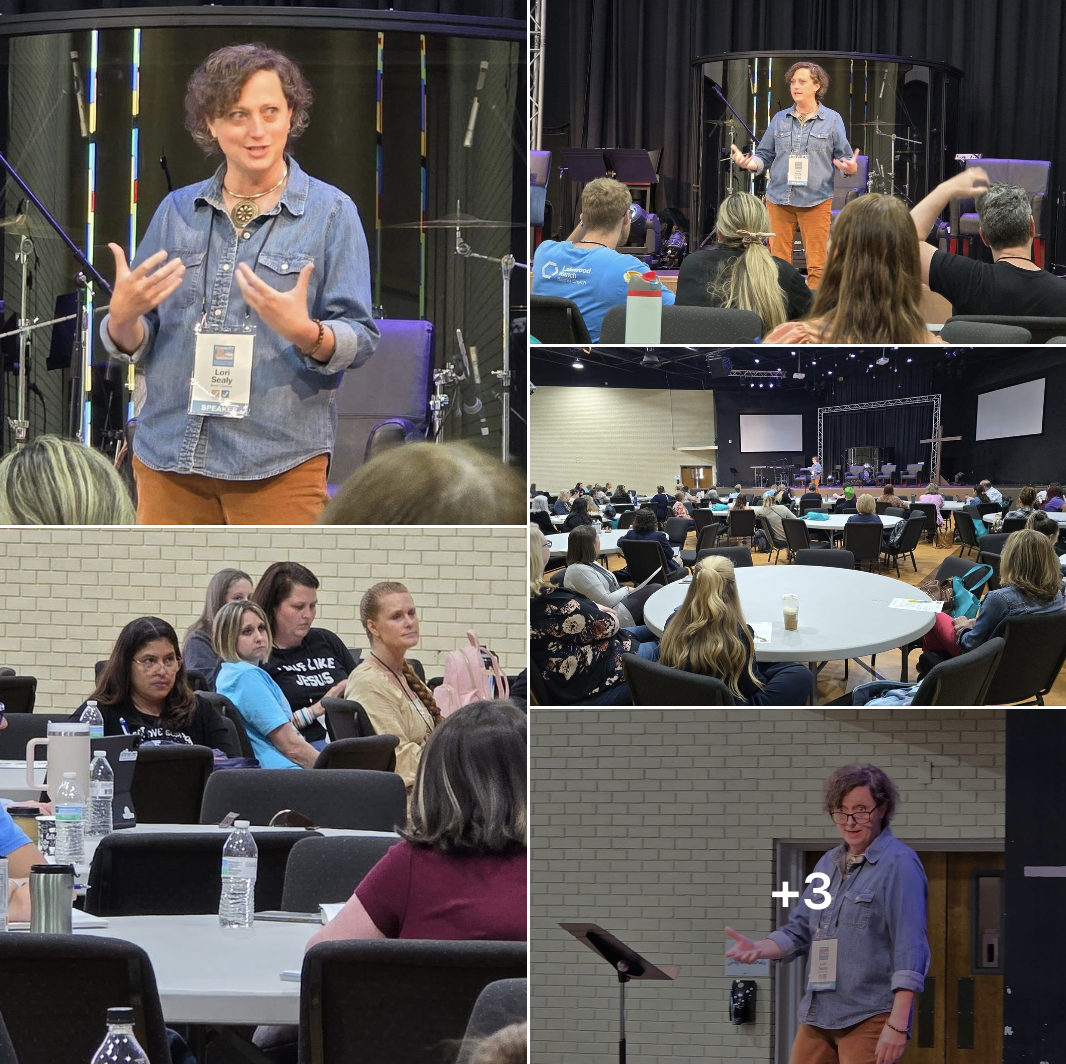
Minister and musician Lori Sealy providing a #DATC2024 workshop “Actually Autistic Autism 101” drawing from her personal experience and her child’s journey. Sealy begins by defining autism as a neurodevelopmental disorder, where the “root” is neurological, while the “fruit” proves psychological in nature. While the DSM includes a range of indicators (a spectrum), that include both a) persistent deficits in communication and social interaction and b) restricted, repetitive motor movements, use of objects, or speech.
Neely, who often presents on Autism and Evangelism (see www.lorisealy.com) notes that every individual with autism is different (and changing day to day) yet a general characterization might be that of a frayed speaker wire, which can produce either perfect sound, or with a slight movement, sends nything from simple static to excruciating white noise.
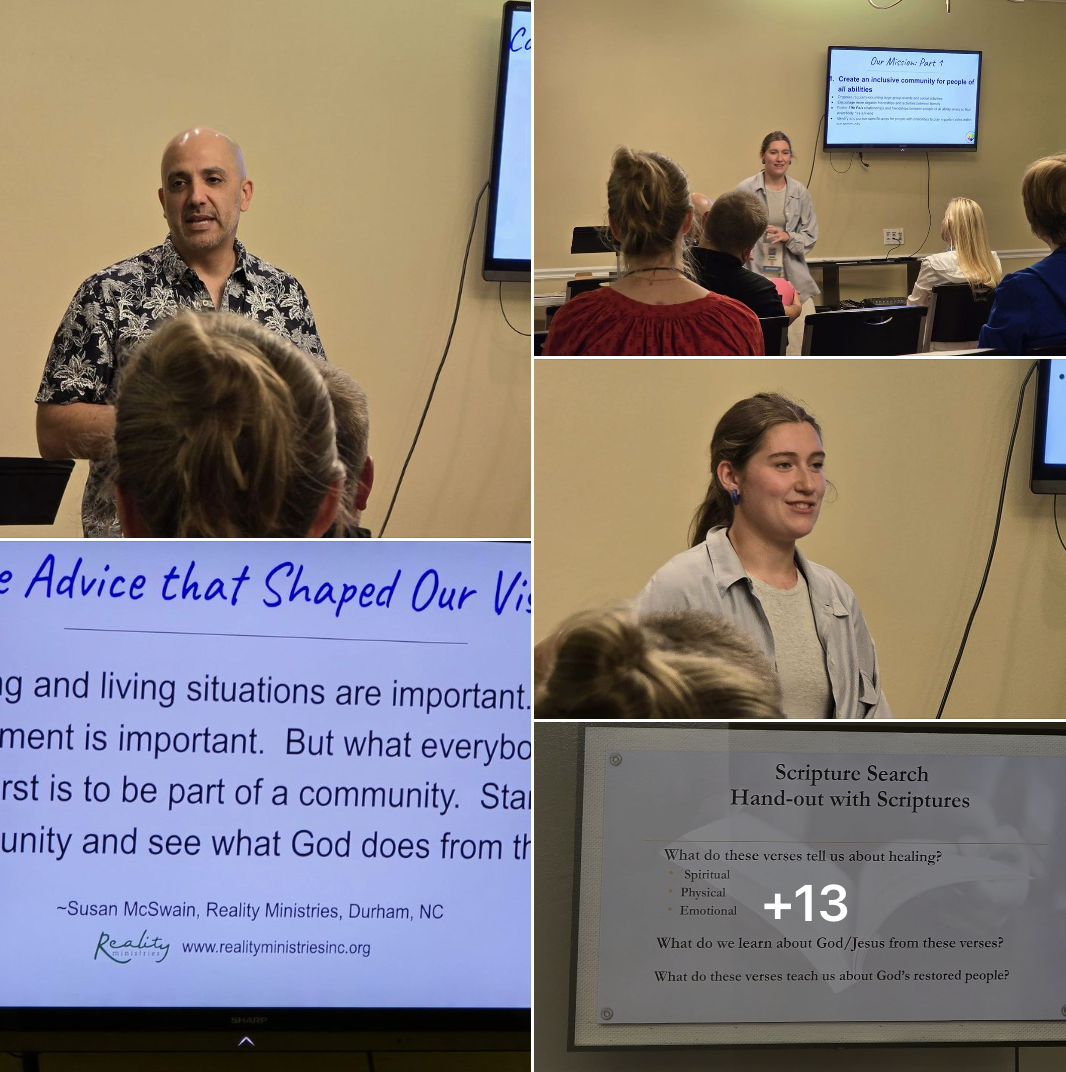
#DATC2024 breakout sessions continue including the story of Masterpiece Alliance, a local ministry which partners with Young Life’s Capernum ministry, designed to create community for disability ministry after age 18 so that no person with a disability or family of a person with a disability lives life in the margins or in isolation. The ministry begins by asking, Who are we? God’s Masterpiece! Ephesians 2:10
For we are God’s masterpiece: We are created by God. More specifically all of us are God’s special creations, His masterpieces. Each person is uniquely and beautifully created and loved by God just as they are.
God has created us anew in Christ Jesus: We are fully alive when we allow Jesus to do something new in and with our lives. All of us are made whole and complete only in Jesus.
So we can do the good things: Every person is created for a purpose. We are made whole in Jesus SO we can live into our purpose. This applies to every single one of God’s masterpieces.
God planned for us long ago: Not only do we have a purpose, but our purpose is uniquely planned for each of us by God.
Masterpiece included a narrative around a local ministry effort, while other sessions focused on everything from teaching, to behavioral guidance, to small group interaction. Quite a range of resource development at the conference.
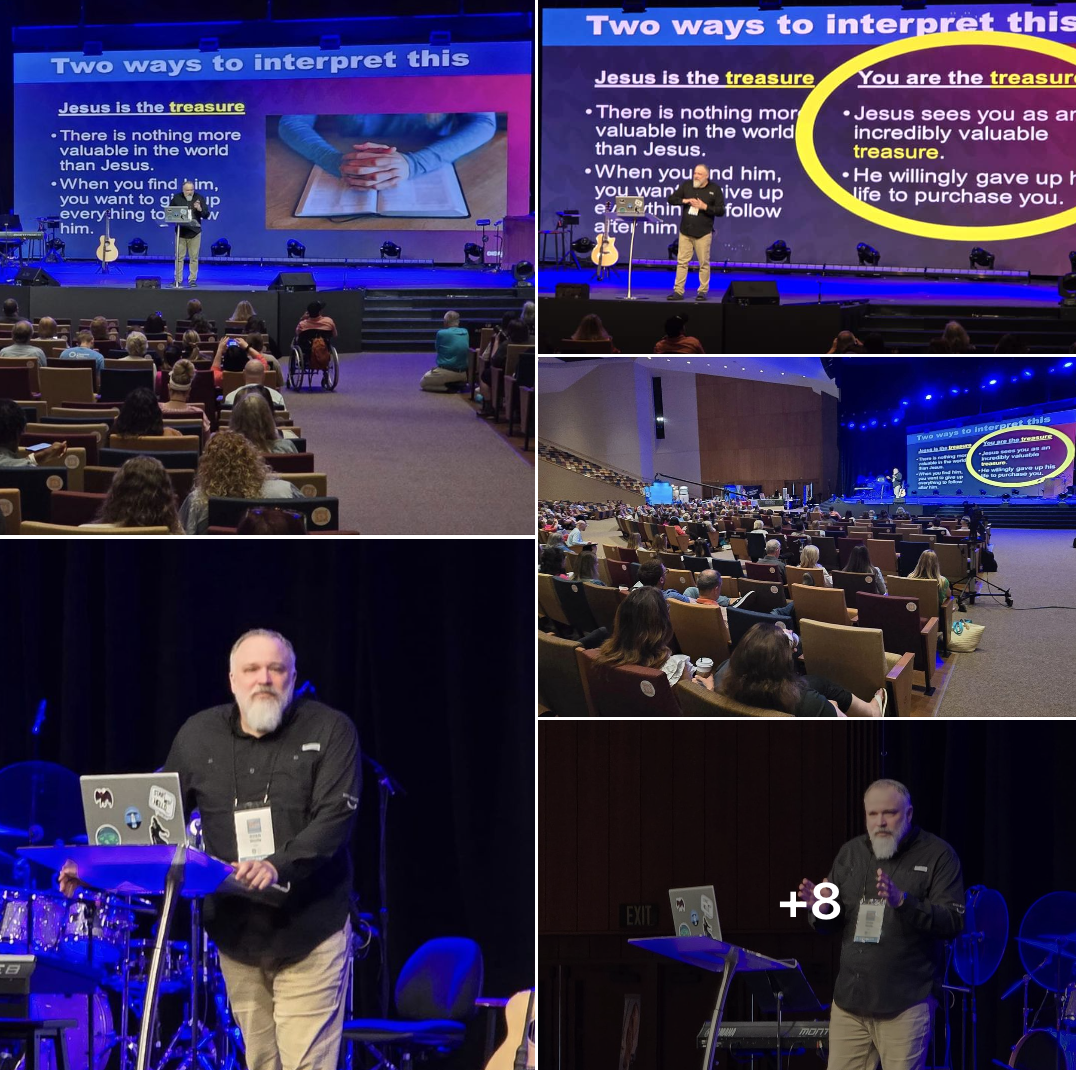
#DATC2024 opens the second day with a sermon focused on “both” people with disability and those ministering in disability ministry by Ability Ministry Director Ryan Wolfe notes often we approach scripture thinking of Jesus as the treasure. However, what happens we realize “we” are God’s treasure? Drawing from Exodus 19:5
“Now if you will obey me and keep my covenant, you will be my own special treasure from among all the peoples on earth for all the earth belongs to me.”
Reverend Wolfe also draws from Deuteronomy 7:6 and offers us a moment to see how “special” we are and the people we minister with.
Final #DATC2024 presentation today comes from Dr. Erik Carter, Baylor Center for Developmental Disabilities, and collaborator with “With Ministries” addressing the topic Flourishing Together: moving from inclusion and embrace. Carter notes ministry has changed over the years from exclusion to at least to ministry either “to” a specialized group, or among with a special class or subgroup in a church, to ministry “with” through more accessible Aspects of Accessible Worship such as
○Architecture ○Attitudes ○Communication ○Contribution ○Expectations ○ Interactions ○Supports ○ Liturgy ○Understanding ○Postures ○Technology ○Sense of community Theology ○ Sensory factors ○Transportation. Still there more to do to move to a place of true belonging and flourishing through the input and interplay of disabled people. Regardless where any church might be, the are places for improvement.
Cynthia Pounds presenting a #DATC2024 session on creative solutions to create belonging in the Church. Pounds notes that belonging rests around three key emphases: focusing on first impressions (will people feel valued as they enter?), Attitudes (what are we assuming rather than inquiring?), and connecting (are we inviting special needs families into our ministry). Pounds suggest we walk through our church facilities, then observe, ask, and, in particular, listen. Places to observe include how we communicate belonging to people with disability:
Website/Social Media
Parking
Entrance
Wheelchair Accessibility
Restrooms
Classrooms/Check-in/Guest Areas
All Worship Areas
Sometimes we need creative exploring options. So, for an adult (or large child) changing table we might consider a used massage table.
#DATC2024 second breakout session on creating inclusive spaces for play with Donna McCrary and Beth Jones. The session opens noting that stories are what make up a child’s life. Their unique story begins with the story of their birth. Eventually, parents share stories with them and with time they create their own life story. So how do we move to include the stories of children with disabilities through play?
McCrary and Jones note the importance of play. Play is an activity chosen by a child and directed by the child. So play remains child directed, imaginative, and emotional. However, play is also cognitive in both generating and pruning synapses, as well as leading also to building communication skills.
So, Why Should Churches Change the Story via Play? • Play Spaces provide the optimum place for play to occur at church. • Play Spaces can be outreach opportunities for the community. • Play Spaces encourages physical, sociaLemotional and cognitive growth • Play Spaces enhance engagement of church members creating volunteering opportunities • Play Spaces at church offer a safe environment that can be reassuring for parents




 Discipleship Commons