
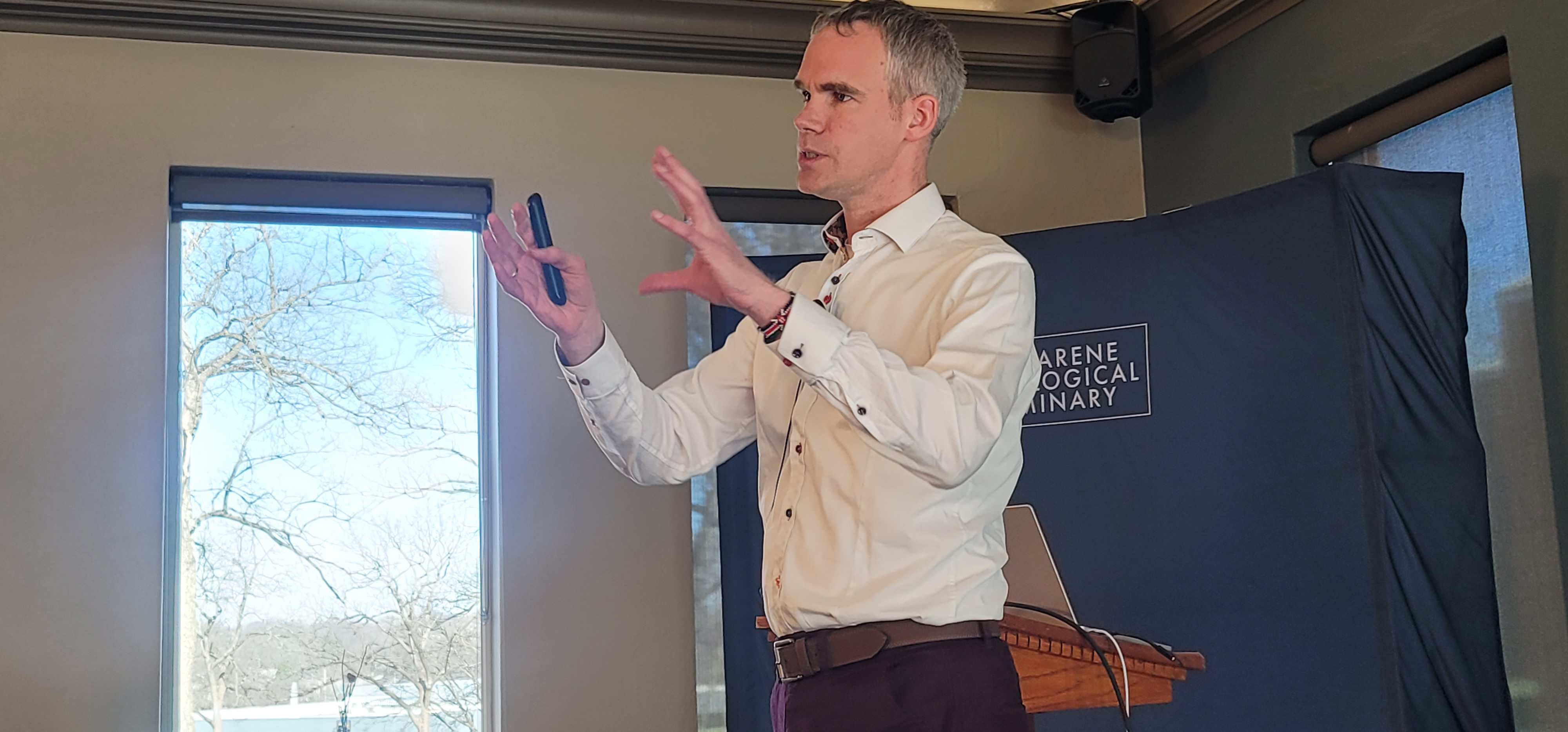
The NTS Nurturing Care/Kansas City Initiative just wrapped up a day of learning with Dr. Léon Van Ommen, Senior Lecturer, Department of Divinity and Religious Studies, University of Aberdeen and co-Director of the Centre for Autism and Theology. His presentations addressed both the social and theological considerations, particularly liturgical concerns, engaging autistic people in worship in our congregations.


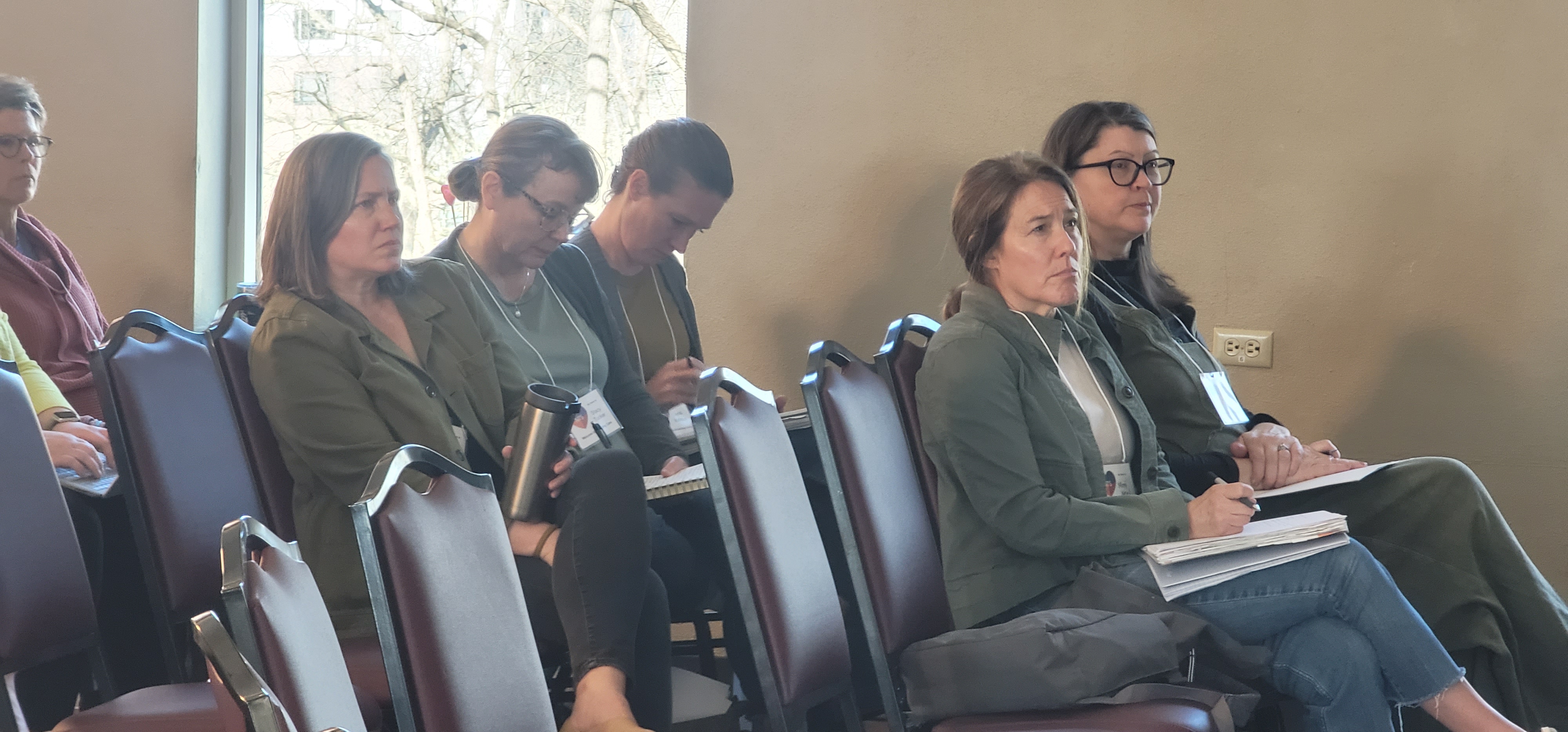
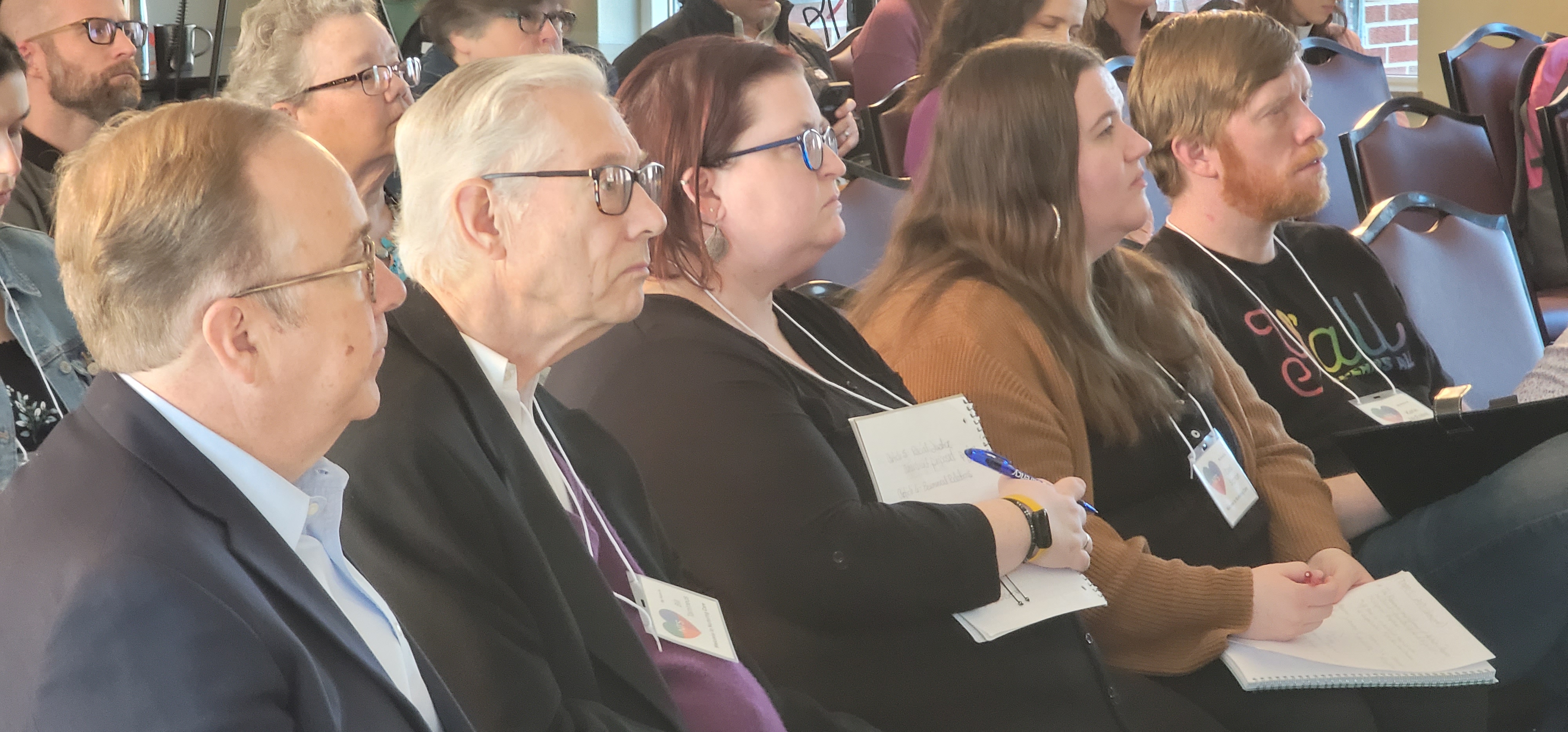
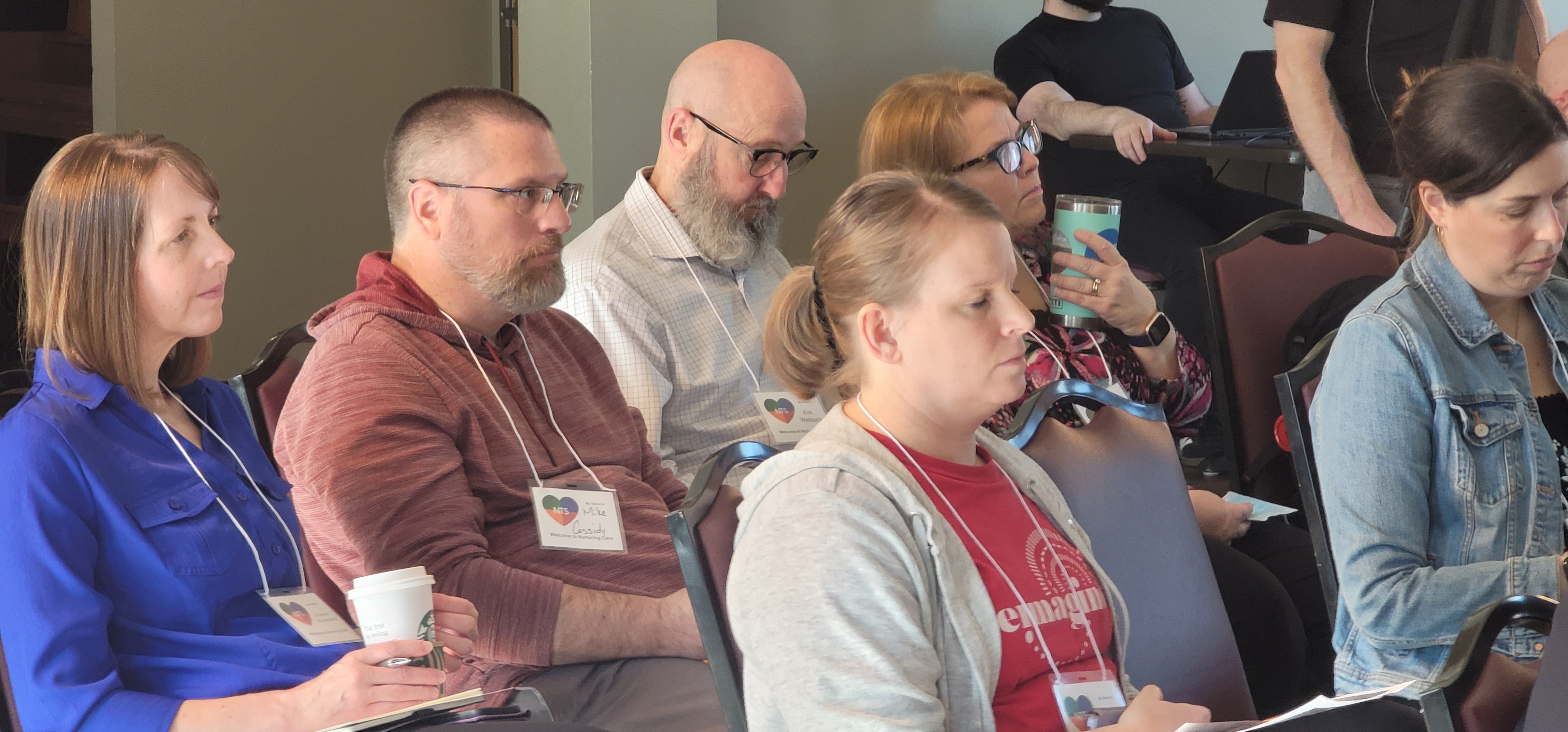
Monday morning provided an opportunity for congregational leaders, media, and interested parents to gather to hear Dr. van Ommen. The brief time for informal gathering revealed an prospective audience of passionate ministers ready to listen, learn, and engage each other.
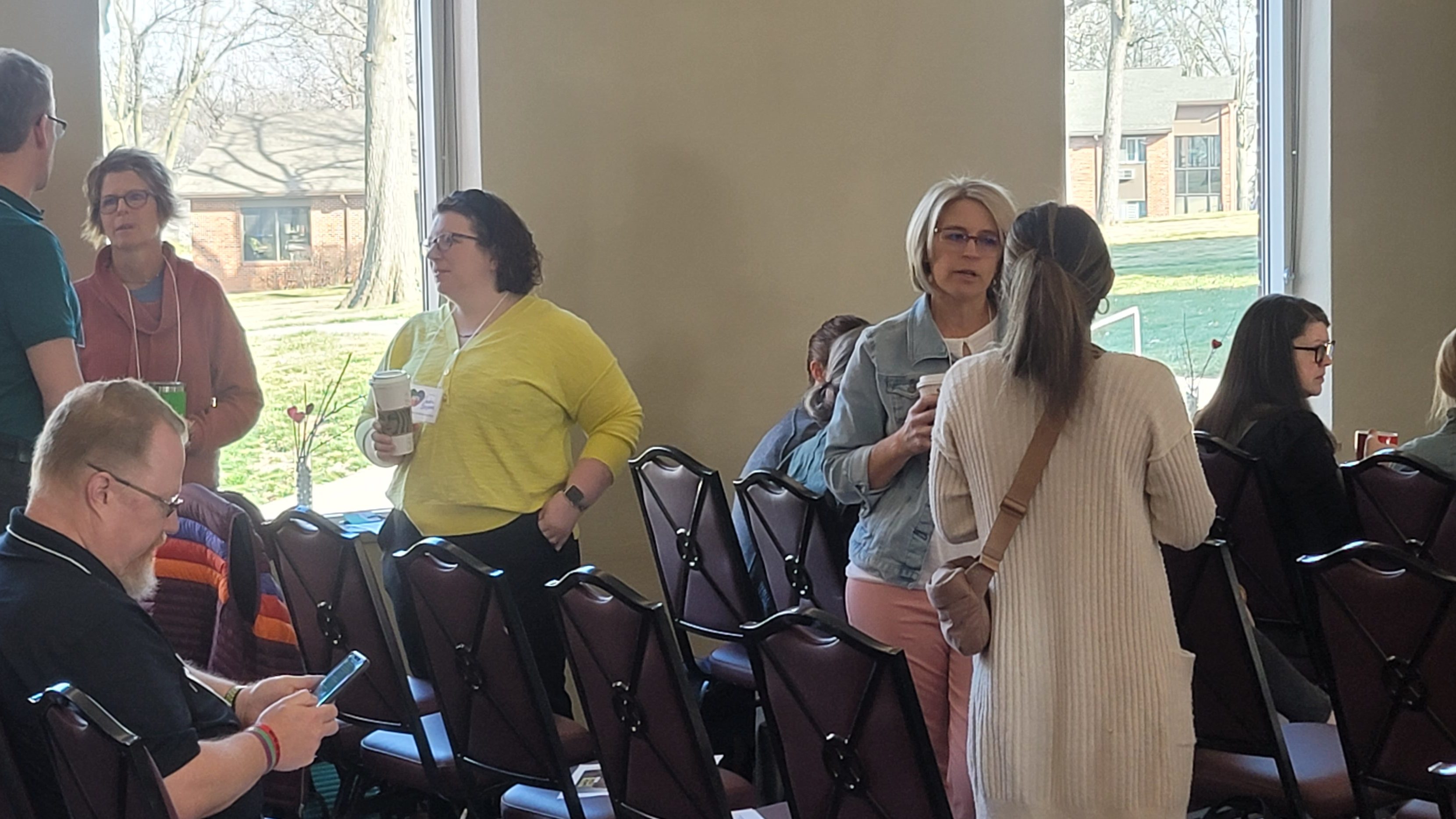
Nurturing Care congregational participants include members from Baptist, Episcopal, Methodist, Presbyterian, and non-denominational settings. These members were joined by gifted consultants who regularly support the initiative, as well as faculty and leadership from NTS.
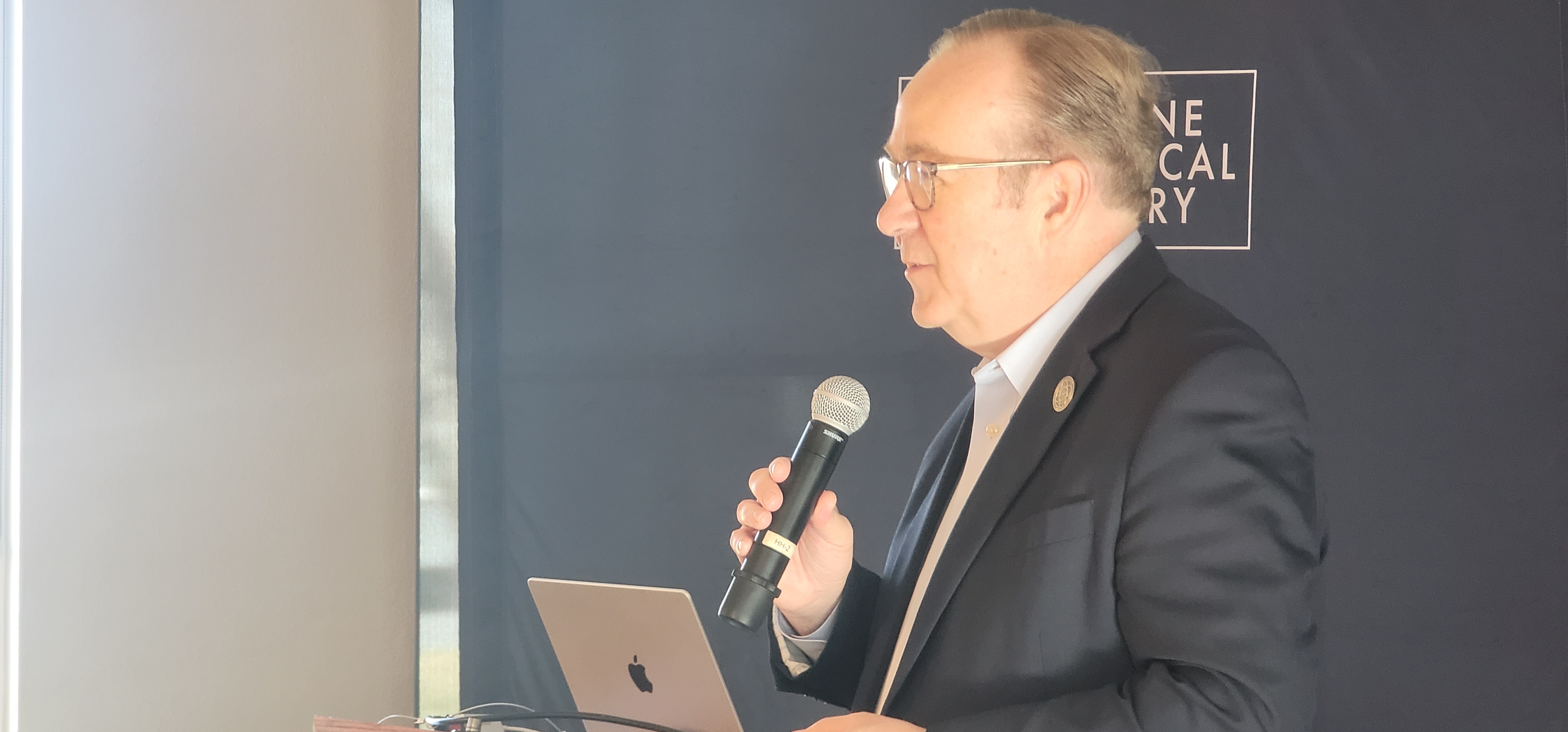
President Jeren Rowel gave greetings and noted the commitment of #NTS to this initiative here in Kansas City. Dr. Dean Blevins noted that this part of the presentation came courtesy the support of the Lilly Endowment Inc. and also from the Joy and Mary Laytham lectureship for Childhood Development.
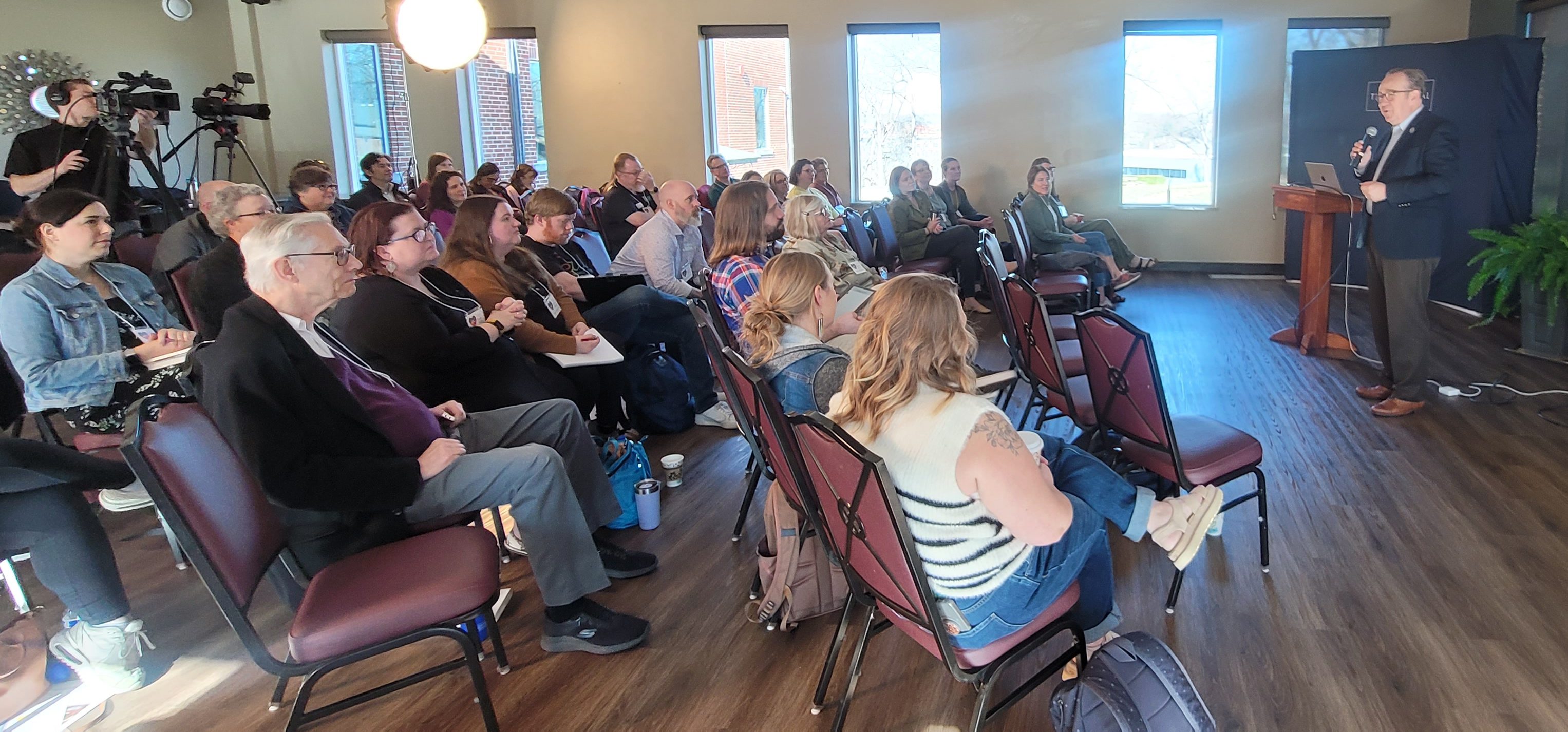
Long leaders in child spirituality and “storied” ministry, Dr. van Ommen’s presence reflected both the values of the Laythams as well as the overarching goal of the Lilly Endowment Inc to foster spiritual experiences with elementary school children through worship and prayer practices. NTS’ initiative in Kansas City takes seriously this endeavor with autism.
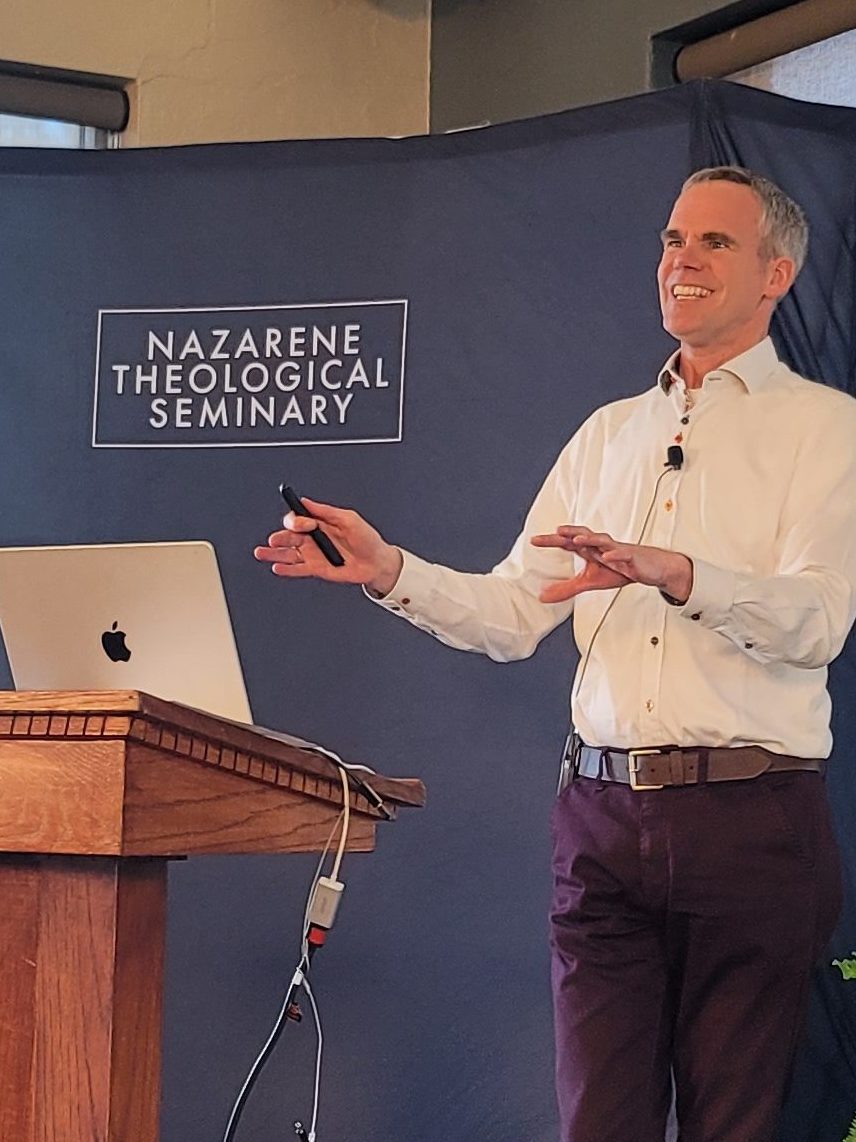
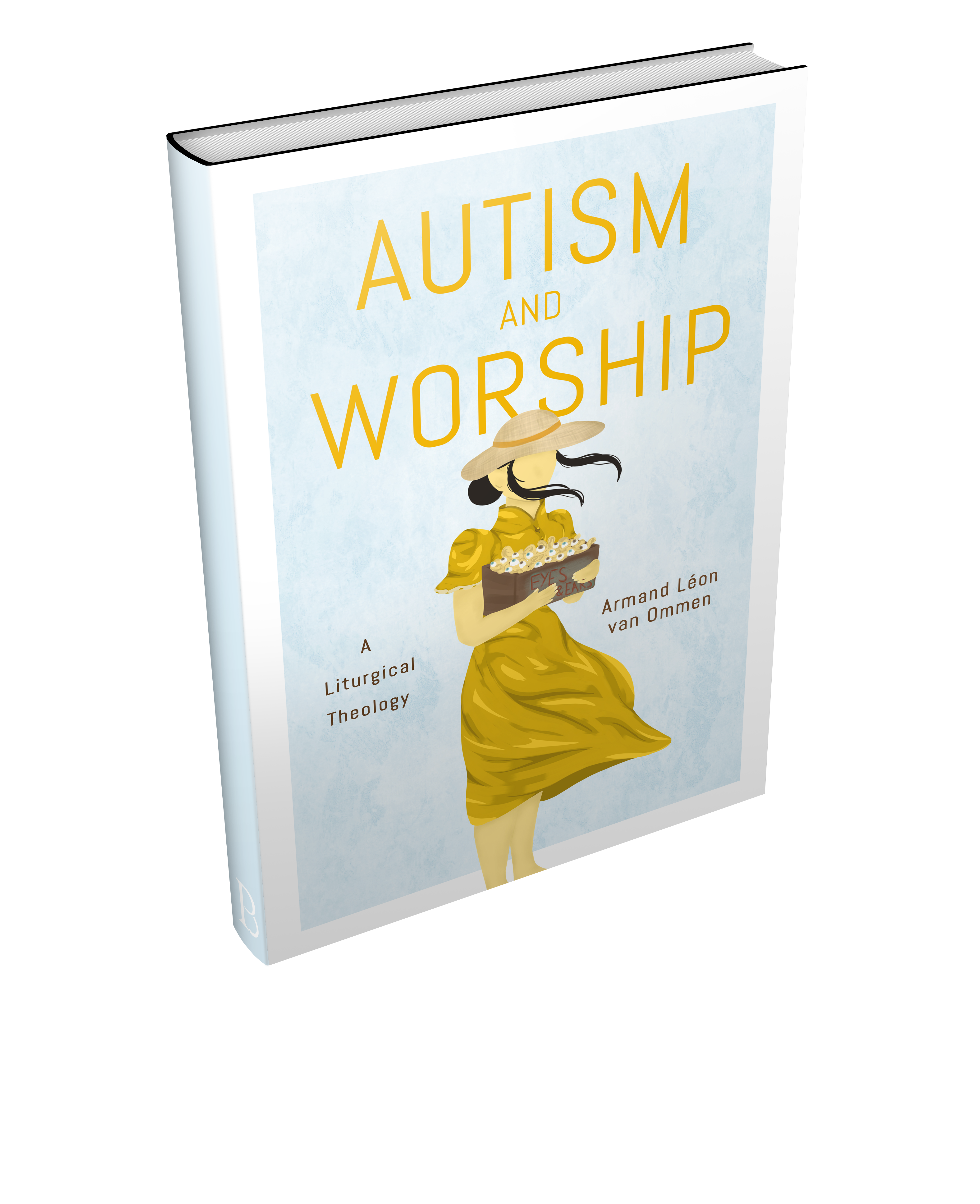
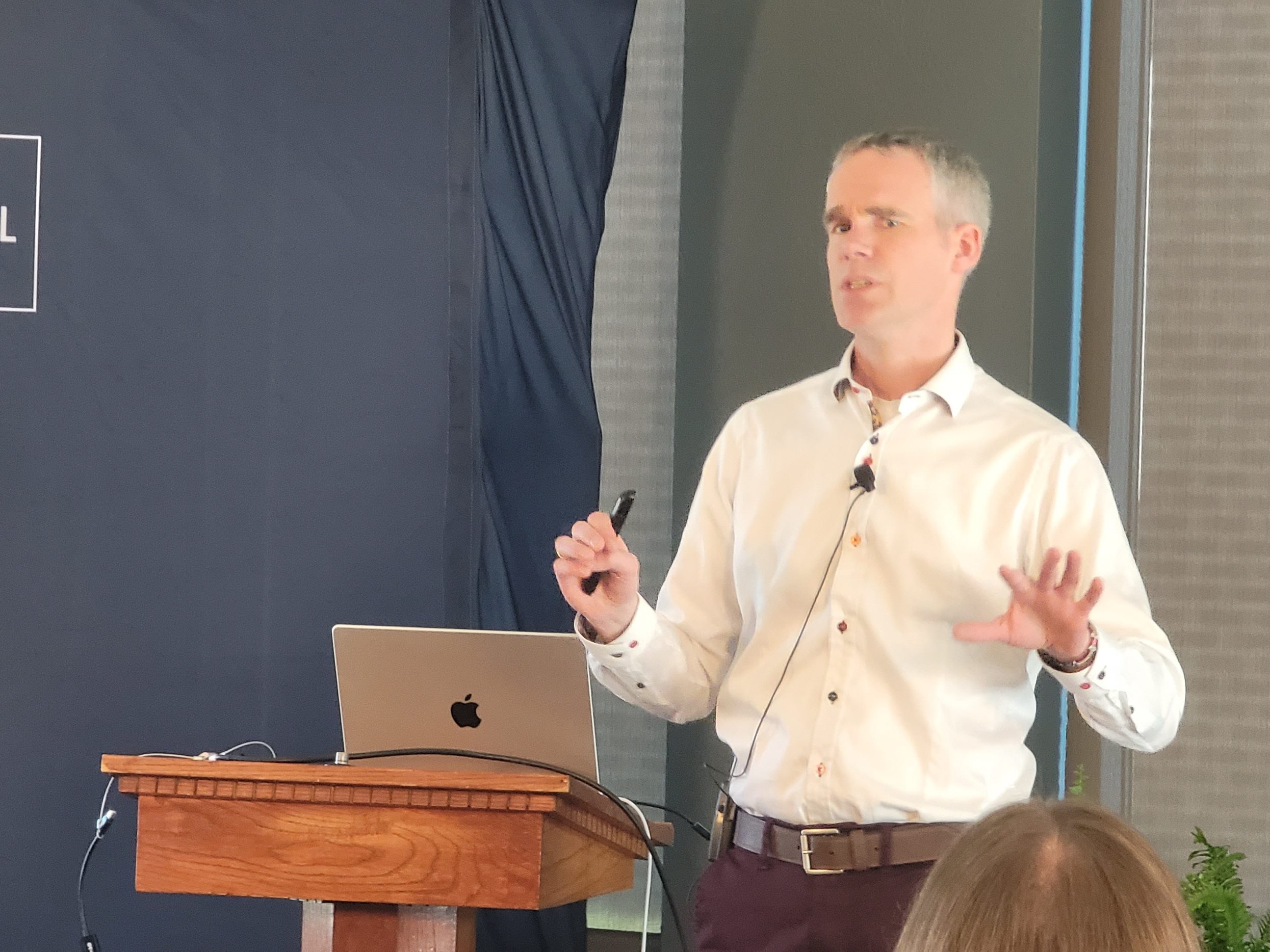
Dr. van Ommen presented two presentations, the first addressed in this blog post.The morning session addressed The Absence and Ignoring of Autistic People in Church: Availability as a Liturgical-Theological Response. In that session Dr. van Ommen oriented the audience to the major themes of his most recent book Autism and Worship: A Liturgical Theology.

Early Dr. van Ommen noted that autistic children are 50-70% less likely to attend religious services than others in their age groups. This statistic merely notes the “absence” of children with autism, but often overlooks the glass ceiling or ignoring of those who “do” attend in a congregation.
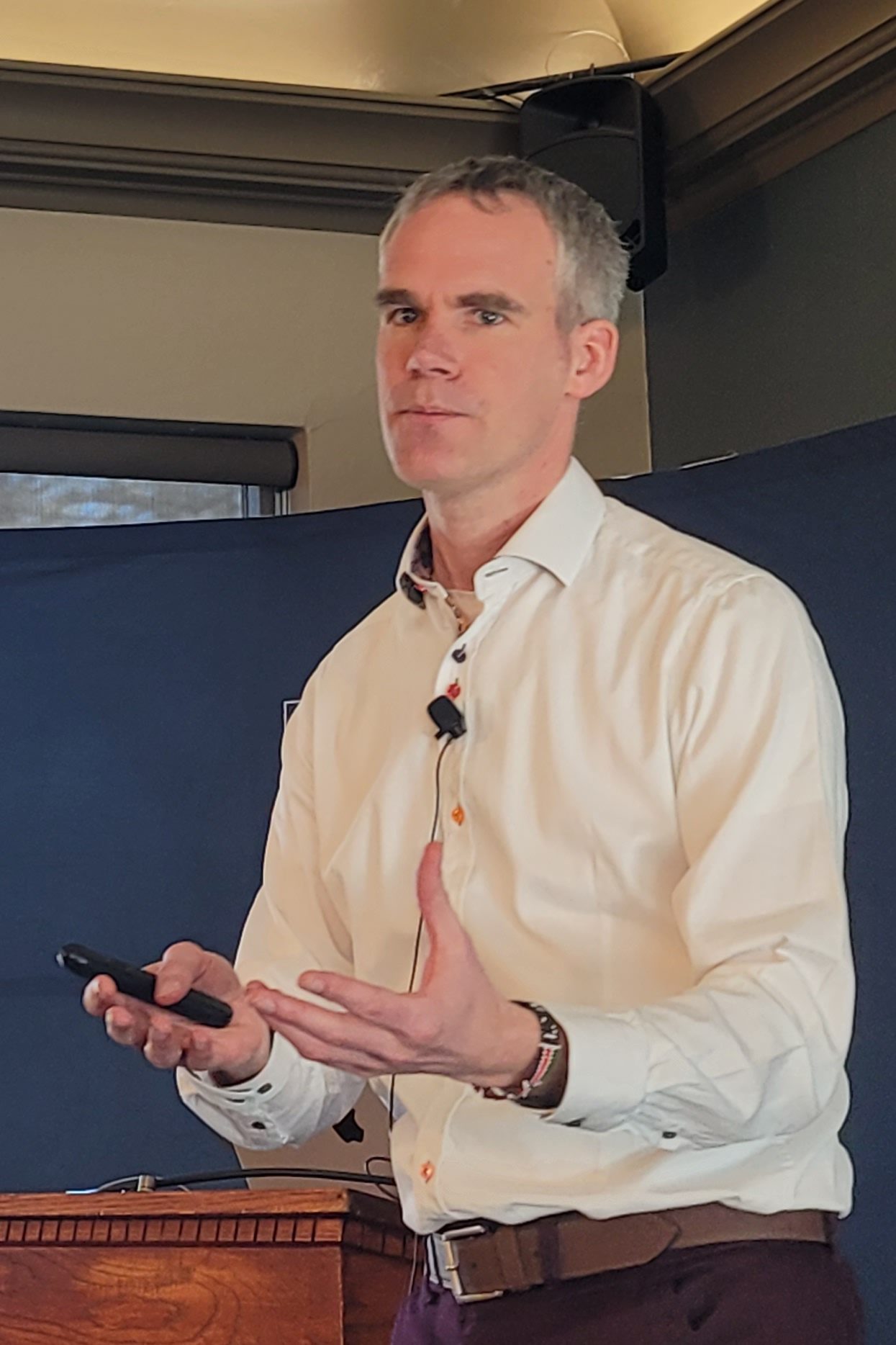
Part of the struggle may rest with definitions of autism that start with a medical model, treating autism as a problem (disability) resident within the individual (there for the individual to solve via medication or behavioral control) rather than seeing autism as a social concern, creating environments of social supports and cues that allow autistic people to engage and participate. At the core of this issue in the church may well be undue reliance on a culture of “normalcy” as noted by both Lennard Davis (Enforcing Normalcy: Disability, Deafness and the Body) and Tom Reynolds (Vulnerable Communion). van Ommen drew from his text to note “Normalcy is the set of dynamics by which communities safeguard the boundaries of what and who they deem normal and therefore acceptable. Those who fall within those boundaries can be integrated into or even belong to the community, but those who do not fall within the boundaries either need to change or will be rejected.”
Dr. van Ommen continued that a response to a culture of normalcy (which tends to rejects autistic people by assuming they fall “outside” normal social participation) may require a deeper sense of both presence “with” autistic people but also a deeper sense of “availability” which requires, as philosopher Gabriel Marcel notes, a truly opening of oneself fully to a person so that each of us are changed in the encounter, as Marcel writes. “When somebody’s presence does really make itself felt, it can refresh my inner being; it reveals me to myself, it makes me more fully myself than I should be if I were not exposed to its impact.” The depth of this truly inter/intra-personal encounter opens up the possibility to mutual transformation, mutual insight.
Theologically a similar form of encounter also occurs through liturgy, or the formal/informal structure of worship. Dr. van Ommen quickly noted that worship remains anchored first in what Christ has accomplished through the Christological hymn 2: 5-11 where Christ’s salvific work precedes our own worshipful response, only as Christ has given to us. This approach stresses that worship is a gift, which mitigates our establishing criteria on what worship might be that could exclude autistic people. All people are invited into worship, not for what they can “get out of it” but for/in/with the transformative presence of Christ through our participation in worship. Dr. van Ommen borrowed from the writing of Don Saliers to define liturgy/worship:
Christian liturgy … is the ongoing prayer, proclamation, and life of Jesus Christ – a sacrifice of thanksgiving and praise – offered to God in and through his body in the world. That is, Christian liturgy is our response to the self-giving of God in, with, and through the One who leads us in prayer. The community is called into being to continue that prayer on behalf of the whole world. So we must continue to gather in praise and thanksgiving about the book, the baptismal font, and the eucharistic table in order to know a home.” (Worship as Theology, p 86)
So, van Ommen notes, even autistic people, including children may participate in worship. He summarized, when we participate in the liturgy/church service/worship service – in “the ongoing prayer, proclamation, and life of Jesus Christ” – we are most truly ourselves. Also, as liturgy serves as identity formation, then our identity is grounded in the kenotic gift of God in Christ.
This selfsame worship, or participating in Christ, then constitutes our availability to each other as a kenotic gift outwardly to others. Worship not only invites autistic persons into our midst but transforms us all into a hospitable, outward focused community extending Christ’s gift to everyone.
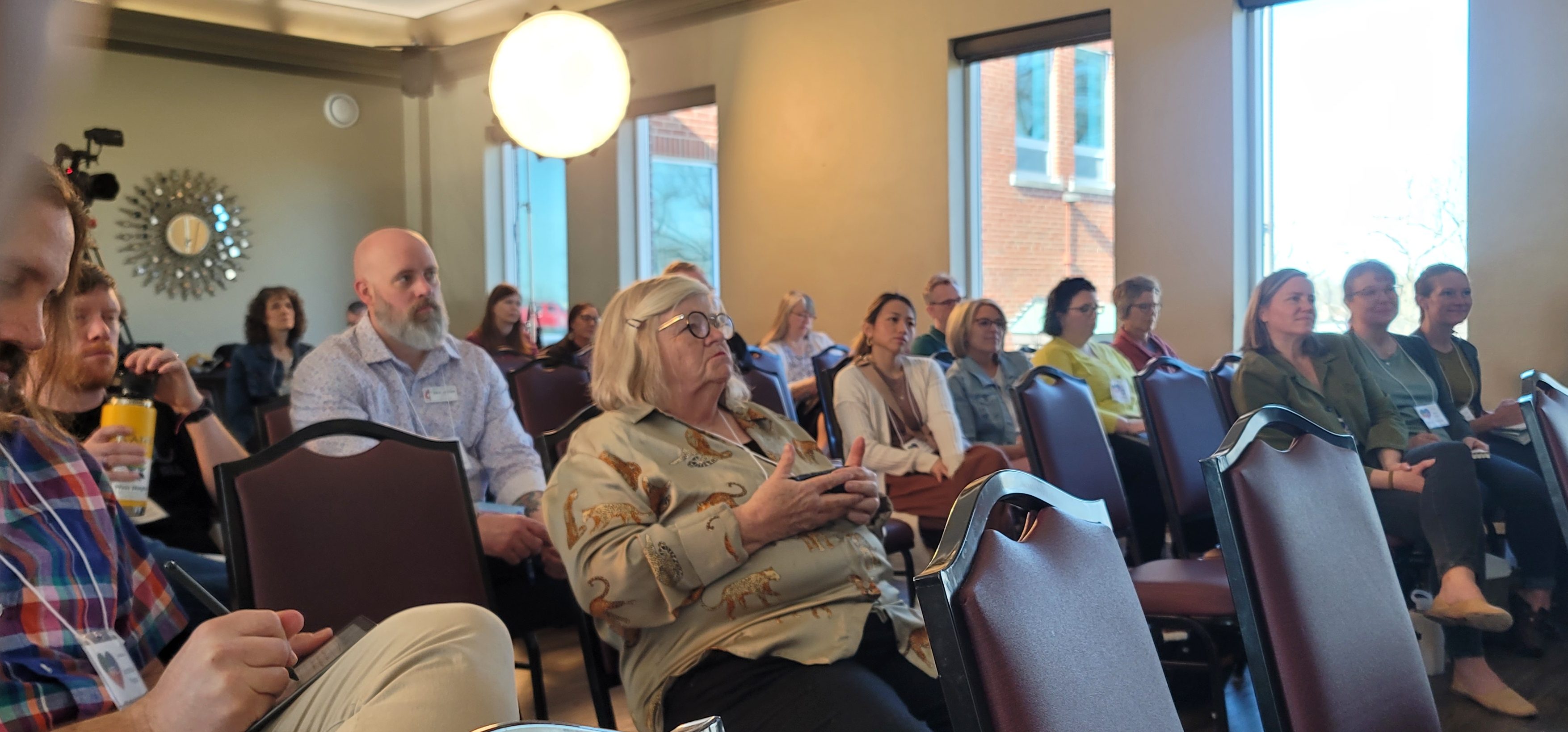
Dr. van Ommen closed with a quote from Dr. Kimberly Hope Belcher to drive how the deeply sacramental power of worship that involves everyone, including children, noting “The heart of sacramentality is the belief that when Christians worship, they participate in God’s life, and this belief must be the backdrop for any sacramental theology.” (Efficacious Engagement, p1)
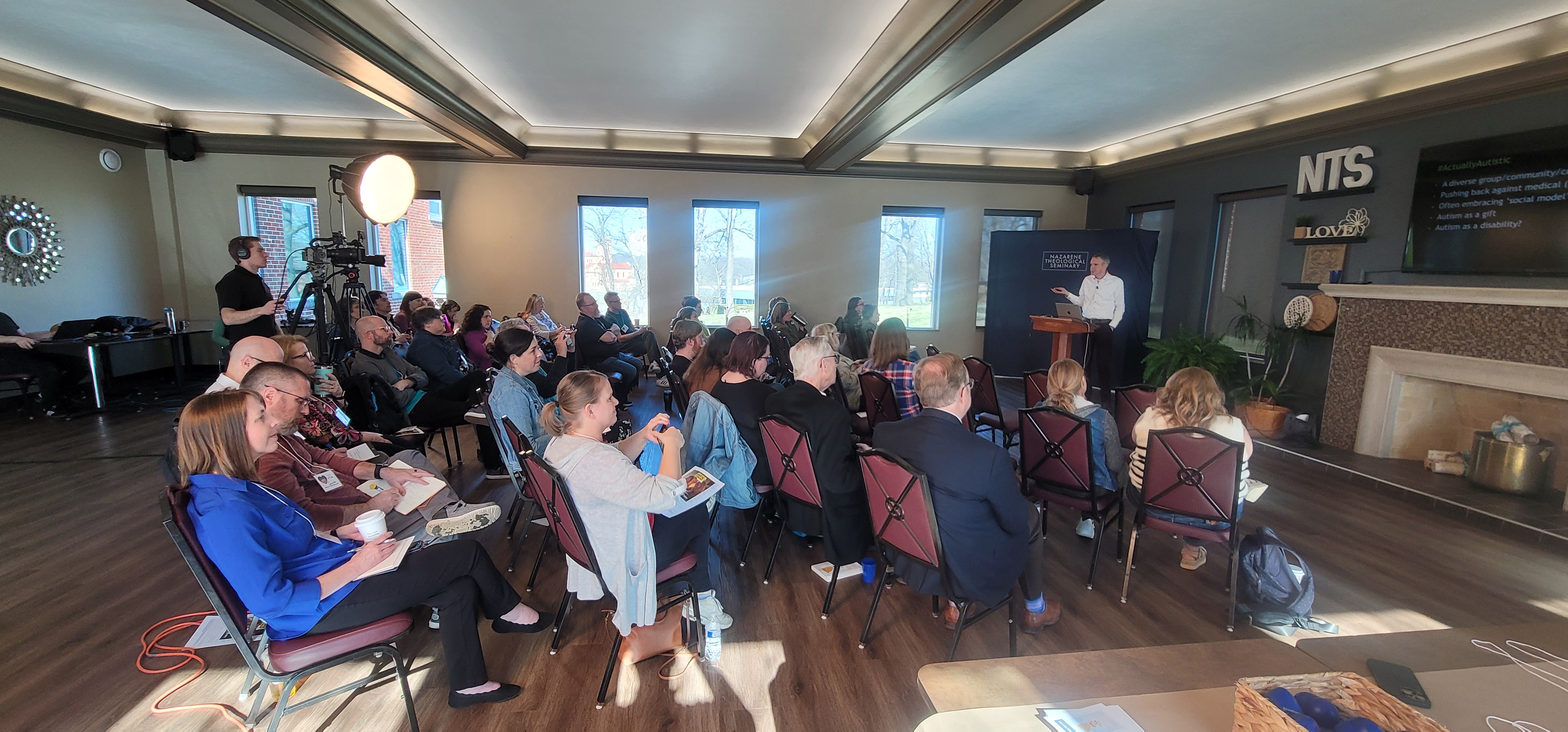

A great first lecture, bringing to our participants in Nurturing Care a thoughtful engagement with the nature of autism, the danger of normalcy, and the gift of Christ that comes to us, and through us, as we engage children with autism in worship. Thoughtful words for the morning, with a second session to come.


 Discipleship Commons
Pingback: Dr. Léon van Ommen visits Matthew’s Ministry | Discipleship Commons
Pingback: Non or Minimally Speaking Autistic Children | Discipleship Commons